NSW Police are investigating a reported verbal abuse incident involving a 13-year-old Muslim schoolgirl on a Sydney bus.
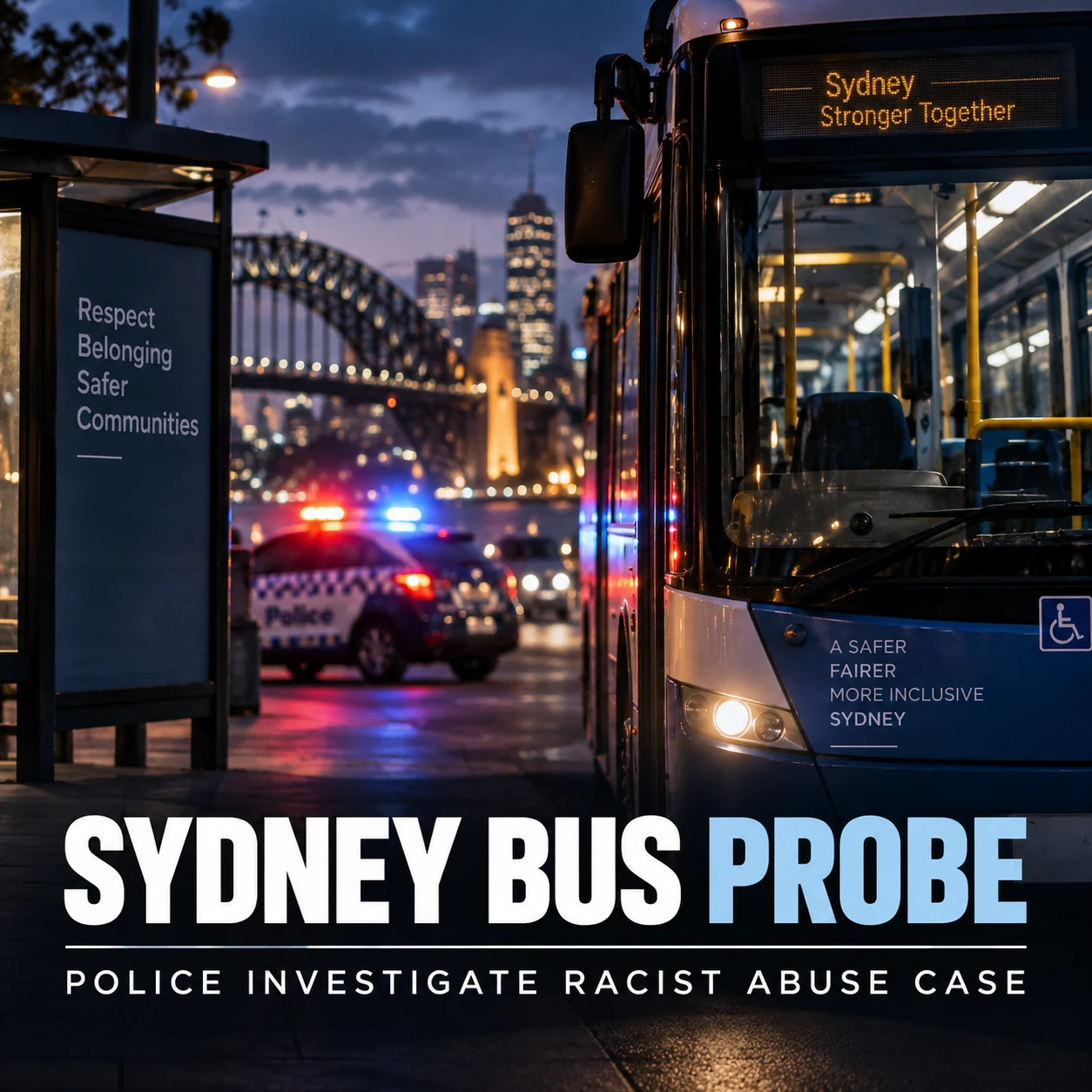
ABC News reported that the incident was captured on video and later shared online. The girl’s family made a police report, and NSW Police said inquiries are continuing.
The teenager was travelling home from school when the confrontation occurred. The original reporting says the exchange began after she spoke up when another passenger was being photographed.
The footage is reported to contain racist and anti-Muslim language directed at the girl. This article does not repeat that language.
No charge or finding of guilt has been announced. Police are still examining the circumstances, and the allegations remain subject to investigation.
The incident has been recorded by the Islamophobia Register Australia, which collects reports of anti-Muslim incidents. The organisation says reported cases have increased sharply in recent years, although its figures reflect reports made to the register rather than a complete count of all incidents nationally.
The case has also prompted discussion about safety on public transport and how adults should respond when a young passenger appears to be in distress.
Bystanders should not put themselves in danger, but practical steps can include alerting transport staff, contacting police when necessary, recording useful details and checking on the person involved once it is safe to do so.
For families, the incident is a reminder that children and teenagers travelling independently should know how to move toward the driver or other adults, contact a parent and seek emergency help if they feel unsafe.
Transport for NSW was contacted for comment in the original reporting. The police investigation will determine whether any offence can be established from the video, witness accounts and other evidence.
It is important not to treat social media footage as a substitute for that process. Viral video can draw public attention quickly, but investigators still need to establish identity, context and the full sequence of events before any legal conclusion is reached.
The wider issue is that public transport should be safe for students and other passengers regardless of religion or background. A young person should not be expected to manage a hostile confrontation alone.
Since the first reports emerged, senior police have publicly condemned the alleged behaviour. Acting Deputy Commissioner Peter McKenna told ABC Sydney the conduct shown in the video was unacceptable and said police would investigate the matter. That response is significant because it confirms the incident is not being treated merely as an unpleasant exchange on social media; it is the subject of an active police inquiry.
Transport for NSW has also responded, saying the behaviour shown in the footage was deplorable and that everyone has the right to travel safely and feel safe on public transport. The agency said the bus driver was not aware of the incident while it was occurring, an important detail because the family had questioned why no transport staff intervened at the time.
The teenager told ABC News the confrontation began after she noticed another girl in a hijab being photographed on the bus without her knowledge and spoke up. According to the reporting, the man then directed a sustained verbal tirade toward the 13-year-old. A witness recorded part of the incident, and the footage later spread widely online.
Because the victim is a child, there is little public value in reproducing the abusive language in detail. The essential fact is that the video contains racist and anti-Muslim insults and threatening language. Repeating the slurs risks turning the abuse itself into the spectacle, rather than focusing on the police investigation and the safety questions raised by the incident.
The case has also been recorded by the Islamophobia Register Australia. The organisation says reports to its service have risen sharply since October 2023, including a 612 per cent increase in reported incidents over the period cited in its research. Its executive director has also said women are disproportionately targeted in the reports the organisation receives.
Those figures require context. A community reporting register is not the same thing as a complete national crime database. It captures incidents reported to that organisation and can be affected by public awareness, reporting behaviour and changes in community confidence. It is still useful as a signal of what people are experiencing, but it should not be treated as a precise count of every Islamophobic incident in Australia.
The Sydney bus case illustrates why that distinction matters. Some incidents may amount to criminal offences; others may involve abusive behaviour that never reaches a charge. Police have to consider the actual words, conduct, identity of the person involved, witness accounts and any relevant state offences before deciding whether charges are available.
That legal process is separate from the broader question of social responsibility. A passenger does not need to know the exact criminal law before deciding that a child being targeted with racist abuse deserves support. Bystander intervention can include moving closer to the victim, alerting the driver, checking whether the person wants help, recording identifying details or calling police if there is an immediate threat.
Intervention also has to be safe. No passenger should be expected to physically confront an aggressive stranger and risk escalating the situation. The practical goal is to reduce isolation for the person being targeted and bring in staff or authorities where necessary.
For parents of children who travel independently, the incident raises another practical issue: young people need a simple plan for what to do if they feel unsafe on public transport. That can include moving toward the driver or other passengers, calling a parent, getting off at a safe and familiar location if appropriate, and contacting emergency services when there is an immediate risk.
Transport operators also face a systems question. Drivers cannot respond to incidents they do not know are happening, particularly on a crowded bus. That puts importance on passenger reporting, onboard CCTV where available, clear complaint channels and training for staff when abuse is brought to their attention.
The fact that the video went viral creates its own risks. Social-media attention can help witnesses come forward and prompt authorities to act, but it can also produce misidentification, harassment and claims that move faster than the evidence. That is why the police investigation should remain the reference point for any conclusion about an alleged offender.
The teenager’s family has already taken the formal step of reporting the incident. Police inquiries can now test the video against witness evidence and other information, including any available transport footage. If investigators identify a suspect and believe an offence can be proved, any charge will then be tested through the normal court process.
Until that happens, it is important to preserve the distinction between what the video appears to show and what has been legally established. The available reporting supports describing the incident as alleged racist and anti-Muslim verbal abuse under police investigation. It does not support declaring anyone guilty of a criminal offence.
The wider public-interest issue is nevertheless clear. A 13-year-old travelling home from school should not have to carry the burden of managing a hostile confrontation because of her religion or clothing, and other passengers should not assume someone else will act. Safe public transport depends not only on policing after an incident but on a culture in which abuse is reported and vulnerable passengers are supported.
NSW Police have not announced an outcome. At this stage, the confirmed position is that a report has been made, senior police have condemned the alleged conduct, Transport for NSW has responded, and inquiries are ongoing.