Western Australia’s new Local Government Inspector will begin a formal three-month inquiry into the City of Perth on Monday, escalating scrutiny of the capital-city council after months of monitoring found continuing problems with governance, confidentiality and collaborative decision-making.
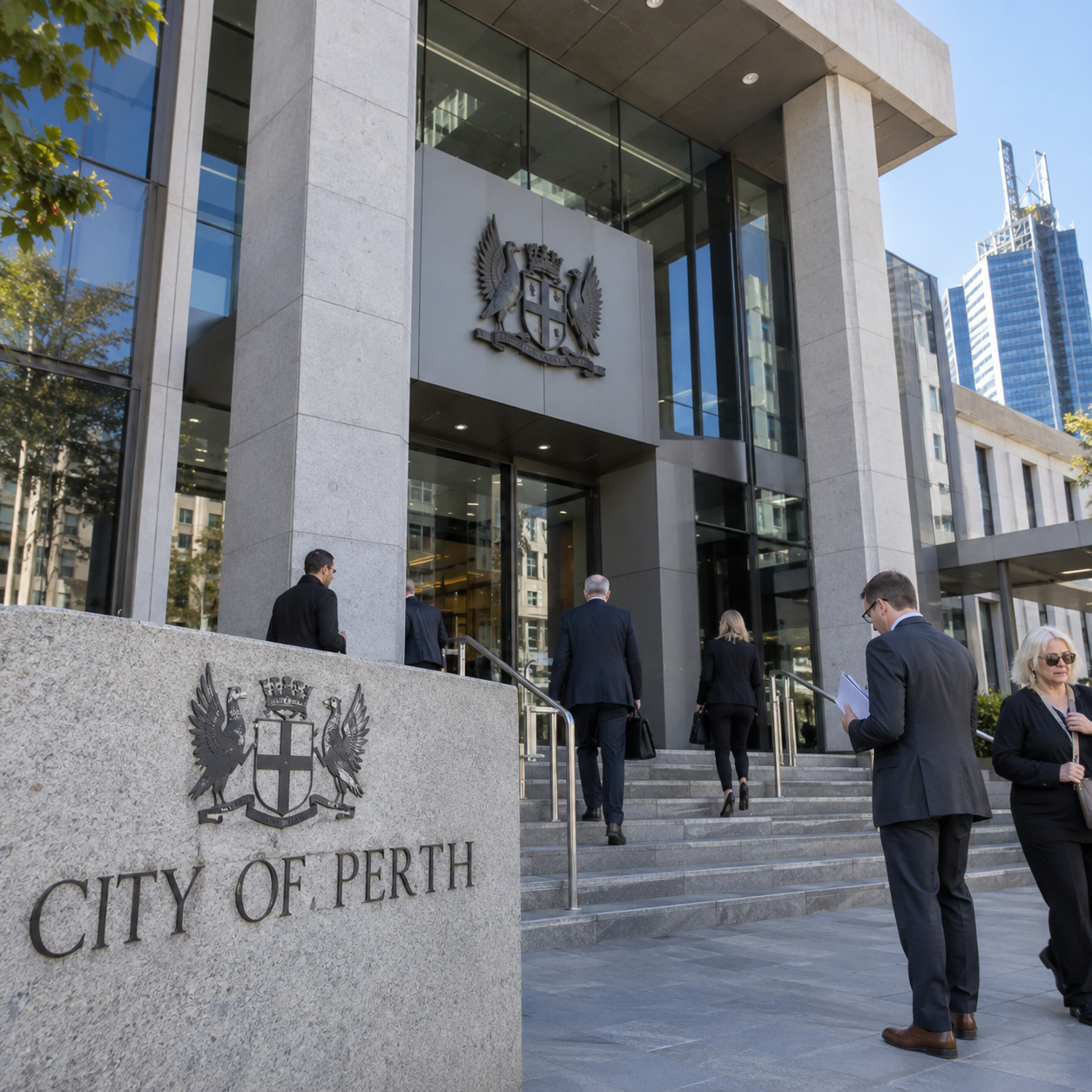
Inspector Tony Brown announced the inquiry after considering a report by Local Government Monitor Carol Adams, who spent months observing the council’s governance practices and relationships.
The inquiry is expected to run for about 12 weeks, with a public report due after the process is completed. It will examine the City of Perth’s operations and affairs, including governance, decision-making, accountability and whether the council is functioning effectively.
The launch does not mean the council or any individual councillor has been suspended or dismissed. Those are potential outcomes that can only arise later if the Inspector makes findings and recommends stronger action under Western Australia’s local government laws.
That distinction is important because Perth has a history of intervention and inquiry, and the current process can easily be confused with the far more dramatic action taken in 2018.
In the latest case, the Inspector first used a monitor rather than immediately moving to a formal inquiry.
Carol Adams, a former Kwinana mayor and lawyer, was appointed in January 2026 to observe governance practices and decision-making at the City of Perth. The monitor could attend meetings, including closed sessions, inspect documents and assess relationships between elected members and the administration.
After the monitoring assignment, Mr Brown provided the council with 12 remedial actions aimed at strengthening governance, accountability and working relationships.
The government says the formal inquiry will now focus on issues including compliance with confidentiality obligations, difficulties in collaborative decision-making and other conduct that may affect good governance.
Since 1 January 2026, 25 complaints involving elected members have been referred to independent Local Government Adjudicators for consideration and determination. A referral is not the same as a finding that a councillor has breached the law or code of conduct.
The Inspector has said the new inquiry will build on the monitoring work rather than start again from scratch.
That is one reason the process is expected to be shorter and cheaper than Perth’s previous major inquiry. The City of Perth says the current inquiry is estimated to cost about $120,000, although the Local Government Act allows the Minister in some circumstances to order a local government to pay some or all of an inquiry’s costs where adverse findings are made.
Ratepayer exposure is therefore one practical issue, but the much larger question is whether the council can demonstrate that its governance has materially improved.
The City has publicly said it will cooperate with the Inspector and work through the 12 actions identified after the monitoring assignment.
Lord Mayor Bruce Reynolds has said he supports independent oversight and wants the process used to improve governance, relationships and culture.
The current council’s response is notable because the City of Perth has experienced a damaging governance history.
In 2018, the entire council was suspended after the state government concluded that the City had suffered serious governance failures. A lengthy inquiry followed, examining relationships between councillors and administration, decision-making, influence, expenses and other governance issues.
The final report released in 2020 contained hundreds of findings and recommendations and described systemic problems in leadership and governance. The previous inquiry cost about $7.2 million, with the bill ultimately falling to the City and therefore to ratepayers.
The current inquiry is not a reopening of that historical case, and it concerns a different council and a newer regulatory framework. But the history explains why fresh signs of dysfunction attract unusually high scrutiny in Perth.
Western Australia’s local government oversight system has also changed.
The Local Government Inspector role commenced on 1 January 2026 as part of reforms intended to provide earlier and more direct intervention when governance concerns emerge.
The Inspector can monitor councils, investigate complaints, issue certain sanctions and begin a formal Inspector’s Inquiry where there is potential for significant dysfunction. Local Government Adjudicators separately assess conduct-breach complaints against individual council members.
Those roles should not be confused. The current City of Perth inquiry is about the operations and affairs of the local government and the effectiveness of its governance. Individual complaint findings are handled through separate statutory processes unless they become relevant evidence within a broader inquiry.
At the end of an Inspector’s Inquiry, a report must set out findings. Depending on those findings, the Inspector may recommend that the council or a council member be suspended or dismissed.
The Minister then has further powers, including the option of establishing an independent inquiry with stronger coercive powers.
None of those later steps has been triggered simply because the inquiry is starting.
The City of Perth says it will continue delivering normal services, projects and priorities while the inquiry runs. For residents and businesses, that is an important practical point: the formal scrutiny does not dissolve the council or stop municipal operations.
What the process does change is the level of external oversight.
The Inspector and staff can require people associated with the local government to attend interviews, answer questions and give evidence. The inquiry can examine records and governance practices more closely than a monitor observing council behaviour.
The 12 remedial actions already given to the City also mean the council will be judged on two tracks at once: what the inquiry discovers about past and current conduct, and whether councillors make the changes the Inspector has already asked for.
That creates a relatively clear test of improvement.
If relationships stabilise, confidentiality obligations are respected and decision-making becomes more collaborative, the City may be able to show that the problems identified through monitoring are being corrected.
If the same patterns continue, the Inspector has publicly indicated he is willing to recommend stronger intervention.
The issue is not simply whether councillors disagree. Robust disagreement is normal in elected bodies. The governance concern arises when conflict prevents decisions being made properly, spills into repeated confidentiality breaches, disrupts relations with administration or undermines the council’s capacity to perform its statutory functions.
That distinction matters for ratepayers because dysfunctional governance can create costs that are harder to measure than an inquiry bill. Delayed projects, repeated legal advice, staff turnover, complaint handling and poor decision-making can all consume public resources.
The current process is therefore intended to determine whether Perth’s problems are primarily behavioural and capable of correction, or whether they amount to a deeper governance failure requiring formal intervention.
The inquiry begins on 21 September and is expected to be completed within 12 weeks. The City says the Inspector’s findings will be made public.
Until those findings are released, claims that the council is about to be dismissed go beyond the evidence.
What is confirmed is that the state’s new watchdog has moved from monitoring to a formal inquiry, has identified 12 remedial actions and now has a statutory process to decide whether more serious steps are necessary.
The new Inspector regime was deliberately designed to intervene earlier than the older system. A monitor can be placed inside a council before dysfunction reaches the point where the state is considering suspension, giving the regulator a chance to observe behaviour and prescribe remedial action while the elected body continues operating.
That sequence is exactly what has happened in Perth. The monitor’s work did not end with a simple warning: it produced 12 specific actions and was followed by the Inspector’s decision that a formal inquiry was still necessary.
The City says it accepts the oversight and will cooperate. That matters because an inquiry is not only an investigation of past conduct. The council’s behaviour during the inquiry — whether members follow confidentiality rules, complete the remedial actions and improve working relationships — can itself become evidence of whether governance is improving.
The Inspector’s powers also sit within a system that separates institutional governance from individual conduct complaints. Independent adjudicators can determine complaints against councillors, while the Inspector examines whether the local government as a whole is capable of effective decision-making. The two streams can overlap factually without being the same process.
For ratepayers, that structure is intended to avoid waiting until dysfunction becomes so severe that a full suspension is the only practical option. Whether it works in Perth will be an early test of the reforms introduced in 2026.
For the City of Perth, that means the next three months will be a practical test of whether a council with a long history of governance controversy can demonstrate that it can work together under the new oversight regime.