Australian Off Road Campers, a long-established Sunshine Coast manufacturer known for premium off-road campers and caravans, appears to have ceased operating at its Caloundra site, leaving owners and customers looking for clear information about servicing, orders and the future of the brand.
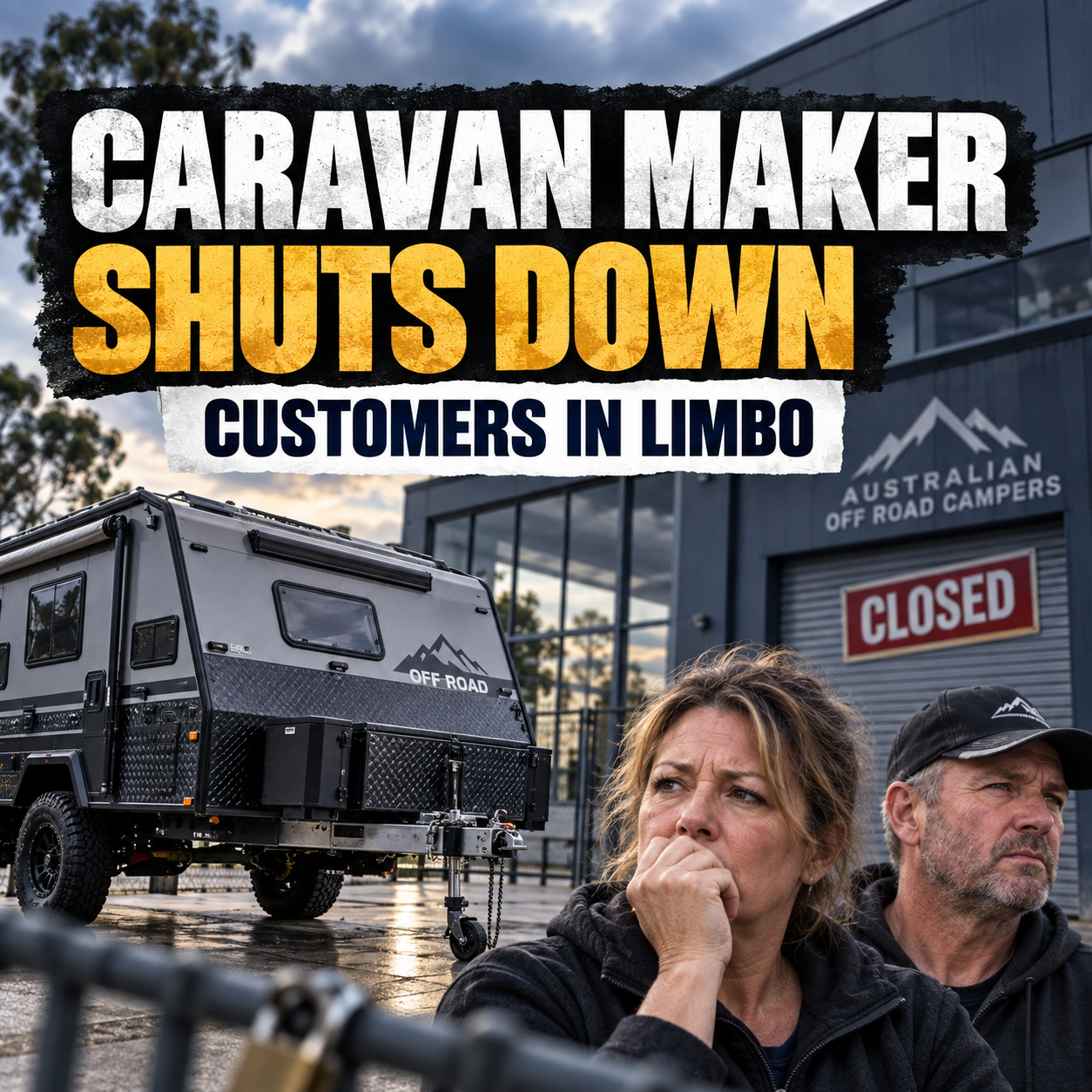
The first public signs of trouble emerged through the Australian off-road touring community late last week. A post on the ExplorOz forum said the company’s website, forum and social media presence had gone offline and that its phone lines were no longer connected. The poster said the Caloundra yard appeared largely empty and that a person at the gate told him the business had shut.
Other forum users reported seeing messages from staff indicating that operations had finished. Those community accounts are not a substitute for a formal company statement, but they are consistent with reports that the site stopped normal trading during the week.
At the time of writing, there has been no detailed public explanation from the company setting out what has happened, whether the shutdown is permanent, or how existing customers with open orders, warranties or service needs will be handled.
That lack of information is what makes the situation particularly difficult for owners. Australian Off Road has built a large customer community over more than two decades, and its products are designed for long-term touring, meaning many vehicles remain on the road years after purchase and continue to rely on parts, technical knowledge and specialist servicing.
The company has been based at 39 Ron Parkinson Crescent in Caloundra and has promoted itself as an Australian manufacturer of off-road campers and caravans. Caravanning Queensland has described the business as operating for more than 20 years and growing from founder Steve Budden’s garage operation into a large purpose-built factory and showroom on the Sunshine Coast.
Until very recently, the company was still promoting products and customer activity online. Archived material from late August showed Australian Off Road posting about owners collecting new campers and travelling around Australia. Its website also continued to advertise models including the Odyssey, Quantum, Quantum+ and Matrix and listed the Caloundra showroom and service contact details.
That makes the apparent closure unusually abrupt from a customer perspective. People who have already taken delivery may want to know who will provide warranty support and specialist repairs. Customers with vehicles in production or deposits paid will want to know the status of their orders. Suppliers and service agents may also need clarity about parts and ongoing arrangements.
There is an additional corporate detail that has attracted attention. Australian Business Register records show a new company, AOR Holding Co Pty Ltd, became active on 3 September 2026. The same record lists business names including AOR Service, Australian Off Road, Australian Offroad Campers and Trax Adventure Company from that date.
The existence of that registration does not, by itself, establish what has happened to the previous operating company or what will happen to customer contracts. A new entity can be created for many reasons, including restructuring, asset transfers or future business plans. Without a statement from the companies involved, it would be premature to assume that the registration means the brand will continue under a new structure.
The older Australian Off Road business names are also associated in public ABN records with a separate entity that has operated for many years. That overlap is likely to add to customer confusion until the company or its advisers explain which entity is responsible for existing orders, warranties and service obligations.
For customers, the legal position can depend heavily on what has actually occurred. A business simply stopping normal operations is different from entering voluntary administration, liquidation or being sold to another company. Each scenario creates different rights and processes for customers and creditors.
There is currently not enough verified public information to describe the company as being in liquidation or administration. The available evidence supports saying that normal operations appear to have stopped and that customers are seeking information, but a formal insolvency status should not be assumed unless it is confirmed by the company, ASIC records or an appointed administrator or liquidator.
That distinction matters especially for people who have paid deposits. If a company enters external administration, customers with money owing or unfinished products may become creditors and may need to lodge claims. If a business is transferred to a new owner, contracts and warranty obligations may be treated differently depending on the sale terms and the legal entity involved.
Owners who already have their campers face a separate issue: access to parts and technical support. Australian Off Road promoted a network of approved service agents around the country, and some independent specialists may still be able to work on the vehicles. But manufacturer-specific components, drawings, warranty approvals and proprietary knowledge can be harder to replace if the original business is no longer operating.
The uncertainty also arrives during a difficult period for parts of Australia’s caravan and recreational vehicle industry. Several manufacturers and dealers have faced financial stress in recent years, with rising production costs, interest rates and changing consumer demand creating pressure across the sector.
That broader history is one reason customers are likely to be sensitive to any sudden closure. When a caravan manufacturer fails, the consequences can extend beyond shareholders and staff to buyers who have paid large deposits for vehicles that may take months to build.
Australian Off Road has occupied a strong niche in that market. Its vehicles are marketed at customers travelling long distances into remote parts of Australia, and the brand has developed a loyal owner base around the idea of durable, locally built products.
The company was also still discussing future product development earlier this year. Its website published an update saying orders for several models would close for a period while the team focused on new projects and production planning. It also promoted a South Australian sales and service partnership during 2026.
That recent activity makes the speed of the apparent shutdown harder for customers to interpret. A manufacturer can reduce product lines or restructure without disappearing, but disconnected phones, inactive online channels and reports of an empty site understandably raise more serious questions.
Until a formal explanation is issued, customers should keep copies of contracts, invoices, deposit receipts, warranty records and correspondence. Those documents can become important if there is a change in ownership, a dispute over an order or a formal insolvency process.
People with outstanding finance arrangements may also need to contact their lender, while customers who paid by credit card may have separate options depending on the transaction and the timing. The appropriate step will vary by individual contract, so customers should avoid assuming that another owner’s outcome will automatically apply to them.
The next significant development is likely to come from a formal corporate filing or statement explaining whether Australian Off Road has permanently ceased trading, been restructured, transferred assets to another entity or entered an insolvency process.
For now, the clearest picture is that the long-running Caloundra operation appears to have stopped normal business and that a new company carrying several familiar AOR business names was registered shortly before the shutdown reports emerged. What that means for existing customers remains unanswered.
Given the company’s long history and the number of Australian travellers who own its campers and caravans, those answers will matter well beyond the Sunshine Coast. Owners are not only asking whether a factory has closed; they are asking who now stands behind the products already on the road and the orders that may still be in the system.