Calls for a national royal commission into violence against women and children have intensified after several alleged domestic violence incidents in New South Wales, but Treasurer Jim Chalmers says the federal government is not currently considering a new inquiry and is instead focused on funding services and prevention.
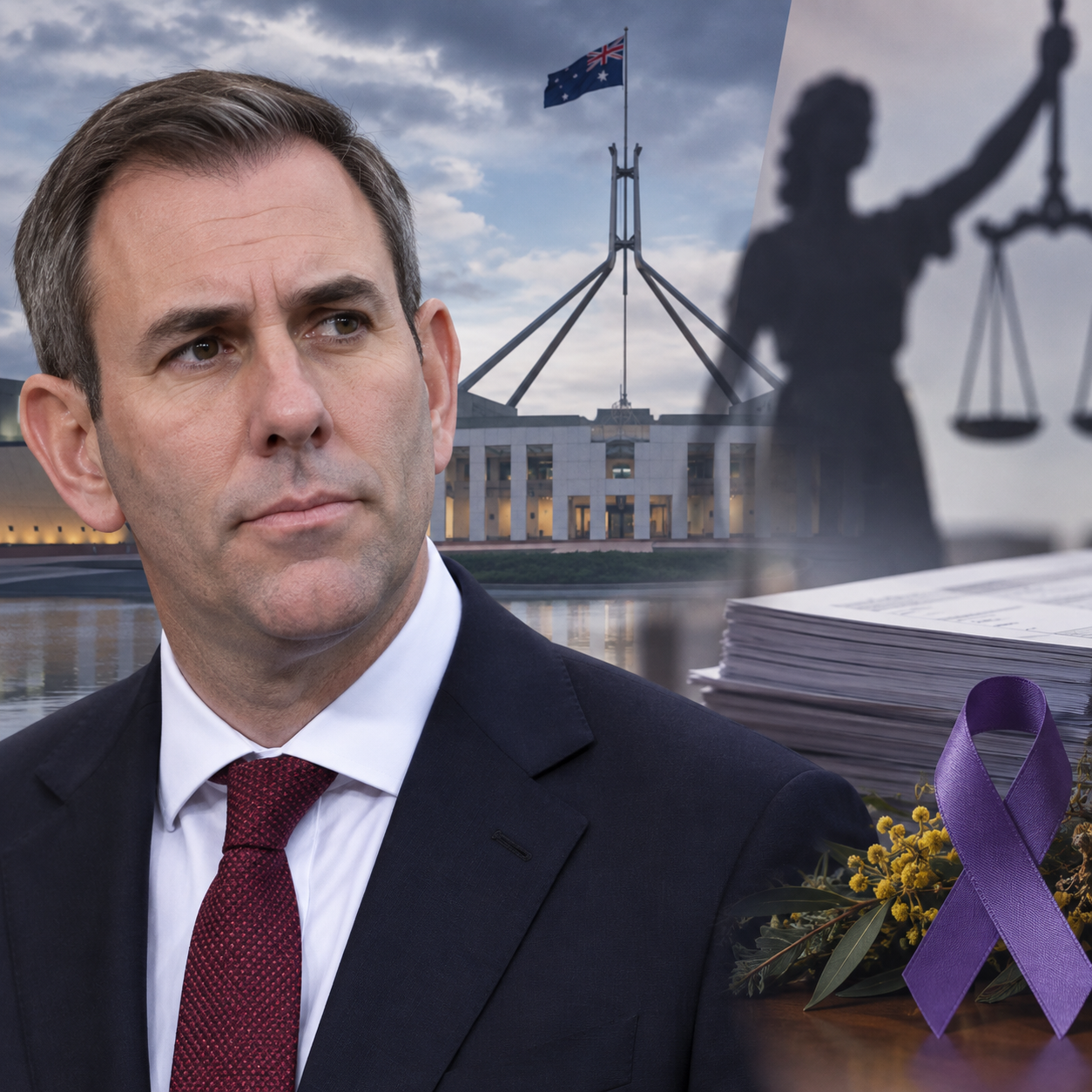
Chalmers told the ABC that the recent incidents were horrific and that the government accepted the seriousness of the problem. He said the current approach was to increase resources for family and domestic violence and to address the conditions that can contribute to abuse, rather than establish another royal commission at this stage.
The renewed call for an inquiry has come from advocates who argue that the scale and persistence of domestic, family and sexual violence justify a national examination of whether governments, police, courts, health systems and support services are working together effectively. A royal commission can compel evidence, examine institutional failures and recommend structural changes, but it does not itself deliver frontline services or guarantee that recommendations will be implemented.
That distinction is at the centre of the current policy argument. Supporters of a royal commission say an independent national inquiry could identify gaps that are missed when different agencies and jurisdictions review themselves separately. The federal government’s position, as outlined by Chalmers, is that the immediate priority should remain practical resources and prevention measures already being delivered.
The debate is taking place against a severe national backdrop. The Australian Institute of Health and Welfare reports that about one in four women and one in 14 men have experienced physical and/or sexual violence from an intimate partner since the age of 15. Those figures come from national survey data and describe experiences over a lifetime, not current-year incident rates, but they show why domestic and family violence remains a major public policy issue.
Homicide data underline the most serious end of the problem. AIHW, drawing on the Australian Institute of Criminology’s National Homicide Monitoring Program, reports that in 2024–25 an average of one woman was killed by an intimate partner every 11 days and one man every 26 days. Domestic homicide victims made up about two-fifths of all homicide victims in that period.
Those statistics should not be used to draw conclusions about any current alleged incident. Police investigations and court processes must establish the facts in individual cases. The immediate political debate is about the adequacy of the broader response, not about assigning responsibility before investigations are complete.
Australia already has a national policy framework aimed at ending violence against women and children, alongside state and territory strategies, specialist services, policing responses and legal reforms. The question raised by advocates is whether those existing structures are sufficiently coordinated and whether governments are learning quickly enough from recurring failures.
A royal commission is one possible mechanism for answering that question. It can hear from survivors, frontline workers, police, courts, health services, researchers and governments. It can obtain documents and examine decisions that might otherwise remain dispersed across agencies. It can also produce a public record that creates pressure for governments to respond.
However, establishing a royal commission also takes time and resources. Terms of reference must be negotiated, commissioners appointed, evidence gathered and hearings conducted. Recommendations may arrive months or years later. Governments that oppose a new inquiry often argue that known problems should be addressed immediately rather than waiting for another large review.
Chalmers’ comments reflect that second view. He said the government had chosen to put more resources into child and family violence and domestic violence, while also trying to address underlying factors. He referred to housing security and online misogyny as examples of issues the government sees as part of the wider prevention challenge.
That approach does not resolve the argument over whether an inquiry could add value. Advocates can reasonably argue that service funding and system-level investigation are not mutually exclusive. Governments can equally point to the need to avoid duplicating existing reviews and to direct limited administrative capacity toward implementing reforms already identified.
The effectiveness of either path depends on detail. More funding has to reach services that can use it, workforce shortages have to be addressed, victims need safe housing options, police and courts need workable risk-assessment systems, and information sharing has to function across agencies. A royal commission, if established, would still need governments to implement those practical changes.
There is also a federalism problem. Policing, criminal law, courts and many frontline services are largely state and territory responsibilities, while the Commonwealth controls major funding streams, social security settings and national policy coordination. A national inquiry could examine those boundaries, but any response would still require cooperation across multiple governments.
Recent data work shows how complex the system already is. AIHW’s family, domestic and sexual violence integrated data system now links information across several government datasets and had identified more than 850,000 people who experienced or used family, domestic or sexual violence between 2010 and 2024 in the linked population. The project is intended to improve understanding of how people interact with services over time.
Better data can help governments identify patterns, but it cannot replace frontline judgement or individual safety planning. Nor can national statistics predict the circumstances of a particular person or family. The policy challenge is to combine evidence about broad risk with services capable of responding to immediate danger.
For the federal government, the immediate question is whether pressure for a royal commission grows beyond advocacy groups and becomes a broader parliamentary or public demand. Chalmers’ comments indicate that Cabinet is not currently moving in that direction. That could change if new evidence emerges or if states and territories push for a national process, but no such decision has been announced.
For advocates, the next step is likely to be demonstrating what a royal commission could examine that existing national plans, reviews and data programs are not already addressing. Clear terms of reference would be essential if the aim is to avoid duplicating past work and instead focus on unresolved institutional problems.
The current debate should therefore be understood as a disagreement over method, not over whether domestic and family violence is serious. The government says it is prioritising resources, prevention and existing programs. Advocates calling for a royal commission argue that the persistence of violence warrants a deeper national examination of how the system operates.
AIHW’s linked family, domestic and sexual violence data system shows how broad the service footprint has become. By June 2026 it contained linked records for more than 850,000 people who had experienced or used family, domestic or sexual violence between 2010 and 2024. The figure is not a prevalence estimate for the whole population, but it illustrates how many systems — health, housing, income support and specialist services — can become involved.
Hospital data also show the gendered pattern of serious partner assault. AIHW reports that almost nine in 10 hospitalisations involving treatment for assault by a partner in 2024–25 were for females. That does not diminish male victimisation, but it is one reason national policy has focused heavily on violence against women while retaining services for all victim-survivors.
Any national inquiry would have to decide whether its purpose is to review known problems, investigate failures in particular institutions, or test whether the existing national plan is being implemented effectively. Without a tightly defined scope, a royal commission could repeat work already done by specialist reviews. With a focused scope, advocates argue it could expose gaps that sit between jurisdictions and agencies.
People affected by domestic, family or sexual violence can contact 1800RESPECT on 1800 737 732 for confidential support. In an emergency, call Triple Zero.
National homicide data also show why advocates focus on the most severe consequences while still insisting on careful language around current cases. In 2024–25, 98 of roughly 240 homicide victims were classified as domestic homicide victims, according to AIHW’s summary of the National Homicide Monitoring Program. Forty-six of those victims were killed by an intimate partner. Those figures describe confirmed historical classifications; they do not determine the facts of any alleged incident now under investigation.
Any future decision will need to weigh urgency against the time required for an inquiry, and system learning against the risk of delaying action that is already known to be needed. In the meantime, the alleged incidents that prompted the latest calls remain matters for police and, where charges are laid, the courts. They should not be treated as proven facts beyond what authorities have established.