More than 800,000 bees are now reported to have been stolen from beekeepers across Far North Queensland, expanding an investigation that first emerged after commercial hives were found emptied on the Atherton Tablelands.
Current reporting says 44 colonies belonging to three beekeepers have been affected.
The thefts have occurred during an important pollination period, increasing the financial impact beyond the value of the bees themselves.
No offender has been publicly identified.
Earlier reporting described nearly 500,000 bees taken from 41 commercial hives at two Atherton Tablelands sites.
As beekeepers checked additional locations, the reported scale increased to more than 800,000 bees across 44 colonies and three beekeepers.
That progression is important because it shows the investigation is still developing.
The final number could change again as operators inspect more remote hive sites.
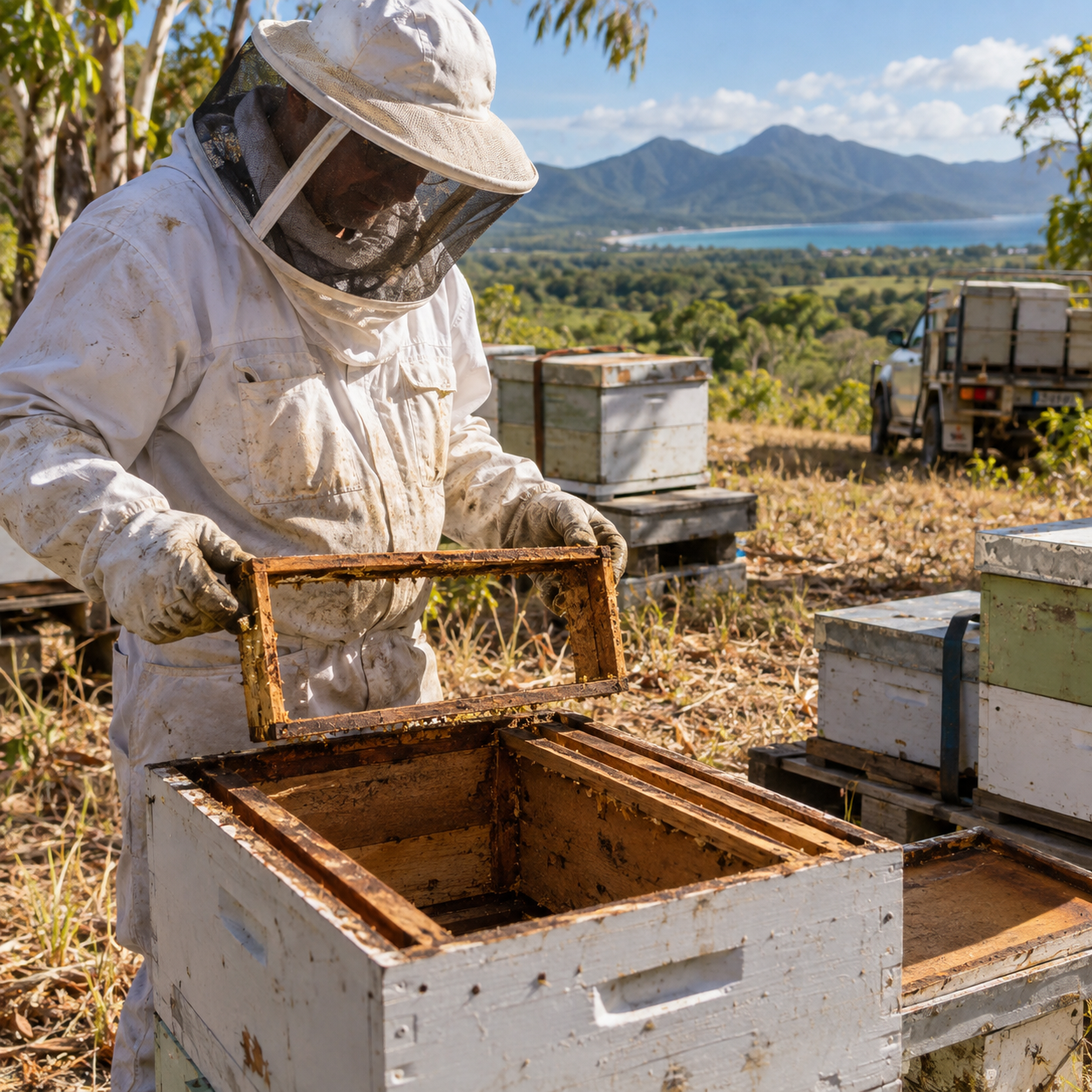
In the initial thefts, beekeepers reported that frames containing bees, brood and queens had been removed while outer hive boxes were left behind.
That method is significant because it can make the theft less obvious from a distance.
A hive box may still appear to be in place even though the living colony and breeding structure have been removed.
Commercial beekeepers often manage many hives across multiple farms, so a theft may not be discovered until the next scheduled inspection.
Queensland investigators have said the method suggests knowledge of commercial beekeeping rather than an opportunistic theft by someone unfamiliar with bees.
Handling frames, queens and brood without destroying the colony requires equipment, protective clothing and some understanding of hive behaviour.
Moving large numbers of frames also takes time and transport.
Those observations are investigative assessments, not proof that any particular commercial operator is responsible.
No person should be accused without evidence.
A commercial bee colony represents years of work.
Its value includes the queen, worker population, brood, frames, hive strength and the beekeeper’s time in building the colony to a productive level.
Replacing a strong colony is not as simple as buying a box of insects.
New colonies need to be established, fed, monitored for disease and built up until they are strong enough for honey production or pollination contracts.
That recovery can take months and may reduce income across more than one season.
Commercial beekeepers in Far North Queensland move hives to farms where growers pay for pollination services.
Avocado, watermelon and other horticultural crops can benefit from managed honeybee activity.
When a beekeeper loses a strong colony shortly before or during a pollination contract, the financial damage includes more than the bees.
The operator can lose the pollination fee, the farmer may lose pollination capacity and future honey production can also be reduced.
That creates a chain of economic consequences across the local agricultural sector.
One beekeeper affected in the earlier stage of the investigation estimated the direct property loss from the emptied hives at up to around $20,000, with additional lost pollination income.
Those figures related to an earlier known portion of the thefts and should not automatically be applied to every colony now reported missing.
Different hives can have different strength, equipment value and contract commitments.
The broader point is that commercial bee theft can quickly become a five-figure business loss before secondary effects are counted.
Farm theft often involves tools, vehicles, fuel or machinery.
Bee theft involves living agricultural assets.
A stolen colony can be moved into another hive system and put to work producing honey or pollinating crops.
That creates the possibility that stolen bees continue generating income for someone else while the original beekeeper faces the cost of rebuilding.
It also complicates recovery because bees themselves do not carry an obvious serial number.
Frames and hive components can sometimes be marked, but colonies can be split, reboxed or moved.
Far North Queensland’s beekeeping industry is already dealing with the threat of varroa mite, a parasite that can weaken and kill honeybee colonies.
Moving bees without proper biosecurity controls can increase the risk of pests and diseases spreading between locations.
That means illegal hive movement is not only a property issue.
It can create additional biosecurity concerns for neighbouring beekeepers and agricultural areas.
Authorities and industry groups place a high value on knowing where commercial hives are located and how colonies move between regions.
Australian beekeepers have spent years responding to the arrival and spread of varroa mite.
The parasite feeds on honeybees and can transmit viruses, reducing colony strength if it is not controlled.
For a beekeeper already spending more time and money on monitoring and treatment, losing productive colonies to theft creates a second major pressure.
Rebuilding after theft also becomes harder when replacement bees must be managed in a changing biosecurity environment.
Pollination hives are often placed on farms, orchards and rural properties rather than inside locked buildings.
They need to be accessible to beekeepers and positioned where bees can reach flowering crops.
That makes conventional security difficult.
Fencing every hive site may be impractical, and cameras need power, connectivity and protection from weather.
Commercial operators may instead rely on site records, branding, GPS trackers on selected boxes, regular inspections and cooperation with landholders.
Removing bees from dozens of colonies is not a quick operation.
Workers would need to open hives, remove selected frames, manage aggressive or defensive bees, place the frames safely into transport boxes and move them without overheating or crushing the colony.
That practical complexity is one reason investigators believe the offenders likely had relevant experience.
But experience alone does not identify a suspect.
Police still need evidence linking a person to the affected sites and stolen property.
The immediate victims are the beekeepers whose colonies were removed, but growers can also be affected.
Many crops rely on adequate insect visitation during a relatively short flowering window.
If hives disappear when flowers are open, replacing them later may not fully recover the lost pollination opportunity.
Poor pollination can affect fruit set, size and overall yield.
That is why rural police have described bee theft as a problem with flow-on consequences for farmers as well as apiarists.
The thefts have been discovered around the avocado pollination season, when strong hives can be especially valuable.
Commercial operators schedule colony movements around flowering periods and contract commitments.
Stealing a colony at that point can therefore cause more disruption than taking the same hive during a quieter part of the year.
The beekeeper loses both a biological asset and a booked income opportunity.
Investigators have urged anyone with information about the thefts to contact Crime Stoppers.
Useful information could include unusual vehicle movements near hive sites, people offering large numbers of colonies or frames for sale, or equipment appearing at a property without a clear explanation.
People should not confront suspected offenders or make public accusations.
Because commercial beekeeping naturally involves moving hives between farms, seeing bees on a truck is not by itself evidence of a crime.
The thefts are likely to renew discussion about ways to identify commercial hive components and monitor movements.
Branding boxes and frames, maintaining accurate apiary records and using trackers on selected equipment can help, but each method adds cost.
There is also a balance between security and practicality because hives are moved frequently during pollination and honey seasons.
Industry responses will need to be workable for both large operators and small beekeepers.
Current reporting puts the known toll at more than 800,000 bees from 44 colonies belonging to three beekeepers in Far North Queensland.
Earlier police reporting had documented nearly 500,000 bees removed from 41 hives at two Atherton Tablelands locations, and further checking has expanded the known scale.
Police believe the method points to people with commercial or semi-commercial beekeeping knowledge, but no offender has been publicly identified.
The thefts have affected pollination operations and created losses that extend beyond the replacement cost of the colonies.
Until police identify and charge someone, the story is about a large, specialised agricultural theft under investigation — not a proven allegation against any named beekeeper or business.