Queensland Premier David Crisafulli has declined to disclose the cost of a plan to preserve a full-sized Gabba cricket wicket and eventually move it to Brisbane’s new Victoria Park stadium after the 2032 Olympic and Paralympic Games.
The proposal is part of the state’s wider Games infrastructure program, which has a $7.1 billion funding envelope. That figure is not the price of the wicket project itself. The specific cost of building, monitoring, transporting and installing the wicket has not been publicly released.
The distinction matters because the wicket transfer is a relatively small but politically visible component of a much larger public infrastructure program. It combines sporting heritage, engineering complexity and public spending, making the lack of a disclosed project cost an obvious accountability question.
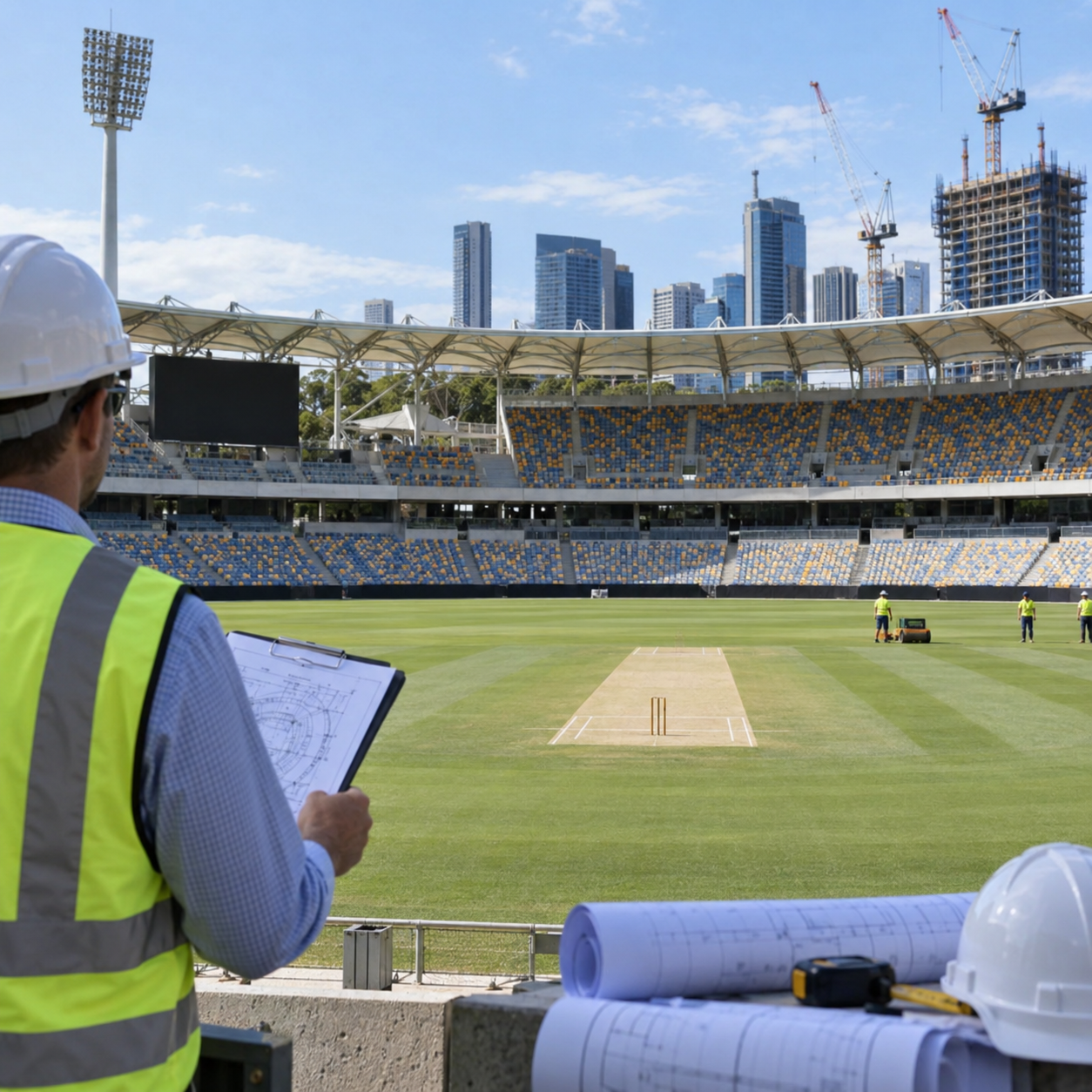
A new full-sized wicket tray is set to be installed alongside the existing wicket block at the Gabba. The tray is intended to replicate key characteristics of the current surface, including its dimensions, clay base, soil and turf.
The new wicket will be monitored and trialled over about 18 months using practice and domestic cricket before the longer-term relocation.
After the 2032 Games, the plan is for the tray to be transported to the new 63,000-seat Victoria Park stadium, which is expected to replace the Gabba as Brisbane’s main major cricket venue.
Stadiums Queensland has said the tray system should also provide flexibility at the new stadium by allowing the ground to switch between cricket and other sporting or entertainment uses.
When asked about the cost, Crisafulli said the government knows what the project is expected to cost but would not provide the figure publicly.
He said the expenditure would sit within the $7.1 billion Games infrastructure funding envelope and argued that releasing a figure too early could weaken the state’s position in the market when contracts are negotiated.
That argument reflects a common tension in public procurement. Governments often say early estimates can become an anchor for suppliers or can move before design and transport details are finalised. Opposition parties and public-accountability advocates, however, can argue that taxpayers deserve enough information to assess whether a project represents reasonable value before money is committed.
In this case, the government has not said the wicket transfer will cost $7.1 billion. The $7.1 billion is the broader Games infrastructure envelope. Any reporting that merges the two numbers would materially overstate the scale of the wicket project.
The Gabba has a distinctive place in Australian cricket, particularly as a traditional early-summer Test venue. Its pitch characteristics have long been associated with pace, bounce and conditions familiar to Australian players.
The government’s stated aim is to preserve some of that cricket identity when major matches move to Victoria Park.
Crisafulli has argued that carrying the Gabba wicket into the new venue could strengthen Brisbane’s case to host the first Test of the Australian summer and preserve continuity for players and fans.
Australian batter Marnus Labuschagne has also publicly supported the value of retaining the Gabba’s pitch characteristics, pointing to the advantage Australian teams have historically enjoyed there.
That sporting rationale explains why officials see the project as more than simply moving a patch of turf. A high-level cricket wicket is an engineered playing surface whose composition, drainage, preparation and behaviour can be difficult to reproduce from scratch.
A professional cricket wicket is built through layers of soil, clay, turf and drainage systems. Its playing behaviour is shaped over time by compaction, moisture management, grass selection and maintenance.
Transporting a prepared wicket tray therefore requires more than loading turf onto a truck.
The tray must be designed to remain structurally stable, be moved without damaging the soil profile, fit the new ground’s drainage and field systems, and then be reintegrated into a stadium that must also accommodate other sports and events.
Officials have indicated trucking is the likely transport method. The final movement is still years away, so transport logistics, route planning and installation methods may change before the post-2032 relocation.
That uncertainty is one reason a final cost may vary, but it is also why the public may want to know what level of contingency is included in the budget.
The wicket plan is only one part of Brisbane’s post-Games sporting transition.
The Gabba will no longer remain the city’s principal cricket stadium after the Games, while the Victoria Park project is intended to become the new centrepiece venue.
That creates a broader set of costs around demolition, construction, transport links, precinct works and venue operations.
The state’s $7.1 billion infrastructure envelope covers the wider Games venue program rather than one stadium feature.
As procurement progresses, the political debate is likely to focus on whether individual project costs can be tracked transparently inside that envelope and whether scope changes remain within the overall budget.
Queensland Labor’s shadow sports spokesperson Grace Grace has supported preserving the wicket while calling on the government to disclose what it will cost.
That position illustrates the narrow dispute at the centre of the story. There is not necessarily a major argument over whether the wicket should be retained; the immediate disagreement is over transparency.
For the opposition, the question is whether a government that says it knows the expected cost should tell the public now.
For the government, the argument is that publishing an early estimate could affect negotiations and that completed-project costs will eventually be disclosed.
Both positions can be tested as procurement advances: whether withholding the figure actually protects value, and whether later disclosure provides enough accountability to assess the decision.
Large infrastructure programs often experience changes between concept design and delivery.
Costs can move because of construction inflation, labour availability, design changes, site conditions, transport requirements and contract risk allocations.
An early estimate is therefore not the same as a final bill.
But estimates still matter because they allow the public, parliament and auditors to compare what was expected with what was ultimately spent.
Without a baseline, it can be harder to tell whether a project has stayed on budget or whether its scope has expanded substantially.
That is the accountability issue around the wicket project: not an allegation that the spending is improper, but a question about when enough financial information should be released to evaluate it.
The 18-month monitoring period gives Stadiums Queensland time to test whether the wicket tray performs as intended before it is relied upon as part of the long-term venue plan.
Ground staff can assess how the surface responds to preparation, match wear, weather and movement in and out of the playing area.
If the tray does not reproduce the desired characteristics, there is still time to adjust the soil profile, turf or maintenance process well before the move to Victoria Park.
That makes the trial a technical risk-control measure as well as a symbolic exercise.
The next meaningful details will be the procurement process, the contracts attached to the tray and transport work, and any future budget updates that identify the wicket project separately.
It will also be important to see whether the project remains within the Games infrastructure envelope without requiring additional funding.
Once contracts are signed, the government may have less reason to argue that cost disclosure could distort the market. That will increase pressure for a clear figure.
Until then, the precise position is straightforward: Queensland plans to preserve a full-sized Gabba-style wicket and move it to Victoria Park after the 2032 Games; the premier says the cost will come from the $7.1 billion Games infrastructure envelope; and the government has declined to disclose how much the wicket project itself is expected to cost.
That is a public-spending transparency story, not evidence that the entire $7.1 billion is being spent on a cricket pitch.
The government’s strongest argument for withholding the figure is that tenders and negotiations are still sensitive. That rationale weakens once key contracts are awarded. At that point, Queenslanders should be able to compare the approved scope, contracted amount and any later variations against the original Games budget. If the cost remains bundled indefinitely inside the $7.1 billion envelope, it will be difficult to assess whether the wicket transfer delivered value on its own terms. Clear post-contract disclosure would let the public separate legitimate procurement confidentiality from permanent opacity.