Property developer Jean Nassif has appeared remotely from Beirut before the New South Wales Independent Commission Against Corruption, giving evidence in one of the most closely watched stages of Operation Rosny as the watchdog examines allegations involving political donations, Liberal Party factional activity and efforts to secure political outcomes.
After Monday’s evidence, Nassif was expected to return to the witness box on Tuesday afternoon as the public inquiry continued. He has denied paying bribes and has disputed claims that money was offered to secure political outcomes.
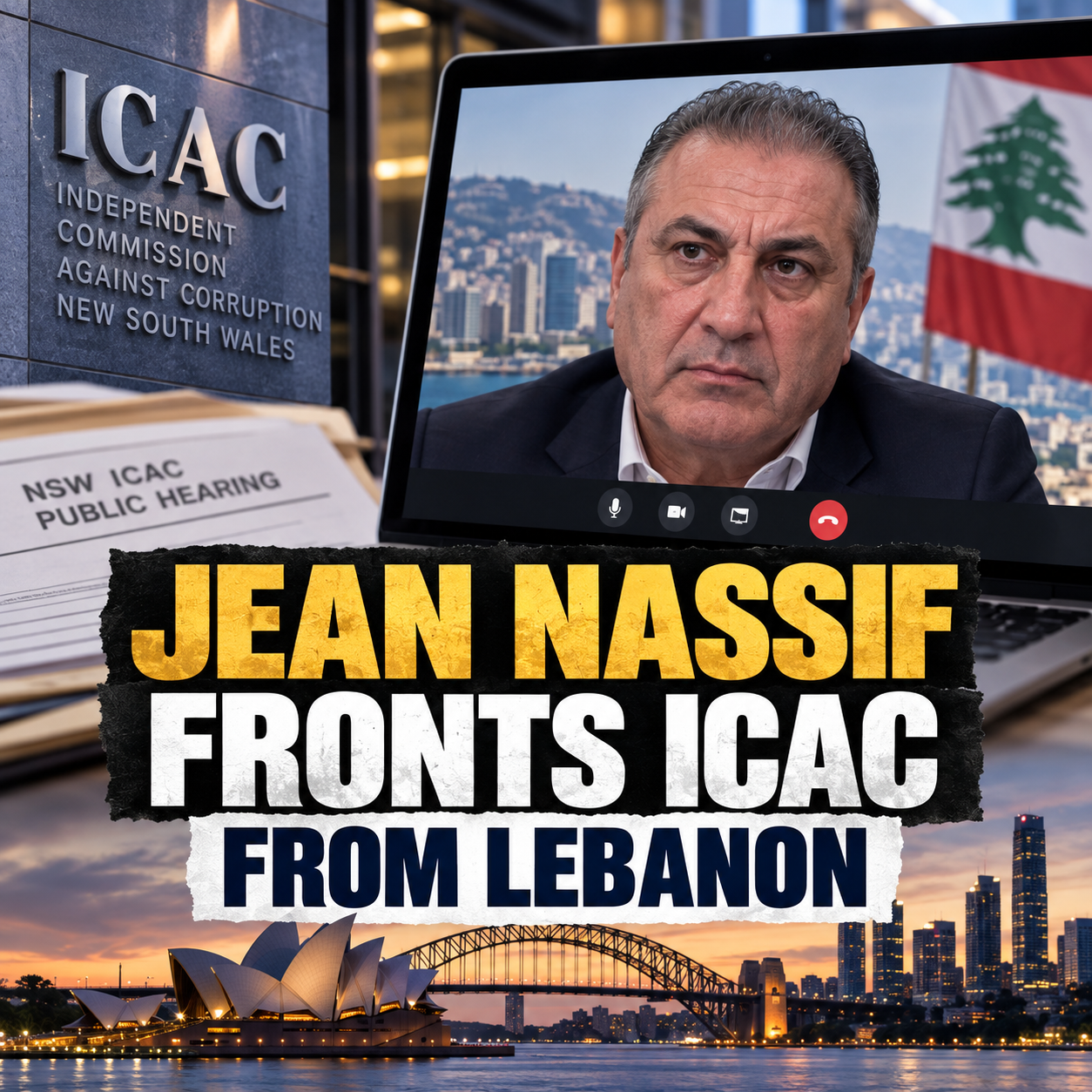
Nassif gave evidence by video link from Lebanon on Monday, facing questions about payments and relationships that have become central to the inquiry. The commission is investigating whether people associated with the NSW Liberal Party solicited or received political donations from prohibited donors, whether money was channelled through other arrangements to avoid electoral funding rules, and whether donations were connected to attempts to advance political or commercial interests.
The hearing is significant because Nassif has been a central figure in the inquiry from its earliest stages, but much of the public evidence until now has come through phone intercepts, documents and testimony from other witnesses. His appearance gave the commission the opportunity to put some of those allegations and recorded conversations directly to him.
Guardian Australia reported that Nassif denied corrupt political payments during his evidence and disputed suggestions that money was provided in exchange for political outcomes. News.com.au reported that he acknowledged making payments to figures connected with the NSW Liberal Party but said he had been pressured to keep contributing and believed he was being misled about what political operatives could deliver.
The commission has not made findings of corrupt conduct against Nassif or the other people whose conduct is being examined. Operation Rosny remains an inquiry, and allegations aired in public hearings are not findings of guilt.
The investigation reaches back over several years and focuses on a complicated network of political fundraising, factional organising and business interests. ICAC has said it is examining whether donations were sought or made in breach of the Electoral Funding Act, including donations associated with prohibited donors and payments that may have been disguised or channelled through third parties.
Property developers are prohibited political donors in New South Wales, a restriction designed to reduce the risk that development interests can use political contributions to influence planning or government decisions. That makes the source and purpose of money allegedly connected to Nassif especially important to the inquiry.
ABC News reported earlier in the public hearings that counsel assisting the commission alleged Nassif wanted to use political relationships to improve his influence within government, including in relation to development matters and people he regarded as obstacles to his business. The inquiry has heard allegations that money linked to Nassif or his company was intended to help recruit or renew Liberal Party members and strengthen a right-wing faction within the party.
One of the most striking parts of the evidence has been a series of intercepted phone calls. Recordings played to the commission have captured Nassif speaking in expansive terms about his political influence. In one previously reported call, he referred to former premier Dominic Perrottet as his “boy”. In another, the commission heard him offer $100,000 in a discussion about a Liberal preselection. Dominic Perrottet, who referred allegations to ICAC while he was premier, is not accused of wrongdoing.
During Monday’s evidence, reports from the hearing said Nassif was challenged over other recorded claims about the amount of political power he believed he held. He sought to play down some of those statements, describing them as talk made in frustration rather than proof that he actually controlled political outcomes.
That distinction is now one of the questions the commission must work through. Political boasting can be exaggerated, but ICAC is not examining the language in isolation. It is testing the recorded conversations against payments, company records, witness evidence and the conduct of political operatives during the period under investigation.
Among the names that have featured in the inquiry are former Liberal operatives Jeremy Greenwood and Christian Ellis, as well as members of the Perrottet family. ABC News reported earlier in the inquiry that counsel assisting expected evidence to show Greenwood, Ellis and Charles Perrottet anticipated receiving a combined $2 million from Nassif. The commission is examining whether money was connected to branch recruitment, factional influence or promised political outcomes. Those allegations remain contested.
Greenwood has denied suggestions that he was extracting money from Nassif by promising political outcomes. Previous evidence also showed tensions over payments, including messages in which Greenwood complained about delays in receiving money. ICAC has been examining whether lobbying and government-relations arrangements were genuine commercial services or whether any payments were being used to conceal political donations.
The inquiry has also looked at claims involving efforts to damage the careers of political or regulatory figures. Former NSW building commissioner David Chandler and former minister David Elliott have repeatedly appeared in evidence about Nassif’s concerns and the political conversations surrounding his business. The commission is testing whether any attempts to remove or weaken such figures were linked to payments or political support.
Nassif’s evidence is therefore important for more than the question of whether a particular payment was made. It goes to the broader issue of what he believed he was buying, what political operatives believed they were being paid to do, and whether relationships that were described as lobbying, political support or factional organising crossed legal lines.
Operation Rosny began after allegations about political donations and branch activity were referred to authorities, with the public hearings opening in July. ABC News reported that the investigation expanded well beyond the allegations first aired in the NSW Parliament, ultimately covering several groups of alleged conduct involving Liberal Party figures, prohibited donors and local government matters.
The public hearings have also examined separate allegations involving Catholic Schools NSW, hotelier Michael O’Hara and Strathfield councillors. Those matters are distinct from the allegations concerning Nassif, but they form part of the same broad inquiry into whether political funding rules were evaded and whether improper influence was sought.
For voters, the underlying issue is the integrity of a political finance system that depends heavily on disclosure. NSW law places limits on donations and bans certain categories of donors because undisclosed money can create both actual conflicts and the appearance that political access is available to those able to pay for it.
That is also why the language used around the hearings needs to remain careful. ICAC can expose evidence, test witnesses and make findings, but a public hearing is not itself a conviction. Witnesses are being challenged on allegations that may ultimately be accepted, rejected or qualified in the commission’s final conclusions.
Nassif’s remote appearance has nevertheless moved the inquiry into a new phase. Instead of hearing only what others say he wanted, the commission is now able to examine his own account of the money, the relationships and the recorded conversations that have dominated weeks of evidence.
His evidence is expected to be assessed alongside the large body of material already before the commission. The key question is no longer simply whether provocative claims were made in private calls, but whether the documentary trail and conduct behind those claims establish breaches of electoral funding laws or corrupt conduct.
Until ICAC makes its findings, those questions remain open. What is clear is that Operation Rosny has placed the intersection of political donations, factional power and private commercial interests under unusually intense public scrutiny — and Nassif’s evidence from Beirut is now a central part of that record.