Why Politicians’ Pay Rises Always Become About More Than Money
Whenever politicians receive a pay rise, the public conversation rarely begins with the numbers.
Instead, it begins with a much simpler question.
Is this really the right time?
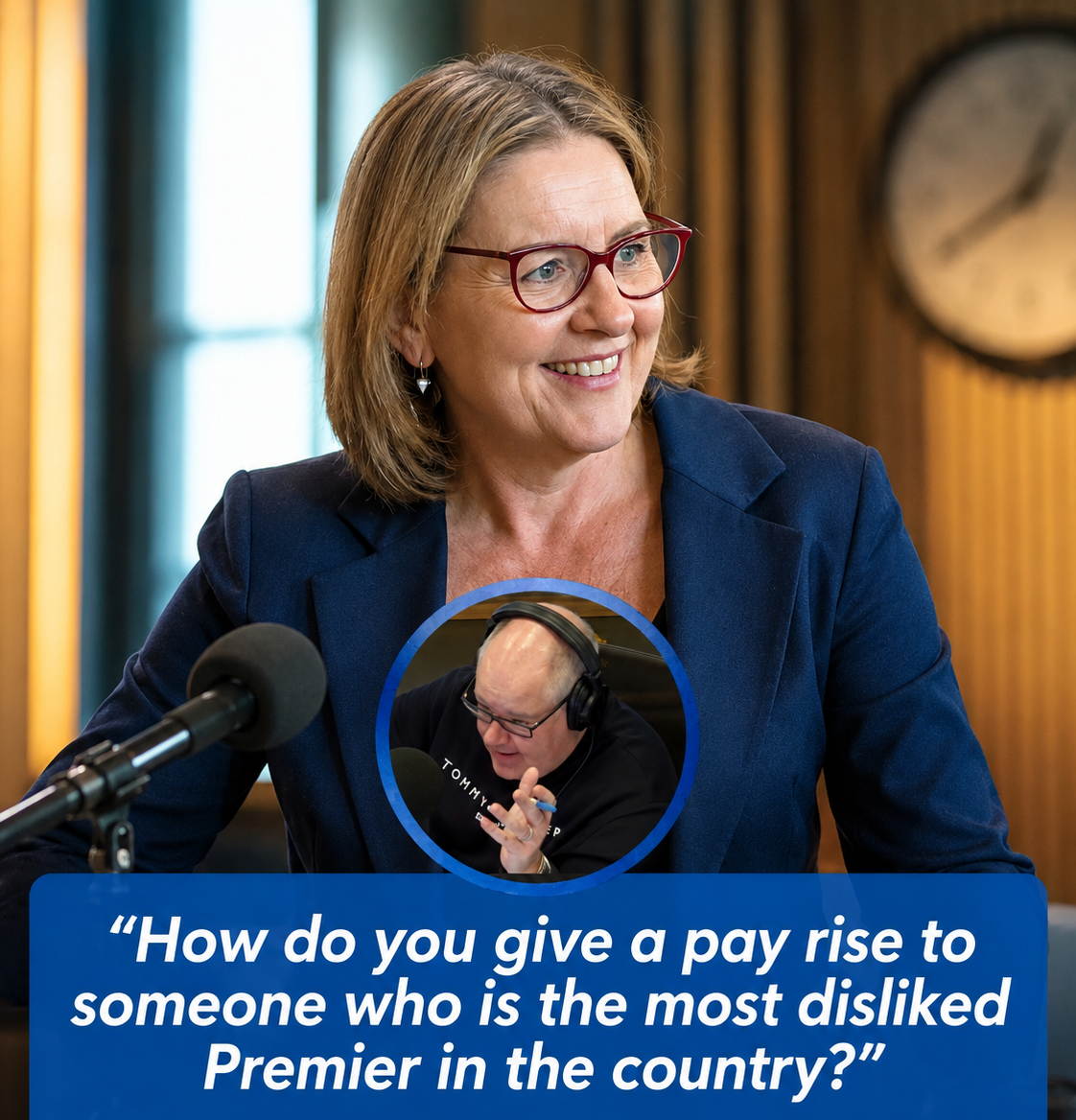
That question has once again surfaced in Victoria after state MPs, including Premier Jacinta Allan, received a salary increase under the state’s remuneration system. The decision has prompted criticism from some commentators, including 3AW host Shane McInnes, who argued the increase would be difficult for many Victorians to accept while households continue facing financial pressure.
The immediate reaction is understandable.
For many Australians, cost of living remains the issue that affects everyday life more than almost anything else.
Mortgage repayments.
Rent.
Electricity bills.
Groceries.
Insurance premiums.
Fuel costs.
These are expenses families think about every single week, so any story involving politicians’ salaries naturally attracts strong public interest.
Yet beneath today’s headlines lies a much broader discussion.
How should elected representatives actually be paid?
Should their salaries rise automatically?
Should governments decide their own pay?
Or should independent bodies make those decisions instead?
In Australia, parliamentary salaries are generally not determined through simple political votes. Most jurisdictions have independent remuneration authorities or tribunals that periodically review salaries using criteria established under legislation. The purpose is to reduce conflicts of interest and create a more transparent process.
Supporters of this approach argue that public office carries significant responsibility.
Members of Parliament spend long hours in Parliament, committee hearings, electorate offices and community events. They oversee legislation, scrutinise government spending and make decisions affecting millions of Australians.
Those who defend independent remuneration systems say competitive salaries are important if governments are to attract capable people from a wide range of professional backgrounds rather than limiting public office to only those who can afford to serve.
Critics see the issue differently.
They argue that regardless of how salaries are determined, perception matters.
When families are cutting discretionary spending, delaying holidays or finding it harder to meet household expenses, any increase for politicians can appear disconnected from everyday reality.
For those voters, the debate is not simply about dollars.
It is about leadership.
Empathy.
Timing.
Public confidence.
This is why similar stories repeatedly generate strong reactions across Australia and overseas.
The actual percentage increase often becomes secondary.
What people debate instead is whether elected representatives understand the economic circumstances facing the communities they represent.
Media commentary frequently reflects those wider concerns.
Talkback radio, television panels and newspaper opinion columns often become places where broader frustrations about government spending, taxation and household budgets are expressed. A pay rise for politicians can therefore become a focal point for much larger conversations about economic management and public accountability.
Different democratic countries deal with parliamentary remuneration in different ways.
Some rely on independent commissions.
Others link increases to public sector wage movements or inflation.
Some conduct annual reviews, while others review salaries only every few years.
Despite these different systems, one outcome remains remarkably consistent.
Public debate almost always follows.
That is because elected representatives occupy a unique position in society.
They are responsible for making decisions about public finances while also being accountable to the taxpayers who fund government. As a result, any discussion about their remuneration inevitably becomes a discussion about trust.
There is also another important consideration.
Governments must communicate clearly how remuneration decisions are made.
When people understand whether an increase resulted from an independent review, a statutory formula or a parliamentary decision, they are better placed to assess the issue on its merits rather than relying solely on the headline.
Reasonable Australians will inevitably hold different views.
Some believe competitive salaries help strengthen democratic institutions by attracting experienced leaders.
Others believe politicians should show greater restraint during periods when many households are under financial pressure.
Both perspectives reflect genuine concerns about good government.
Ultimately, today’s debate extends well beyond one pay rise in Victoria.
It reflects an enduring question that surfaces whenever elected representatives receive higher salaries:
How can governments balance fair remuneration for public office with the expectations of taxpayers who want to know their leaders understand the financial realities facing ordinary Australians?
As economic conditions continue evolving, that question is unlikely to disappear. Whether the discussion centres on Victoria or any other jurisdiction, politicians’ pay will probably remain one of the most closely watched—and most passionately debated—subjects in Australian public life.






