New South Wales Parliament has passed legislation intended to establish a regulated path for terramation, a process that transforms human remains into soil through controlled natural decomposition. The change could eventually offer families an alternative to burial and cremation, but the parliamentary decision should not be mistaken for the immediate opening of commercial services. Detailed health, planning and operational rules still have to be established.
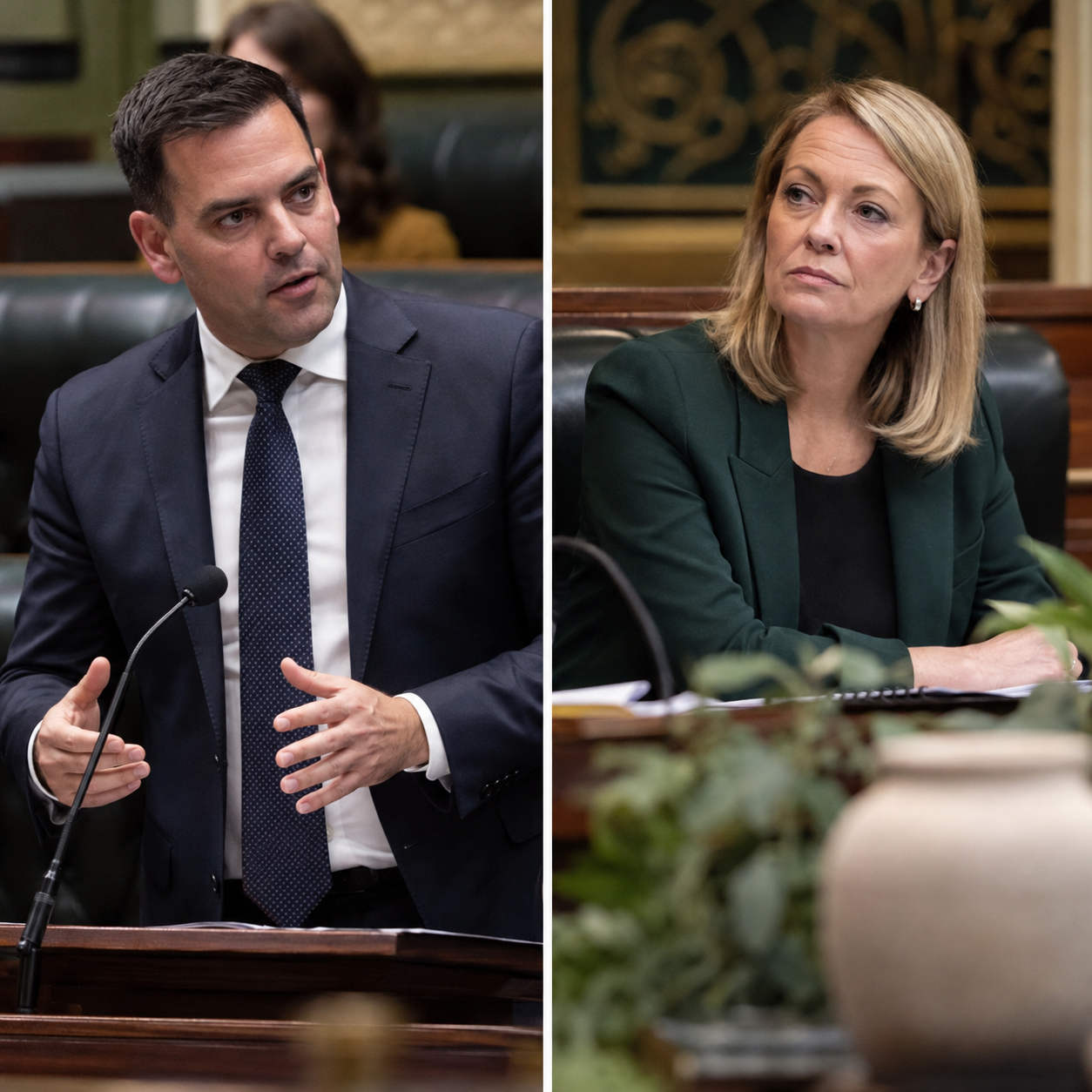
Independent Sydney MP Alex Greenwich introduced the proposal, with Animal Justice Party MP Emma Hurst presenting it in the upper house. The legislation addresses what is also called natural organic reduction. In a controlled facility, a body would be placed with organic material inside a purpose-designed vessel, allowing microbial activity to break down the remains. It is a regulated funeral practice under consideration, not a suggestion that human remains can simply be placed into an ordinary household compost bin.
The parliamentary debate has centred on choice, environmental effects and respect for the deceased. Supporters say terramation could provide an option that uses less land than traditional burial and avoids some of the energy demands associated with cremation. Those are propositions advanced by supporters and should not be inflated into an independently confirmed claim that every facility would have identical environmental performance. The eventual impacts would depend on the equipment, materials, transport and operating standards used.
Hurst’s parliamentary speech explained that the bill would amend the Public Health Act to enable a detailed regulatory scheme. It also deals with standards for facilities, the handling of remains and consumer protections. Such provisions are vital because funeral decisions are made by people who may be grieving and in a vulnerable position. Clear rules about consent, dignity, identification, fees and how remains can be returned to families are as important as the technical method itself.
The requirement to honour the deceased’s wishes is particularly significant. The legislative framework is intended to prevent terramation contrary to a person’s written directions and to ensure individual bodies are treated separately. These safeguards respond to concerns that a new method should not dilute the personal and legal protections associated with burial and cremation. Families need confidence that the service they purchase will follow an identifiable, enforceable procedure from beginning to end.
The legislation also connects with existing cemetery and crematoria consumer rights. New options for memorialisation and the lawful placement of processed remains will require rules that are intelligible to both families and operators. There are genuine questions about whether processed soil can be returned, where it may be placed and how facilities will be monitored. Answers should come from the regulations and consent arrangements rather than assumptions imported from overseas examples.
Another consideration is public health. A controlled decomposition process relies on temperature, monitoring and other safeguards to manage risks associated with human remains. Parliamentary debate recognised that not every circumstance or medical condition necessarily fits a single treatment approach. Regulators will need to decide which cases are eligible and how operators can demonstrate that the finished material meets applicable standards. It would be premature to promise that any remains could be accepted automatically.
The existence of a new choice does not diminish the continuing place of burial or cremation. Australians have religious, cultural, family and personal reasons for preferring different arrangements. Terramation’s supporters argue that it can give some people a way to reflect their values, but opponents or cautious observers may reasonably seek reassurance about dignity, safety and practical oversight. A sound system should allow people to choose freely without suggesting that one funeral preference is morally superior to another.
For funeral providers, the development could eventually create an additional specialist service. That prospect also raises issues of equipment costs, consumer pricing, geographic access and staff training. None of these can be accurately presented as a current commercial offer simply because a bill has passed. Providers will need lawful facilities and operating rules before it is possible to assess real consumer prices or availability.
The parliamentary record also distinguishes legislation passing both houses from the later commencement of detailed provisions. A law can set out a framework while leaving practical requirements to be implemented through regulations and subsequent official steps. Readers should therefore be cautious about a headline implying that families can immediately arrange a terramation funeral anywhere in NSW. The confirmed change is legislative approval for the regulatory pathway.
One reason the terramation decision attracts attention is the cost of conventional funerals. ASIC’s Moneysmart guidance says funerals can cost thousands of dollars, with the final amount depending on the service and arrangements chosen. Expenses can include the funeral director, coffin, transport, certificates, permits, celebrant, cemetery plot or cremation. The passage of the NSW legislation does not provide a quoted price for terramation services, and no honest comparison can be made until providers set out their fees and the regulatory framework is operational. Presenting the practice as an immediately cheaper option would therefore be premature.
For families, the financial decision is rarely about the disposal method alone. A ceremony, transport, memorial arrangements and help with administration may still be wanted irrespective of what happens to the remains. The full cost of a service can rise through choices made under emotional pressure, when relatives have little time or energy to compare options. Consumer information that separates necessary regulatory expenses from optional extras can help families understand what they are purchasing. An additional lawful method has the potential to increase choice, but competition and transparency depend on how the market develops rather than on the legislation’s passage alone.
Moneysmart outlines several ways Australians can plan for funeral expenses: savings, funeral bonds, prepaid arrangements and insurance. Each has different risks and flexibility. A bank account may be accessible for broader needs, while a funeral bond is generally tied to funeral costs. Prepaid plans can fix some arrangements with a provider, but contracts, cancellation terms and portability matter. Funeral insurance may require ongoing premiums and can cost more across a person’s life than the benefit eventually paid. None of these products is specifically designed around an immediately available terramation service in NSW; they are general consumer-finance considerations relevant to end-of-life planning.
That distinction is important because new services can create opportunities for misleading marketing if public interest moves faster than regulation. Consumers should not pay a business on the assumption that it has authority to perform a procedure that is not yet supported by operational approvals. Before entering any future agreement, families would need to check who provides the service, which activities are authorised, what safeguards apply and how cancellation or provider failure would be handled. Those questions are particularly relevant if someone is considering a prepaid arrangement long before the service is needed.
The environmental aspect also warrants careful treatment. Supporters argue that natural organic reduction can be a lower-impact alternative to familiar methods, but the size of any environmental benefit depends on energy use, transport, facilities and the way products of the process are handled. The parliamentary debate does not establish that every future provider will deliver the same environmental outcome. Consumers motivated by sustainability may reasonably want transparent information about resource use and independent standards. Without that, broad claims of being ‘green’ could conceal considerable differences between individual services.
Consent and dignity are equally central. End-of-life choices involve religious commitments, personal beliefs, cultural practices and the wishes of relatives, and a new legal option should not be represented as suitable for everyone. Clear written preferences can reduce uncertainty, while professional advice may be necessary for complex family or estate arrangements. The rules will need to make it apparent who can authorise the procedure, how bodies are handled and how the resulting material is managed. The legislation sets the direction for a regulated option; the operational detail still requires implementation.
The business opportunity, if the framework becomes usable, would not be limited to a facility performing the process. Funeral directors, planners and other service providers may need to adjust training, insurance, contracts and information given to families. Such adjustments would have costs that could influence eventual prices. It would be speculation to estimate a new industry size or to say insurers have already priced the risk. A sounder conclusion is that the industry will need clear guidance before providers and customers can make informed commitments.
NSW’s decision is consequently both a social policy change and a consumer-protection question. Parliament has opened a pathway for another end-of-life practice, while practical safeguards and commercial details remain to be settled. People interested in the choice should distinguish what the law permits in principle from which services are legally and practically available. The likely cost, conditions and personal suitability of any future offering will need to be demonstrated, not assumed from the novelty of the method.
The debate offers a glimpse of the difficult balance in end-of-life policy: broadening choices while making sure safeguards keep pace. For some families, an alternative to conventional arrangements may provide a meaningful way to remember a loved one. For others, the key questions will be practical and cultural. NSW has moved the legislative process forward, but the availability and detailed conditions of terramation services remain dependent on the next regulatory decisions.