Why Political Symbols Often Matter More Than Political Policies
Most people assume elections are won through policy.
Tax plans.
Housing proposals.
Energy strategies.
Economic forecasts.
Yet political history suggests something more powerful is often at work.
Voters do not always respond primarily to policy details.
They often respond to symbols.
To stories.
To personalities.
And to what those personalities represent.
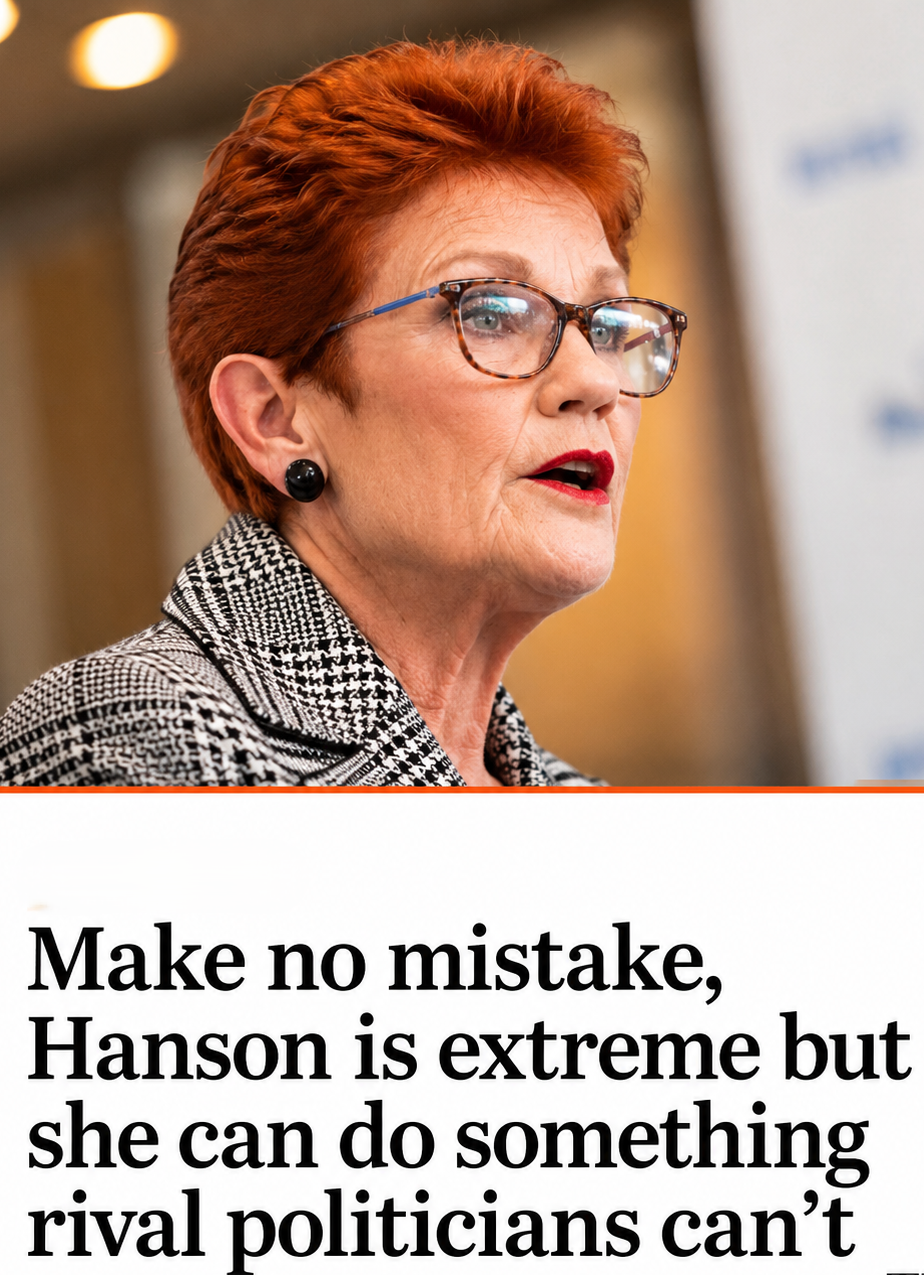
Recent political commentary examining the rise of Pauline Hanson has focused on an important idea: some political figures become larger than their policy platforms. They become symbols onto which voters project broader hopes, frustrations and concerns about the direction of their country.
This phenomenon is not unique to Australia.
Nor is it unique to any particular ideology.
Throughout modern democratic history, political outsiders have frequently gained support not simply because of what they propose but because of what they represent.
For supporters, they can embody change.
For opponents, they can embody disruption.
Either way, they become focal points for broader public emotions.
Political scientists have long observed that voters often make decisions using impressions, trust and identity rather than detailed policy analysis.
Most people do not spend hours comparing legislative proposals.
They instead ask simpler questions.
Who understands my concerns?
Who seems authentic?
Who appears willing to challenge the status quo?
Who seems disconnected from everyday life?
These perceptions can become extremely influential during periods of uncertainty.
When economic conditions are difficult, housing becomes less affordable or confidence in institutions declines, voters often become more receptive to figures who position themselves as challengers rather than defenders of the existing system.
In those circumstances, political symbolism can become more important than technical policy detail.
This helps explain why outsider movements frequently emerge during periods of social and economic change.
The phenomenon has appeared repeatedly across democracies around the world.
Different countries produce different leaders.
Different movements pursue different goals.
Yet the underlying dynamic often looks remarkably similar.
A portion of the electorate begins feeling that traditional political institutions are no longer addressing their concerns.
As dissatisfaction grows, voters become more willing to support alternatives.
Importantly, this does not necessarily mean voters agree with every proposal advanced by those alternatives.
In many cases, support reflects broader sentiment rather than detailed ideological alignment.
A voter might disagree with a politician on several issues while still seeing that politician as a useful vehicle for expressing frustration with the political establishment.
This distinction is often overlooked.
Political debates frequently focus on what politicians say.
Voters are sometimes responding to what politicians symbolise.
That symbolic role can be extraordinarily powerful.
It allows public dissatisfaction to become concentrated in a single figure, movement or campaign.
The result is that political contests often become cultural and emotional as much as they are policy-based.
Social media has accelerated this trend.
Modern political communication increasingly rewards memorable personalities and emotionally resonant messages.
Complex policy discussions can struggle to compete with clear narratives that capture public attention quickly.
This environment tends to favour political figures who evoke strong reactions.
Supporters become highly engaged.
Critics become highly engaged.
Both groups contribute to visibility.
The political figure remains at the centre of public conversation.
Meanwhile, deeper structural concerns often continue driving the debate.
Cost-of-living pressures.
Housing affordability.
Migration.
Healthcare access.
Infrastructure.
Economic opportunity.
Trust in government.
These issues frequently shape public sentiment long before they appear in election campaigns.
Political symbols simply provide a way for those concerns to become visible.
This is why commentators sometimes disagree about the meaning of political movements.
One observer may focus on a leader’s policies.
Another may focus on the frustrations motivating supporters.
Both perspectives can contain elements of truth.
The political figure matters.
The public mood matters as well.
In many cases, the public mood matters more.
History suggests political movements rarely succeed solely because of charismatic leaders.
They succeed when those leaders connect with concerns that already exist within society.
The individual becomes a messenger.
The underlying conditions provide the audience.
That is why political symbols remain so influential.
They simplify complex debates into recognisable stories.
They transform broad social concerns into human faces.
And they give voters a way to express feelings that may have been building for years.
Whether those feelings involve hope, frustration, optimism or anger, political symbolism remains one of the most powerful forces shaping democratic politics.
Understanding that dynamic may be just as important as understanding any individual policy platform.






