Why One Nation’s Vision For Australia Is Driving One Of The Nation’s Biggest Political Debates
Few political ideas have generated as much discussion in recent weeks as Pauline Hanson’s call for a more unified Australian culture.
While the proposal has attracted fierce criticism from opponents and enthusiastic support from some voters, the debate surrounding it reveals something much larger than a disagreement over policy. It highlights a growing national conversation about identity, social cohesion, migration and the future direction of Australia.
At the centre of that conversation is One Nation.
For years, the party has positioned itself as an alternative to the major political parties, arguing that Australia has changed too rapidly and that many voters feel disconnected from political decisions being made in Canberra.
Recent polling and political commentary suggest the party’s message is reaching audiences that may previously have dismissed it.
The concept being discussed most intensely is the idea of a more culturally unified Australia.
Supporters argue that a stronger shared national identity can encourage social cohesion, reduce community divisions and strengthen a sense of belonging among citizens.
They point to common values, shared institutions, the English language and civic participation as factors that help societies function effectively.
Critics take a different view.
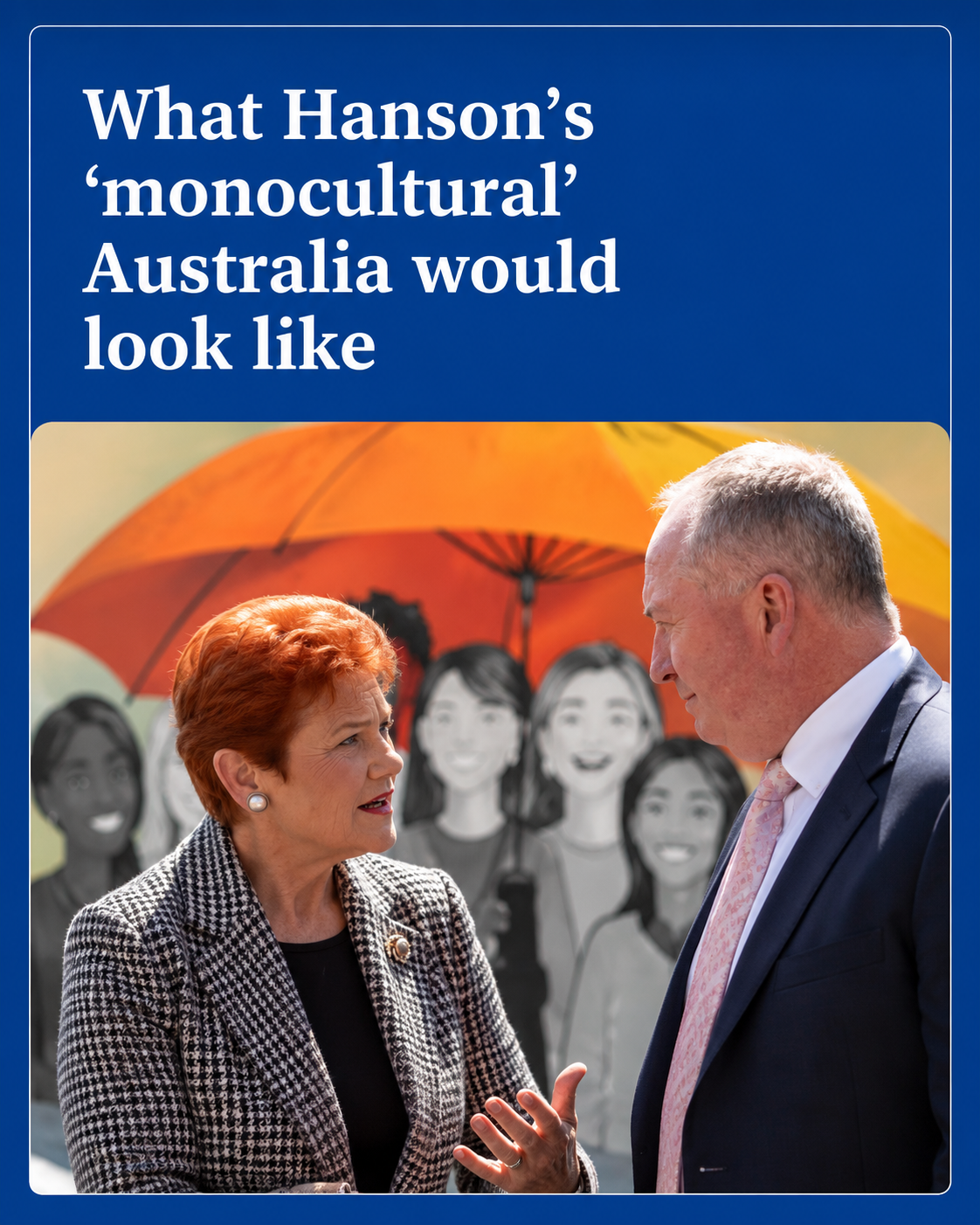
They argue that modern Australia has been shaped by decades of immigration and cultural diversity. In their view, multiculturalism has helped drive economic growth, innovation and social development while allowing people from different backgrounds to contribute to Australian society without abandoning their heritage.
The disagreement illustrates a broader challenge facing many developed nations.
As migration increases and societies become more diverse, governments and voters are often forced to reconsider how national identity should be defined.
Australia is not alone in confronting these questions.
Similar debates have emerged across Europe, North America and other parts of the world.
What makes the Australian discussion particularly significant is the timing.
Cost-of-living pressures remain high.
Housing affordability continues to dominate political conversations.
Infrastructure and public services face increasing demand as the population grows.
In such an environment, issues that may once have been considered purely cultural often become linked to economic concerns.
For many voters, debates about migration and national identity are inseparable from discussions about housing availability, transport congestion, healthcare access and employment opportunities.
Whether those links are supported by evidence is often contested.
However, politically, the perception itself can be powerful.
That helps explain why One Nation’s message has attracted renewed attention.
The party has consistently argued that mainstream political leaders have ignored concerns held by ordinary Australians about the pace of social and demographic change.
Its supporters believe those concerns deserve greater recognition.
Its critics argue the party oversimplifies complex issues and risks creating divisions rather than solutions.
Yet regardless of which side voters support, the growing interest in these debates suggests they resonate with a significant section of the electorate.
The challenge for One Nation is moving from broad themes to detailed policy.
Political parties often find it easier to identify problems than to explain precisely how proposed solutions would work in practice.
Questions inevitably arise.
How would cultural objectives be implemented?
What role would government play?
How would existing communities be affected?
How would success be measured?
These are the kinds of questions that voters typically ask as elections approach.
For Labor and the Coalition, One Nation’s growing popularity presents a different challenge.
Major parties can no longer assume that traditional voting patterns will remain unchanged.
Across Australia, there is evidence that many voters are becoming more willing to consider alternatives when they feel dissatisfied with the political status quo.
This trend has contributed to the rise of independents, minor parties and issue-focused political movements.
One Nation has benefited from that environment.
The party’s supporters often describe it as a voice for Australians who believe their concerns are overlooked by mainstream politics.
Whether that support continues to grow will depend on several factors.
Economic conditions will matter.
Migration policy will matter.
Public confidence in major parties will matter.
Most importantly, voters will ultimately decide whether broad political messages translate into practical solutions that can improve their lives.
That may be the defining question behind the current debate.
Not whether Australians should discuss culture and identity.
Most agree those conversations are important.
The real question is how those discussions should shape public policy and what kind of Australia voters want to build in the years ahead.
As political tensions continue to rise and the next election draws closer, that conversation appears unlikely to fade away.
If anything, it may become one of the most influential debates in Australian politics over the coming year.






