Why Australia Is Becoming One Of The Most Important Countries In The Global Lithium Race
For more than a century, Australia’s mining story was largely built on iron ore, coal and gold.
Those resources helped shape regional towns, create thousands of jobs and fuel economic growth.
Today, a new chapter is emerging.
And its most important ingredient may fit inside a battery.
Lithium has become one of the world’s most strategically important minerals.
From electric vehicles to energy storage systems and consumer electronics, demand for lithium is increasingly linked to the technologies expected to shape the coming decades.
That reality is helping transform parts of Australia into critical hubs for the global energy transition.
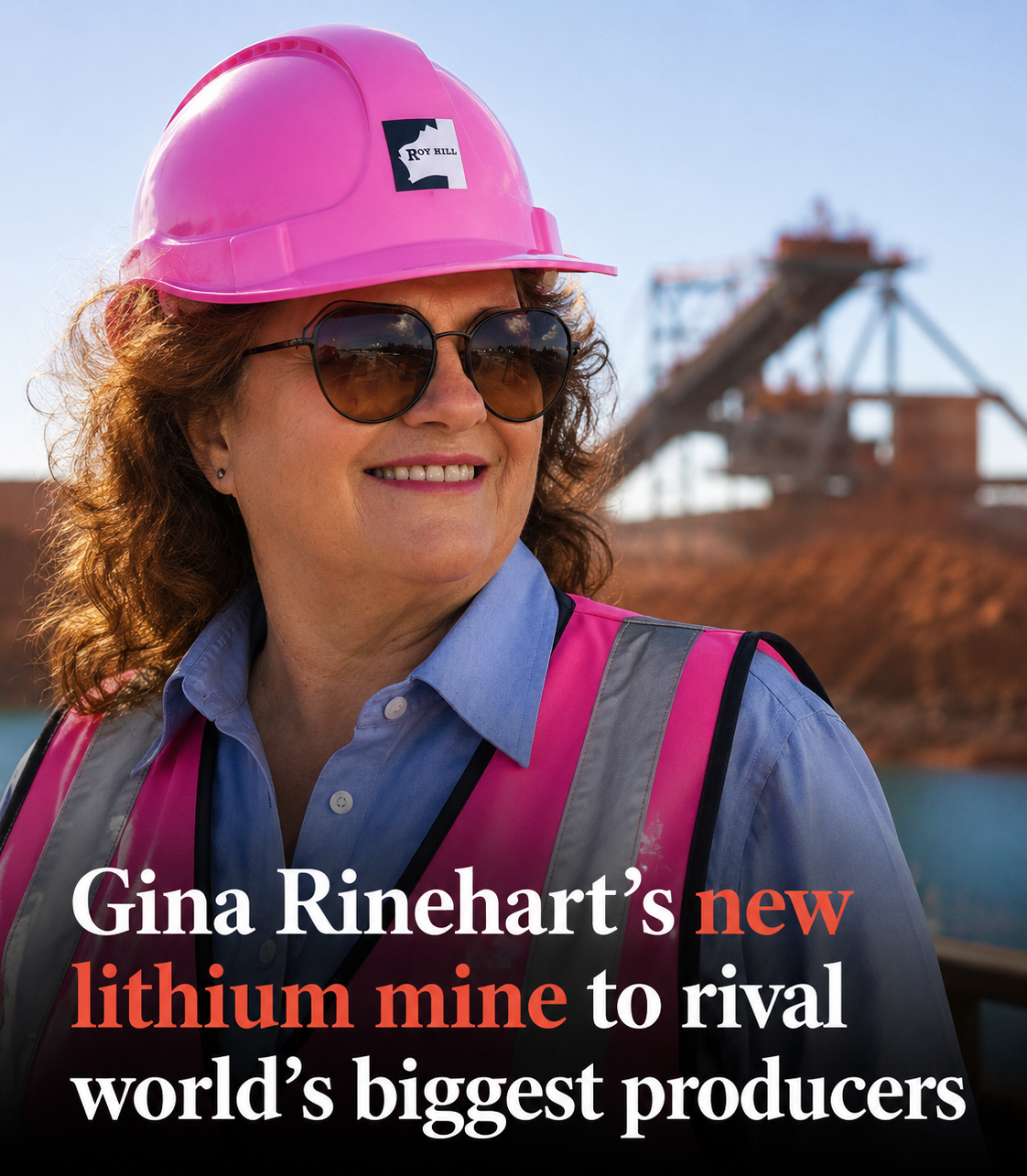
The latest example comes from Western Australia, where Gina Rinehart’s Hancock Prospecting and its partners have unveiled plans for the Andover lithium project near Roebourne in the Pilbara. The proposed operation could produce up to 1.1 million tonnes of lithium concentrate annually, potentially making it one of the largest lithium mines in the world and second only to a handful of global producers.
On the surface, the story is about a new mine.
But the bigger story is about Australia’s growing position in one of the most important resource markets of the twenty-first century.
For years, lithium was a relatively niche commodity.
Demand existed, but it was modest compared with major industrial resources.
That changed as electric vehicles, renewable energy systems and large-scale battery storage became central to energy and industrial policy around the world.
Suddenly, countries were no longer simply competing for oil and gas.
They were competing for the minerals needed to power the next generation of technology.
Lithium quickly became one of the most sought-after resources in global markets.
Australia entered this race with a significant advantage.
The country possesses some of the world’s largest hard-rock lithium deposits and already ranks among the leading lithium producers globally. Western Australia in particular has become the centre of much of this activity. :contentReference[oaicite:6]{index=6}
The Andover project demonstrates how rapidly the industry is evolving.
Plans submitted by the consortium include a large processing plant, supporting infrastructure and an 80-megawatt power station. Construction is expected to require approximately 2,000 workers, while ongoing operations could support around 500 permanent jobs.
Such numbers help explain why lithium projects attract attention far beyond the mining sector.
They influence regional development.
Employment.
Infrastructure investment.
Export earnings.
And government revenues.
Yet mining projects are rarely judged solely on economic benefits.
Large developments often generate debates about environmental impacts, community consultation and cultural heritage protection.
The Andover proposal is no exception.
The project is located near Indigenous communities and areas subject to native title interests, making engagement with local stakeholders a critical part of the approval process. Questions surrounding environmental management and dust control have also been raised as planning progresses.
These discussions highlight a challenge facing resource-rich nations around the world.
How can governments and companies develop critical minerals while protecting communities and environmental values?
There is no simple answer.
Demand for lithium continues growing.
At the same time, expectations regarding environmental and social responsibility continue rising.
Projects increasingly need to satisfy both economic and community expectations.
The global context makes these decisions even more significant.
Governments across North America, Europe and Asia are investing heavily in battery manufacturing and supply chains.
Many countries want to reduce dependence on a small number of suppliers and diversify access to critical minerals. Lithium sits at the centre of those efforts.
Australia therefore occupies a unique position.
It possesses large reserves.
It has an established mining sector.
It enjoys political stability compared with many competing jurisdictions.
And it increasingly attracts international investment seeking secure long-term supplies of battery materials.
That combination has encouraged some of Australia’s biggest mining investors to expand beyond traditional commodities.
Companies that once focused primarily on iron ore are now building positions in lithium, rare earths and other critical minerals. Gina Rinehart’s growing exposure to lithium projects forms part of a broader trend occurring across the mining sector.
However, the future remains uncertain.
Lithium prices have experienced substantial volatility in recent years.
Periods of strong demand have been followed by sharp corrections.
Investors must therefore balance optimism about long-term battery demand against the cyclical nature of commodity markets.
Mining companies routinely make decisions that may take a decade or more to fully play out.
That long-term perspective is one reason major projects continue advancing despite short-term fluctuations.
Supporters believe demand for battery minerals will continue expanding as transportation, industry and energy systems become increasingly electrified.
If those forecasts prove accurate, projects such as Andover may play an important role in global supply chains for decades to come.
The significance of this development extends beyond one mine or one company.
It reflects a broader transformation occurring across Australia’s resource sector.
For generations, the country’s mining success was built on supplying the raw materials of industrialisation.
Today, it is increasingly supplying the raw materials of electrification.
That shift could help shape regional economies, export markets and Australia’s place in the global economy for many years ahead.
The race for lithium is no longer just a mining story.
It is becoming a story about technology, energy security, economic growth and the industries that may define the future.






