Who Should Decide The Future Of Your Neighbourhood?
Across Australia, one of the biggest political battles is no longer taking place inside Parliament.
It is happening on suburban streets.
In local shopping precincts.
Near train stations.
Around family homes.
And increasingly, inside courtrooms.
The question at the centre of these disputes is simple.
Who should decide what a neighbourhood looks like in the future?
Local residents?
Local councils?
State governments?
Or should market demand ultimately shape development decisions?
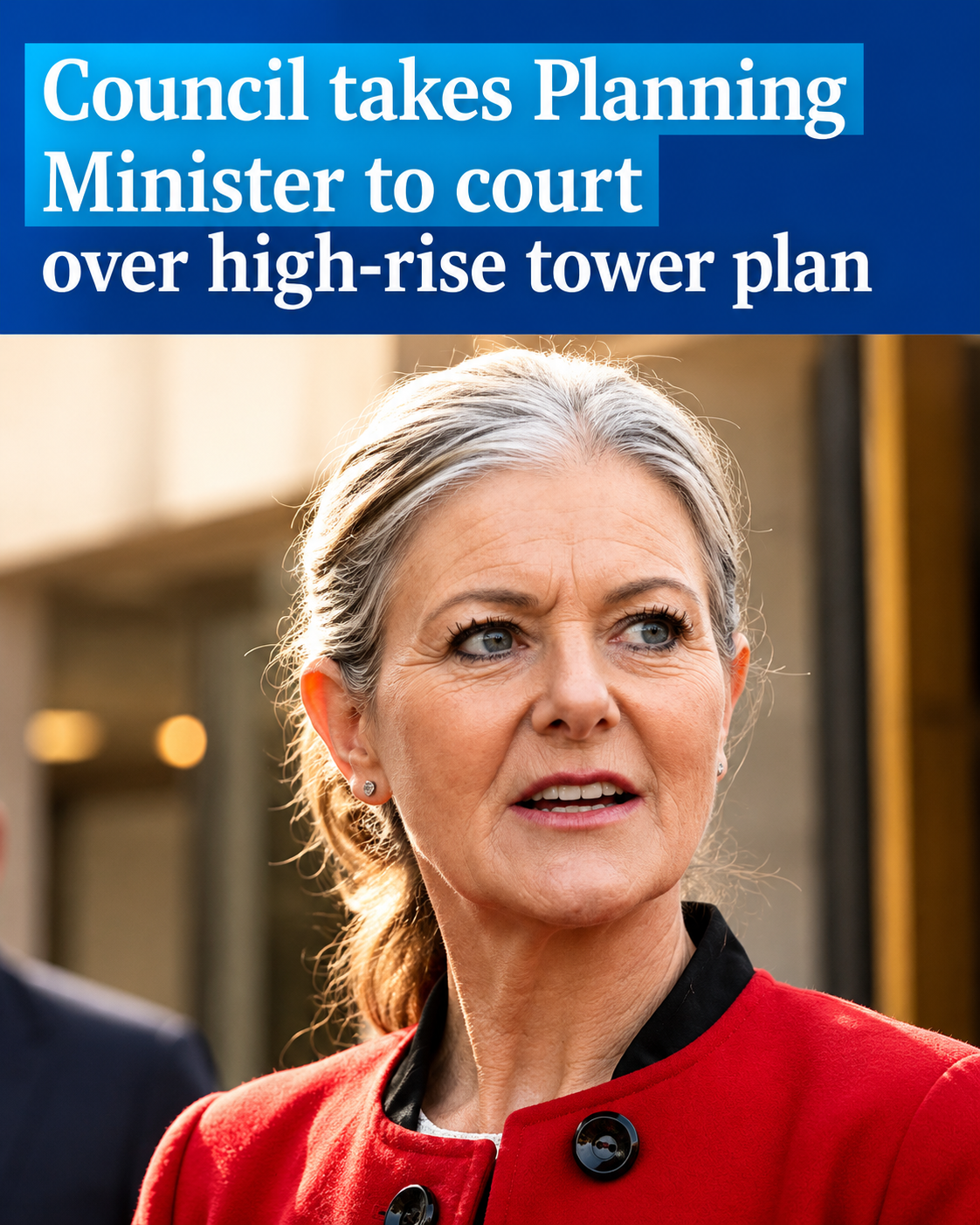
That question has moved back into the spotlight after Bayside City Council launched Supreme Court action against Planning Minister Sonya Kilkenny over plans that could allow significant apartment development across parts of Melbourne’s suburbs.
Although the legal arguments will be examined by the courts, the dispute reflects a much larger debate that is unfolding throughout Victoria and across the country.
Australia is facing a housing challenge that has been building for years.
Population growth has increased demand.
Construction costs have risen.
Housing supply has struggled to keep pace.
Home ownership has become more difficult for many younger Australians.
Rental vacancies remain tight in numerous locations.
As a result, governments at every level are under pressure to find solutions.
One approach has been to encourage higher-density housing in established suburbs.
The logic is straightforward.
If cities cannot continue expanding endlessly outward, they may need to accommodate more people within existing urban areas.
That often means apartments, townhouses and mixed-use developments located near transport, employment centres and services.
Supporters argue this approach is essential.
They believe increasing housing supply is one of the few practical ways to improve affordability over the long term.
Without additional homes, they argue, competition for housing may continue pushing prices higher.
Many planning experts also point out that concentrating development near existing infrastructure can reduce urban sprawl and make public transport investments more effective.
From this perspective, higher-density housing is not simply a planning choice.
It is an economic necessity.
Yet opponents see significant risks.
For many residents, neighbourhoods are more than collections of buildings.
They represent communities, lifestyles and local identity.
People often choose suburbs because of their character, open space, traffic conditions or established streetscapes.
Rapid development can therefore generate concerns about congestion, parking, infrastructure capacity and the overall character of an area.
Many local councils argue that communities deserve a meaningful role in decisions that could reshape the places where they live.
This tension has become increasingly common.
State governments frequently focus on housing targets and population forecasts.
Local governments often focus on community impacts and neighbourhood planning.
Both perspectives contain legitimate concerns.
The challenge lies in balancing them.
Housing shortages create pressure for faster development.
Community concerns create pressure for greater consultation.
Meeting both objectives simultaneously is rarely easy.
The conflict is not unique to Melbourne.
Similar debates are occurring in Sydney, Brisbane, Perth and numerous regional centres.
As housing affordability becomes a more prominent political issue, governments are increasingly looking for ways to accelerate construction.
That often means revisiting planning rules that have existed for decades.
Those changes can generate strong reactions because they affect people’s daily lives.
A budget announcement may seem distant.
A new apartment tower proposed near a family home feels immediate.
That is one reason planning disputes often become emotionally charged.
They involve questions about growth, fairness and the future direction of communities.
Some residents worry that governments are moving too quickly.
Others worry they are moving too slowly.
Both groups often point to the same housing statistics while reaching very different conclusions.
The legal battle between Bayside City Council and the Victorian Government is therefore about more than planning law.
It represents a broader disagreement about how Australia should respond to housing pressures.
Should governments prioritise faster approvals?
Should local communities retain greater control?
Can cities increase housing supply while preserving neighbourhood character?
These are questions that policymakers across the country continue to confront.
The answers will shape not only future skylines but also the affordability, accessibility and liveability of Australian cities.
As populations grow and housing demand increases, disputes like this may become more common rather than less.
The court case itself will eventually be resolved.
The larger debate, however, is likely to continue for many years.
Because at its heart lies a question that affects millions of Australians.
Who should decide the future of the places people call home?






