Who Decides What The Public Is Allowed To See?
Few things attract attention faster on the internet than content that suddenly disappears.
A video is removed.
A post vanishes.
An interview becomes unavailable.
And almost immediately, a new question emerges.
Why was it taken down?
In many cases, the removal itself becomes a bigger story than the original content.
People who may never have watched, read or listened to the material suddenly become curious.
The controversy shifts from what was said to whether it should have been accessible at all.
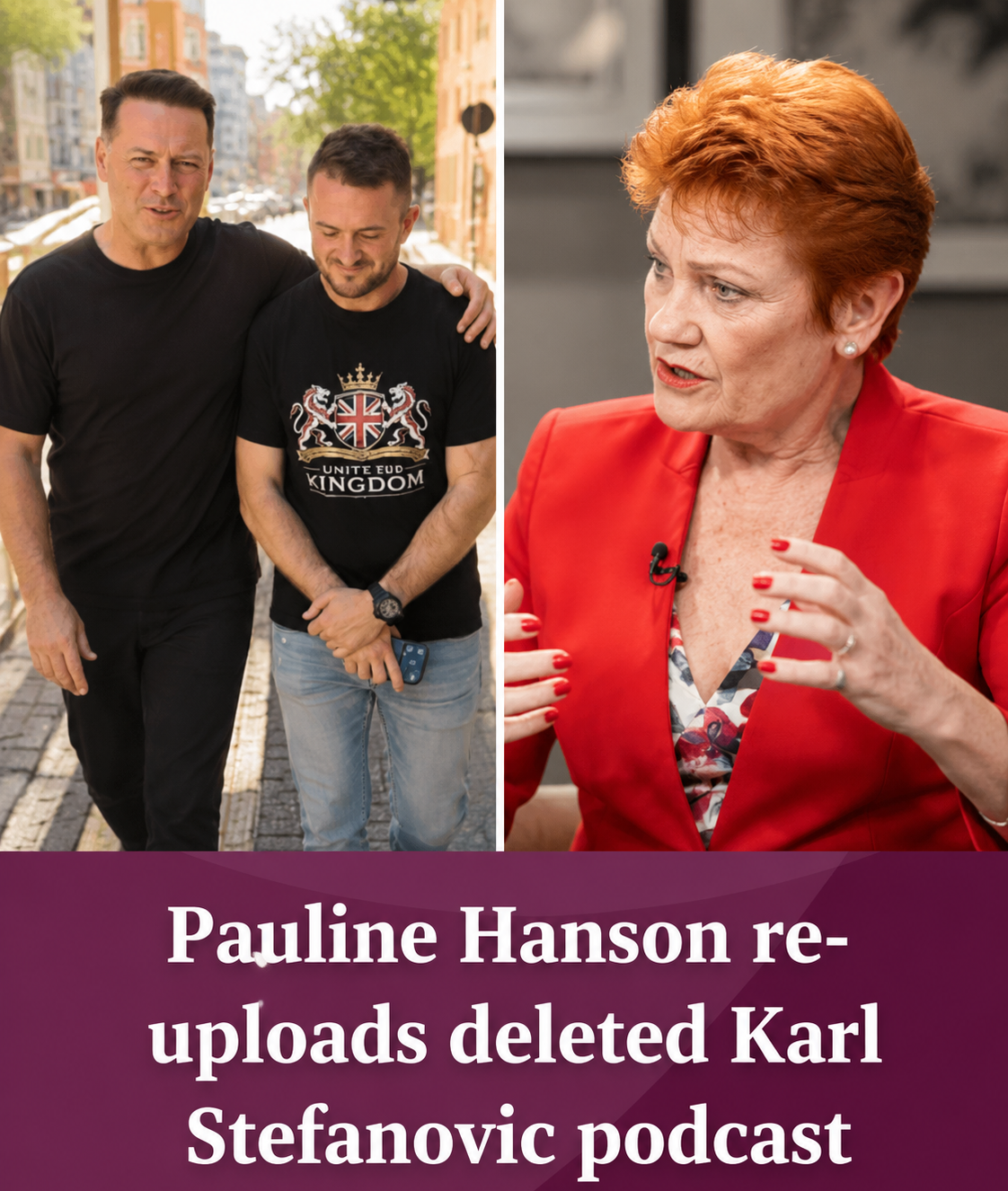
That dynamic has once again become part of public debate following reports that Pauline Hanson re-shared a controversial podcast interview involving broadcaster Karl Stefanovic and British activist Tommy Robinson after the original version was reportedly removed from online platforms.
The specific personalities involved have generated significant discussion.
Yet the larger issue extends well beyond any individual interview.
It raises fundamental questions about information, public access and the power to shape modern debate.
For most of human history, access to information was limited by physical distribution.
Newspapers controlled what was printed.
Broadcasters controlled what was aired.
Publishers controlled what was distributed.
Today’s digital environment operates differently.
Information can be shared instantly across the world.
Individuals can reach audiences once available only to major media organisations.
But while barriers to publishing have fallen, new questions have emerged about moderation and control.
Every platform makes decisions.
Every publisher sets standards.
Every media organisation exercises editorial judgment.
The challenge lies in determining where those decisions end and where public interest begins.
Supporters of broad access to information often argue that adults should be trusted to evaluate controversial material for themselves.
They believe exposure to competing ideas, even unpopular ones, is an essential feature of open democratic societies.
From this perspective, restricting access can create suspicion and undermine public confidence.
Some even argue that removing content can unintentionally increase its popularity.
The phenomenon is well known.
Attempts to suppress information sometimes generate more interest than the information itself.
People naturally become curious when something appears forbidden or unavailable.
Critics of unrestricted access view the issue differently.
They argue that publishers and platforms have responsibilities as well as rights.
They point out that editorial decisions are part of how media organisations operate.
Not every piece of content is guaranteed a platform.
Not every viewpoint receives equal distribution.
In their view, responsible moderation can be necessary to maintain standards and protect audiences.
The tension between these positions has become one of the defining debates of the digital era.
Technology has dramatically expanded public communication.
At the same time, it has concentrated significant influence in the hands of platforms, broadcasters and content distributors.
Those organisations increasingly find themselves acting as gatekeepers of public conversation.
That role attracts scrutiny from all sides.
Some accuse them of allowing too much.
Others accuse them of restricting too much.
Very few decisions satisfy everyone.
The debate is especially intense when political issues are involved.
Political content often touches questions of identity, values, public policy and social change.
As a result, decisions about visibility can quickly become politically charged.
People may disagree not only about the content itself but also about whether access should be limited.
This helps explain why disputes over removed interviews, deleted videos and unavailable content continue attracting significant attention.
The discussion is rarely limited to one broadcast or one personality.
Instead, it becomes a broader conversation about trust.
Trust in media.
Trust in institutions.
Trust in platforms.
And trust in the public’s ability to make informed judgments.
Modern democracies continue searching for the right balance.
Complete openness presents challenges.
Heavy restrictions present challenges as well.
Finding a middle ground remains one of the most difficult tasks facing media organisations and technology platforms alike.
The controversy surrounding this interview illustrates that larger struggle.
What began as a media appearance evolved into a debate about access, moderation and public discourse.
Those questions are unlikely to disappear anytime soon.
As technology continues reshaping how information moves, societies will keep confronting the same fundamental issue.
Who should decide what the public is allowed to see?
And how much power should any individual institution have over that decision?






