What Should Modern Policing Look Like In A Diverse Society?
Most people agree on the core mission of policing.
Keep communities safe.
Prevent crime.
Respond to emergencies.
Protect the public.
Yet beyond those fundamental responsibilities, a growing debate has emerged in many democratic countries.
What role should police play in building relationships with increasingly diverse communities?
And how much time and effort should law enforcement agencies devote to community engagement activities beyond traditional policing?
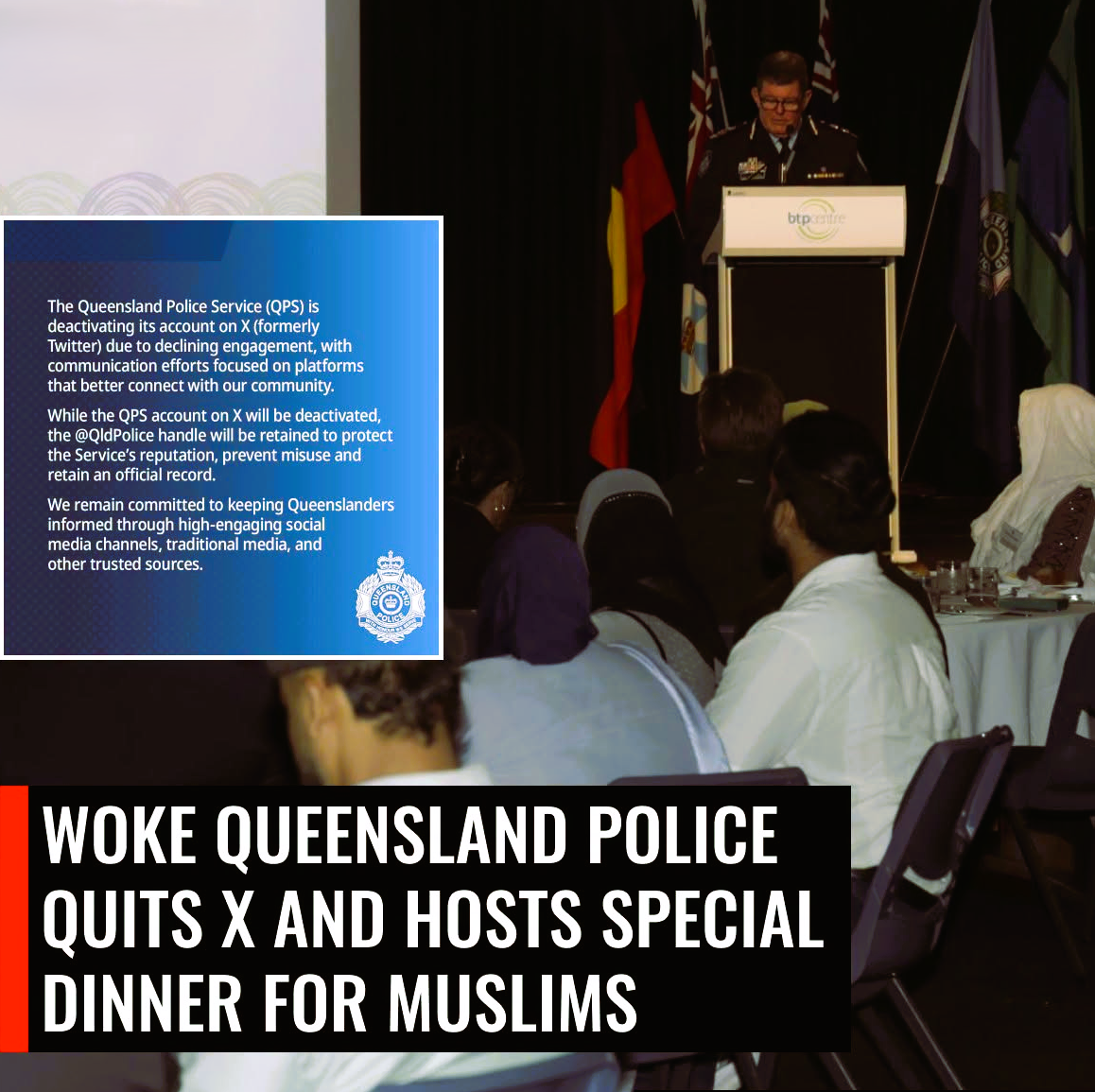
Recent discussion surrounding Queensland Police has highlighted these questions once again.
The debate was sparked by criticism of decisions involving social media strategy and participation in a community diversity event, generating strong reactions from different sides of the political spectrum.
Supporters and critics often approach these issues from very different perspectives.
For some Australians, the primary expectation of police is straightforward.
Fight crime.
Catch offenders.
Maintain public order.
From this perspective, activities perceived as political, cultural or symbolic can be viewed as distractions from the agency’s primary mission.
Critics often argue that limited public resources should remain focused on operational policing outcomes.
Others see the issue differently.
They argue that modern policing is not only about responding to crime after it occurs.
It is also about preventing crime, building trust and ensuring cooperation between police and communities.
Under this view, outreach programs, community events and engagement with different cultural groups can strengthen relationships that ultimately improve public safety.
This debate is not unique to Queensland.
Police agencies across Australia, North America, Europe and New Zealand have increasingly adopted community engagement programs over recent decades.
The goal is often to improve communication between law enforcement and communities that may historically have had limited interaction with police.
Supporters argue that stronger trust can lead to greater cooperation, better reporting of crime and more effective policing outcomes.
However, critics frequently question where the line should be drawn.
At what point does community engagement become excessive?
How should police balance operational priorities with broader social objectives?
How should agencies decide which community groups to engage with and when?
These questions rarely produce simple answers.
The challenge becomes even more complex as societies become increasingly diverse.
Modern police forces often serve communities with different cultural backgrounds, languages, religions and social experiences.
Building trust across such a broad population can require approaches that did not exist several decades ago.
At the same time, public expectations remain high regarding crime prevention and law enforcement performance.
Queensland Police has itself been the subject of extensive discussions about organisational culture and representation in recent years.
Reviews conducted by the Queensland Human Rights Commission examined issues including workplace culture, diversity and inclusion within the service. Those reviews found ongoing debate about how the organisation should evolve to better reflect the communities it serves.
These broader discussions help explain why decisions involving community engagement often attract attention.
They become part of larger conversations about the purpose and priorities of public institutions.
Public trust plays an important role in these debates.
Research consistently shows that confidence in law enforcement can influence whether people report crimes, cooperate with investigations and support policing initiatives.
For that reason, many police agencies invest significant effort into community relationships.
Yet trust must also be balanced against public expectations regarding effectiveness.
Citizens generally expect police resources to be used efficiently.
When crime, youth offending, domestic violence or public safety concerns dominate public discussion, some people naturally question whether enough attention is being directed toward frontline responsibilities.
This tension creates a challenge faced by police services around the world.
They are expected to be both highly effective law enforcement organisations and highly responsive community institutions.
Those objectives often overlap.
But sometimes they can appear to compete with one another.
The debate surrounding Queensland Police illustrates that broader reality.
Different Australians have different expectations about what modern policing should involve.
Some prioritise enforcement.
Others prioritise engagement.
Many expect both.
Ultimately, the question extends far beyond any single event or controversy.
It touches on how public institutions adapt to changing societies while maintaining confidence, effectiveness and accountability.
As communities continue evolving, debates about the role of police are likely to remain an important part of public discussion.
And regardless of where people stand, the conversation reflects a common concern: ensuring that law enforcement remains trusted, effective and responsive to the communities it serves.






