Victorian Premier Ben Carroll has admitted driving away from a petrol station without paying for fuel, saying he simply forgot to settle the bill while juggling government responsibilities and a family errand. He says he paid the amount owed after the mistake was brought to his attention.
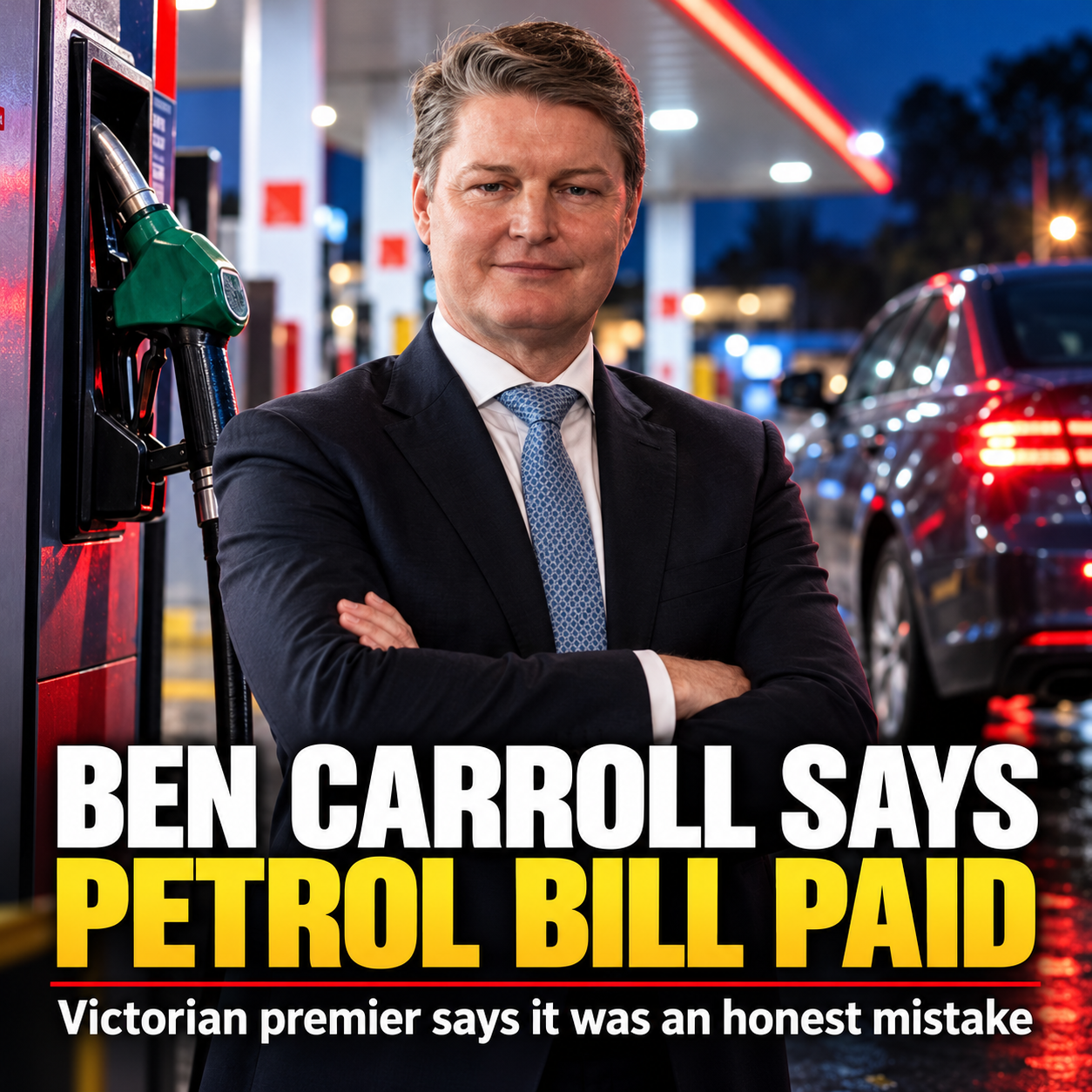
The unusual episode has drawn attention because of Carroll’s position as premier and because it involved police inquiries into an unpaid transaction. But Carroll has described the incident as an oversight, and Police Commissioner Mike Bush has said it was treated as a civil matter. There has been no publicly reported criminal charge against the premier over the fuel payment.
Carroll told reporters he had been dealing with a difficult day of official work, including briefings about the attack that left independent federal MP Helen Haines critically injured. At home, he and his wife were also discussing a small task: returning a pencil case belonging to a friend of their daughter. Carroll said he decided to handle the errand and stop for petrol along the way.
He filled up near his home in Melbourne’s north-west and left without completing the payment. According to Carroll, he did not realise the fuel had gone unpaid until the matter was raised with him. He said he returned to settle the bill promptly and thanked the petrol station staff for their understanding.
The ABC reported that police had contacted the Department of Parliamentary Services about the unpaid fuel and that Carroll was subsequently notified. It was this contact that turned what might otherwise have remained a private administrative mistake into a question put to the state’s most senior political leader.
At a service station, a failure to pay can be financially significant even when a single transaction seems modest. Petrol retailers sell a product whose posted price is highly visible and fiercely compared, while their operating costs include wages, rent, equipment maintenance, card-processing fees and security. Shops attached to petrol stations often rely on a mixture of fuel and convenience-store sales. An unpaid tank of petrol still represents stock that has left the business, and staff must spend time reconciling the discrepancy. The inconvenience exists whether the missing payment resulted from a deliberate act or a customer error.
The distinction between an oversight and deliberate non-payment is important for anyone involved. Cameras, electronic point-of-sale records, vehicle details and the customer’s response to contact can help establish what occurred. Retailers cannot simply know a driver’s intention from a forecourt recording. In Carroll’s case, the premier has admitted the payment was not made, says he forgot, and states that he settled the account when notified. Police Commissioner Mike Bush described it as a civil matter. Nothing in the publicly reported account establishes a criminal conviction or an outstanding unpaid bill.
The episode also illustrates how increasingly convenient payment methods can create confusion. Motorists move between counter payments, card taps, app-based payments and pumps where procedures differ by operator. Some pay for a coffee or other item inside the shop; others try to complete the transaction at the bowser. A customer who believes a payment has been processed can leave without realising an authorisation failed or that an item was left out. Those possibilities are general examples of why a retailer must check transaction records; they are not competing explanations claimed by Carroll in this incident.
The account contains the kind of mundane detail that has made the story widely discussed. A premier handling urgent government briefings and a daughter’s pencil case is not the usual image of executive office, and forgetting to pay at a petrol pump is an embarrassment that many motorists can understand. Public office, however, brings extra scrutiny to behaviour that might attract little notice from anyone else.
Fuel retailers have long struggled with unpaid drive-offs. Service stations must account for lost stock and can report a vehicle’s details when a customer leaves without paying. Sometimes the cause is a deliberate attempt to avoid payment; in other cases, a customer may be distracted or believe a transaction has gone through. Establishing what occurred requires examination of the circumstances, not just the fact that a vehicle left the forecourt.
Fuel prices are a major household cost in Victoria, especially outside Melbourne. Commuters in communities with limited public transport may have to drive to work, school, sport or medical appointments. Tradespeople pay for fuel to reach clients, and regional businesses often depend on light commercial vehicles. When petrol becomes dearer, consumers notice every amount they spend at the pump. That daily familiarity has helped an otherwise minor payment error become politically memorable: few household expenses are as routinely purchased and as quickly scrutinised by customers.
The broader political setting makes the distinction between a mistake and how it is handled particularly relevant. Governments ask residents and businesses to observe rules and meet payment obligations. Senior office-holders are expected to demonstrate the same standards in their own affairs and to correct errors when made aware of them. Acknowledging an embarrassing incident can strengthen accountability; refusing to explain it can extend public doubt. Whether voters find Carroll’s response sufficient is a matter of political judgement, but the facts described publicly are that he admitted the error and paid.
Modern elected leaders are also expected to remain reachable during emergencies. A premier may receive briefings from agencies while travelling, at home or between public events. That creates a demanding schedule, but it does not change the obligation to pay for goods. Carroll’s account of the day places the incident in the ordinary complications of family life rather than providing an exception from responsibility. It is noteworthy that the mundane task of returning a child’s friend’s pencil case features in an explanation given by the leader of Australia’s second-largest state.
Carroll has taken responsibility for the unpaid bill rather than denying that it happened. His explanation is that he forgot, and the payment has been made. The episode has therefore become more about the judgement expected from senior politicians than about an unresolved debt to the service station.
For businesses, consistency matters as much as the amount at stake. A station operator needs a workable process to contact customers, report suspected offending when appropriate and close a case when payment arrives. For staff, allegations of a drive-off can carry stress if the account is disputed or a customer reacts angrily. Training and clear procedures help keep a commercial problem from turning into an unnecessary confrontation. The premier’s prominence should not change the need for a factual account of what was paid, when the discrepancy was identified and how it was resolved.
Political embarrassment can linger because it produces a simple image that rivals and voters can recall far more readily than a budget paper. Yet sensationalising a settled transaction would obscure the actual issue. The public interest lies in what a premier says happened, whether public institutions handled the matter properly and whether there is evidence that contradicts his account. The confirmed sequence does not establish a pattern of unpaid purchases or wrongdoing beyond the acknowledged mistake. It is a test of credibility under scrutiny, rather than a case in which the reported facts support broad criminal conclusions.
The Victorian government remains responsible for substantial decisions about hospitals, transport, schools and public finances. A distraction involving a petrol payment can momentarily dominate news coverage without changing those responsibilities. For voters, the useful comparison is between the premier’s personal explanation and his conduct as a leader: he has apologised for an error, paid the outstanding money and publicly addressed the questions put to him. That allows the episode to be assessed in proportion to its actual impact on the service station and the standards expected of elected office.
The distinction between public scrutiny and personal privacy is difficult for politicians to manage. A resident who makes the same error might resolve it with a shop manager and never attract attention. A premier can be questioned at a press conference because constituents expect openness from those who lead government departments and enforce rules. That heightened attention is legitimate when it clarifies the facts, but it should remain proportionate to what is established. A settled petrol bill does not answer larger questions about the government’s performance, and it does not justify inventing additional details about the premier’s behaviour.
It has also arrived in an intense Victorian political climate, with the government and opposition competing for public confidence. A small personal mistake can quickly become a campaign talking point when it concerns a premier, particularly if the subject touches on everyday issues such as respect for businesses and the rules customers are expected to follow.
For the petrol station, the practical outcome is that the bill has been settled. For Carroll, the episode is a public embarrassment he has acknowledged in his own words. The broader political reaction will depend on how voters weigh an admitted mistake against the premier’s explanation and his response.






