Teachers across Victoria have rejected a government offer of a 28% pay rise, escalating tensions in the state’s education sector and raising the prospect of further industrial action ahead of the November election.
The decision marks a significant setback in negotiations between the government and education unions, with both sides now facing pressure to return to the bargaining table.
While the pay offer was positioned as a major wage increase, teachers and education staff argued it still falls short of addressing long-standing concerns about workload, classroom conditions and overall compensation.
The union has been seeking a 35% increase over three years, alongside structural reforms aimed at improving working conditions in schools.
Key demands include reducing class sizes, lowering administrative burden and decreasing the amount of face-to-face teaching required from staff.
Teachers argue that workload pressures have increased significantly in recent years, making it harder to retain experienced educators and attract new staff into the profession.
They say pay rises alone are not enough without broader reforms to how schools operate on a day-to-day basis.
The government’s rejected offer was intended to address both wage growth and retention concerns, but failed to win support from the union membership.
The breakdown in negotiations now raises the possibility of renewed strikes or work stoppages, particularly if talks fail to progress in the coming weeks.
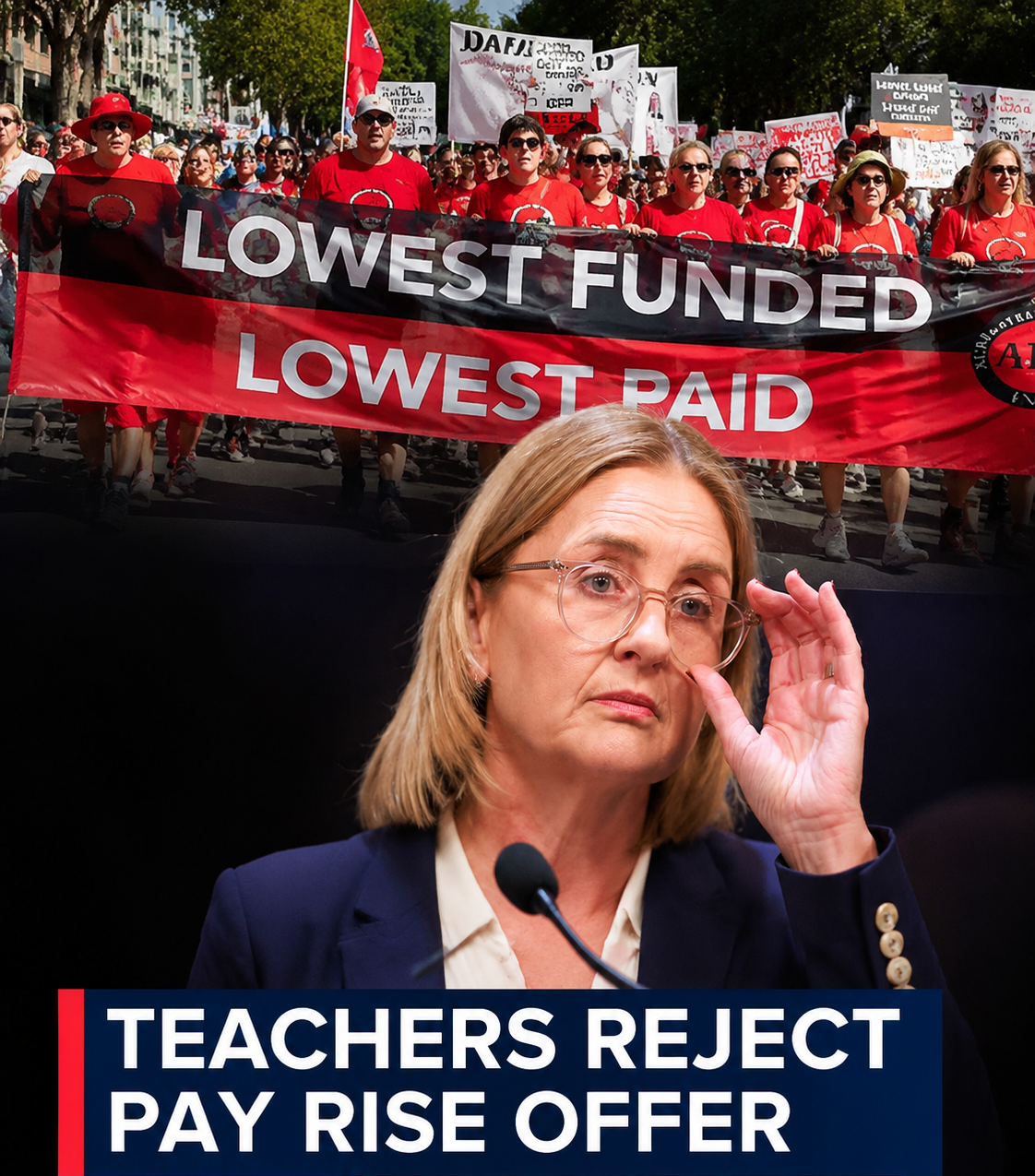
Industrial action in the education sector has the potential to significantly disrupt schools, families and broader community planning, especially during a politically sensitive period leading up to a state election.
For the Victorian government, the dispute adds another layer of pressure at a time when issues such as public spending, infrastructure and cost of living are already under scrutiny.
Education has become a central political issue in recent years, with debates over funding, staffing shortages and classroom conditions frequently shaping public discussion.
Opposition figures are likely to use the breakdown in negotiations to question the government’s handling of essential services, while the government maintains it has made a fair and substantial offer.
Supporters of the government argue that large wage increases must be balanced against broader budget constraints and the need to maintain fiscal stability.
The dispute highlights a wider national challenge facing education systems across Australia, where teacher shortages and workload pressures are becoming increasingly common.
Many schools are struggling to retain experienced staff, particularly in regional and high-demand areas, adding further strain to the system.
As negotiations continue, both sides will be under pressure to find a compromise that avoids prolonged disruption to students and families.
Whether a resolution can be reached before industrial action escalates remains uncertain, but the issue is now firmly positioned as a key pre-election battleground in Victoria.
The coming weeks are likely to determine whether this dispute becomes a short-term disagreement or a major industrial confrontation across the state’s education system.






