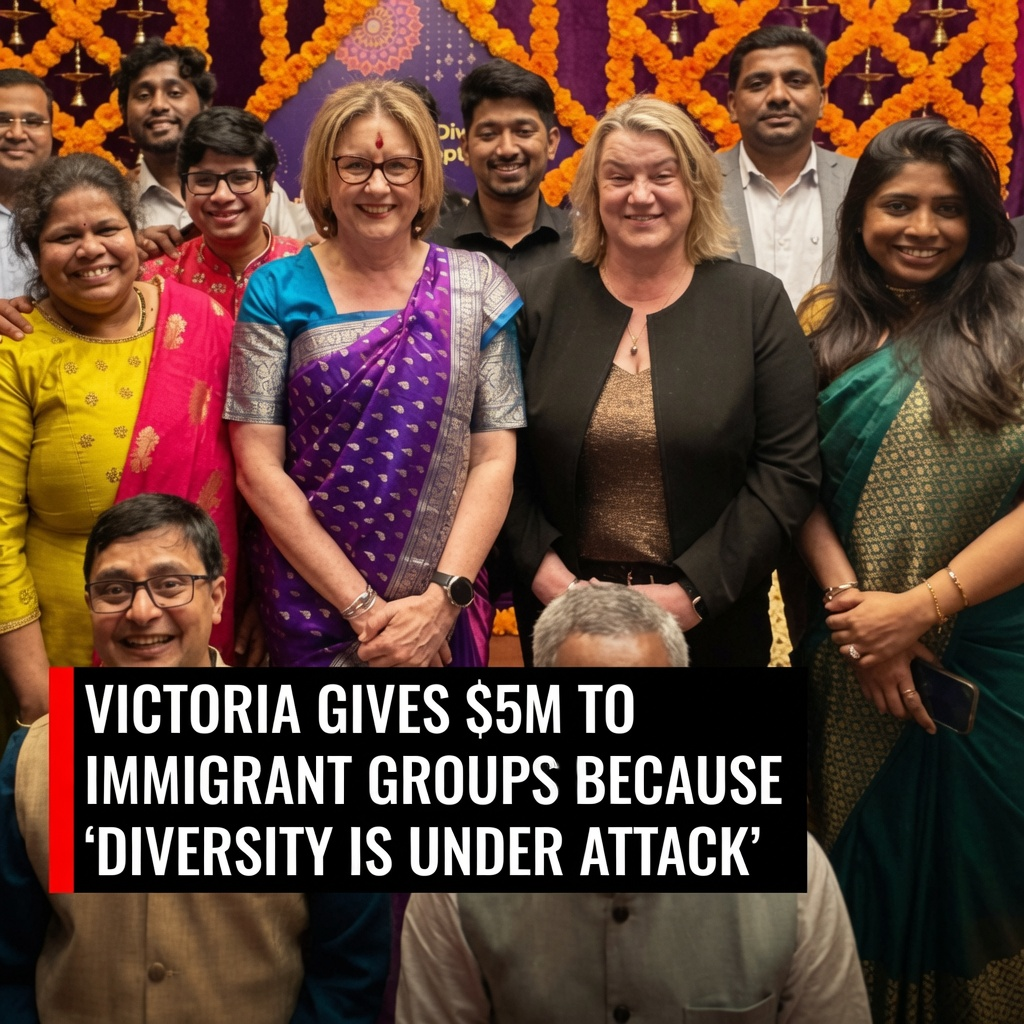
The Victorian Government has announced $5 million in funding for multicultural organisations representing dozens of ethnic communities and religious groups, saying the investment is intended to strengthen social cohesion and support Victoria’s diverse population.
According to published reports, the funding will be distributed among organisations representing 46 ethnic communities and 15 religious traditions. Government representatives said the initiative is designed to help community organisations continue delivering programs that promote inclusion, participation and community resilience. The Government also stated that the funding responds to concerns that diversity and social cohesion have faced increasing challenges in recent years.
The announcement has prompted debate over the role of government funding in supporting multicultural organisations. Supporters argue that community groups often provide valuable services including cultural programs, settlement assistance, language support, youth engagement and activities that encourage stronger community connections. They contend that government assistance can help strengthen social cohesion and improve participation across Victoria’s diverse communities.
Critics, however, have questioned whether taxpayer funding should be allocated in this way and have argued that governments should carefully assess funding priorities while ensuring public money delivers measurable community benefits. Some commentators also believe broader discussion is needed about multicultural policy, social integration and the most effective use of public resources.
Victoria is one of Australia’s most culturally diverse states, with residents representing hundreds of ancestries, languages and religious traditions. Successive governments have supported multicultural policies through a variety of grants, community initiatives and public services intended to promote inclusion and equal participation.
Policy experts note that debates surrounding multicultural funding often extend beyond individual grant programs to broader questions about national identity, community integration, social cohesion and public expenditure. Different political parties and community organisations frequently propose differing approaches to achieving these objectives.
Public administration specialists also emphasise that government grant programs are typically accompanied by eligibility requirements, reporting obligations and accountability measures designed to ensure public funds are used for their intended purposes. Funding recipients are generally expected to demonstrate how programs benefit the communities they serve.
As discussion continues, the funding announcement is expected to remain part of the wider debate over multiculturalism, government priorities and community policy in Victoria. Supporters and critics alike are likely to continue presenting competing perspectives on how governments can best encourage social cohesion while managing public finances responsibly.
The issue reflects an ongoing national conversation about balancing community support, cultural diversity, public accountability and fiscal priorities. Any future changes to multicultural policy or funding arrangements would ultimately depend on decisions made by elected governments through the normal parliamentary and budgetary process.






