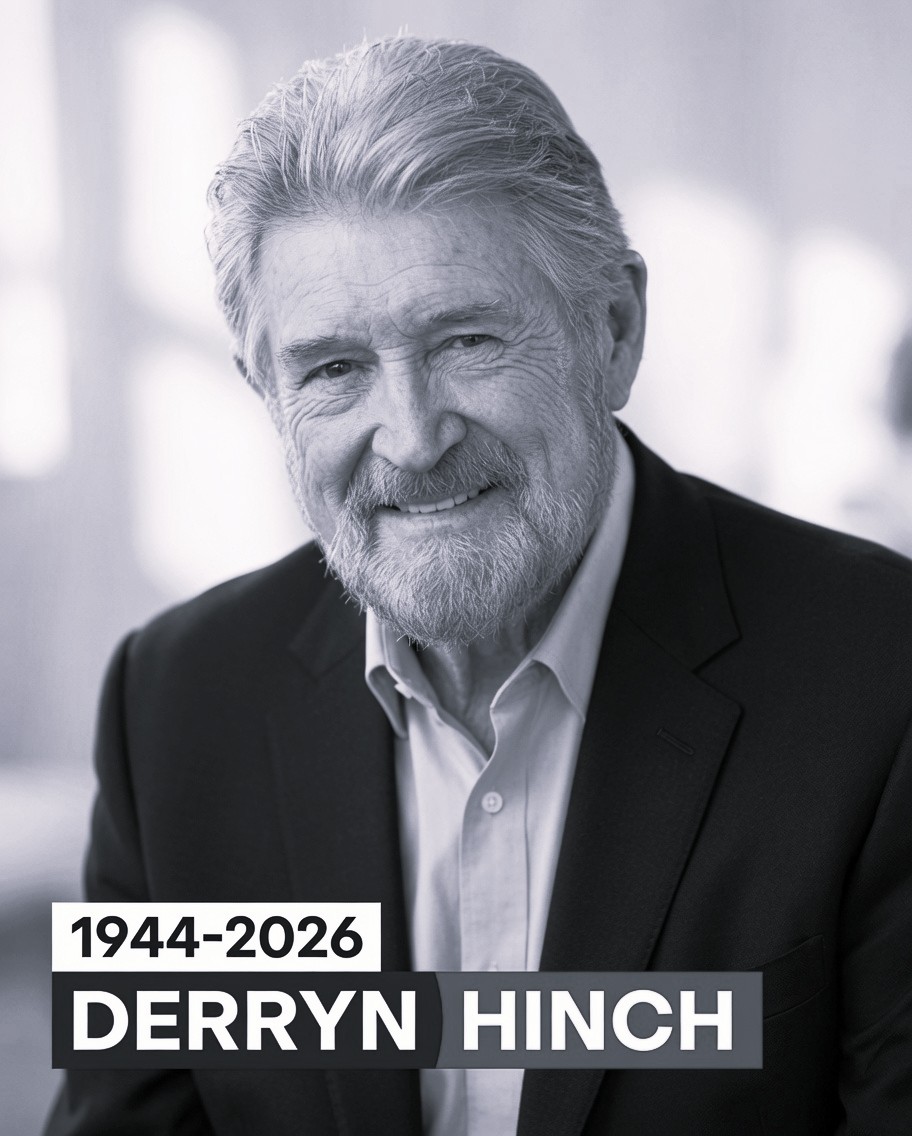
Veteran broadcaster, journalist and former federal senator Derryn Hinch has died at the age of 82, prompting an outpouring of tributes from political leaders, media colleagues and Australians who followed his long and often remarkable career.
Widely recognised as one of Australia’s most distinctive media personalities, Hinch built a reputation over decades for his direct interviewing style, fearless reporting and willingness to tackle controversial issues. His death marks the end of a career that influenced Australian journalism, talkback radio and public debate for more than sixty years.
His passing was confirmed by Melbourne radio station 3AW, where Hinch became one of the station’s most recognisable voices during the 1980s. According to those close to him, he died peacefully at home while asleep.
Friends had previously spoken about the challenges Hinch faced in recent months as declining mobility affected his health following several falls. Despite those difficulties, he remained engaged with current affairs and maintained regular contact with friends and colleagues.
Prime Minister Anthony Albanese led tributes following the news, describing Hinch as someone who lived life with conviction and courage. Communications Minister Anika Wells also acknowledged his contribution to Australian media, calling him one of the industry’s enduring figures.
Many broadcasters who worked alongside Hinch reflected on the influence he had across generations of journalists.
Long-time colleague Darren James remembered him as someone who never pretended to be anything other than himself.
According to James, Hinch valued honesty above all else, whether listeners agreed with his opinions or not. He also recalled the friendship they shared away from the microphone, including daily conversations and a shared enthusiasm for solving Wordle each morning.
Veteran broadcaster Neil Mitchell described Hinch as a larger-than-life personality whose impact extended well beyond radio studios.
Mitchell said Hinch helped shape modern talkback broadcasting by encouraging robust public discussion and challenging accepted ideas, even when doing so attracted criticism.
Born in New Zealand before moving to Australia, Hinch worked across newspapers, radio and television during a career that constantly evolved with the changing media landscape.
His outspoken style earned him the nickname “the human headline”, reflecting his ability to generate discussion and keep himself at the centre of major public conversations.
Throughout his broadcasting career, Hinch became known for campaigning on issues involving crime victims, public accountability and legal reform. Supporters viewed him as someone willing to speak for ordinary Australians, while critics sometimes questioned the methods he used in pursuing stories.
His profile eventually extended beyond journalism when he entered federal politics, serving as a senator after founding Derryn Hinch’s Justice Party. Although his parliamentary career was relatively brief, it reflected his long-standing interest in influencing public policy as well as public opinion.
Away from politics and broadcasting, Hinch was equally open about his personal health struggles.
Years of heavy alcohol consumption contributed to serious liver disease before he was diagnosed with liver cancer. In 2011 he underwent a liver transplant, later speaking publicly about the experience in the hope of encouraging greater awareness of organ donation.
Following the operation, Hinch often expressed gratitude towards his anonymous donor and openly discussed how the transplant gave him additional years of life. His willingness to share those experiences became another defining aspect of his public profile.
In later interviews, he acknowledged returning to moderate drinking after many years of abstaining, explaining that advancing age had changed his outlook on life while continuing to express appreciation for the donor who made his transplant possible.
Hinch also spoke publicly about difficult experiences from his childhood, including surviving sexual abuse. By discussing those events later in life, he hoped to encourage broader conversations around child protection and support for survivors.
Whether interviewing political leaders, challenging institutions or sharing deeply personal experiences, Hinch rarely avoided difficult subjects. His straightforward style attracted both loyal supporters and outspoken critics, yet few disputed his influence on Australian broadcasting.
Over the course of his career he worked through dramatic changes in the media industry, moving between newspapers, commercial television, current affairs programs and talkback radio while maintaining a public profile that spanned several generations.
For many Australians, Derryn Hinch represented a distinctive era of journalism where strong personalities played a central role in shaping public debate. His legacy now includes not only decades of broadcasting but also his contribution to national conversations on justice, accountability and freedom of expression.
Tributes are expected to continue as colleagues, listeners and former political associates reflect on the lasting impact he made on Australian public life.






