Ukraine’s ambassador to Australia has challenged Greens leader David Shoebridge’s opposition to military assistance for Kyiv, arguing that the reality of Russia’s invasion requires more than a commitment to peace in principle. Shoebridge supports humanitarian and civilian assistance but opposes sending military aid.
Ambassador Vasyl Myroshnychenko told the ABC he wanted to explain Ukraine’s circumstances directly to Shoebridge. The newly appointed Greens leader has opposed Australian military assistance to Kyiv while maintaining support for humanitarian and civilian aid. That distinction is central: opposing the transfer of weapons is not the same as endorsing Russia’s invasion.
The two were due to discuss the issue at the Ukrainian embassy on Friday 16 October. ABC coverage records what the ambassador intended to say ahead of the meeting, not a verified account of what either man said privately or whether the discussion changed Shoebridge’s position.
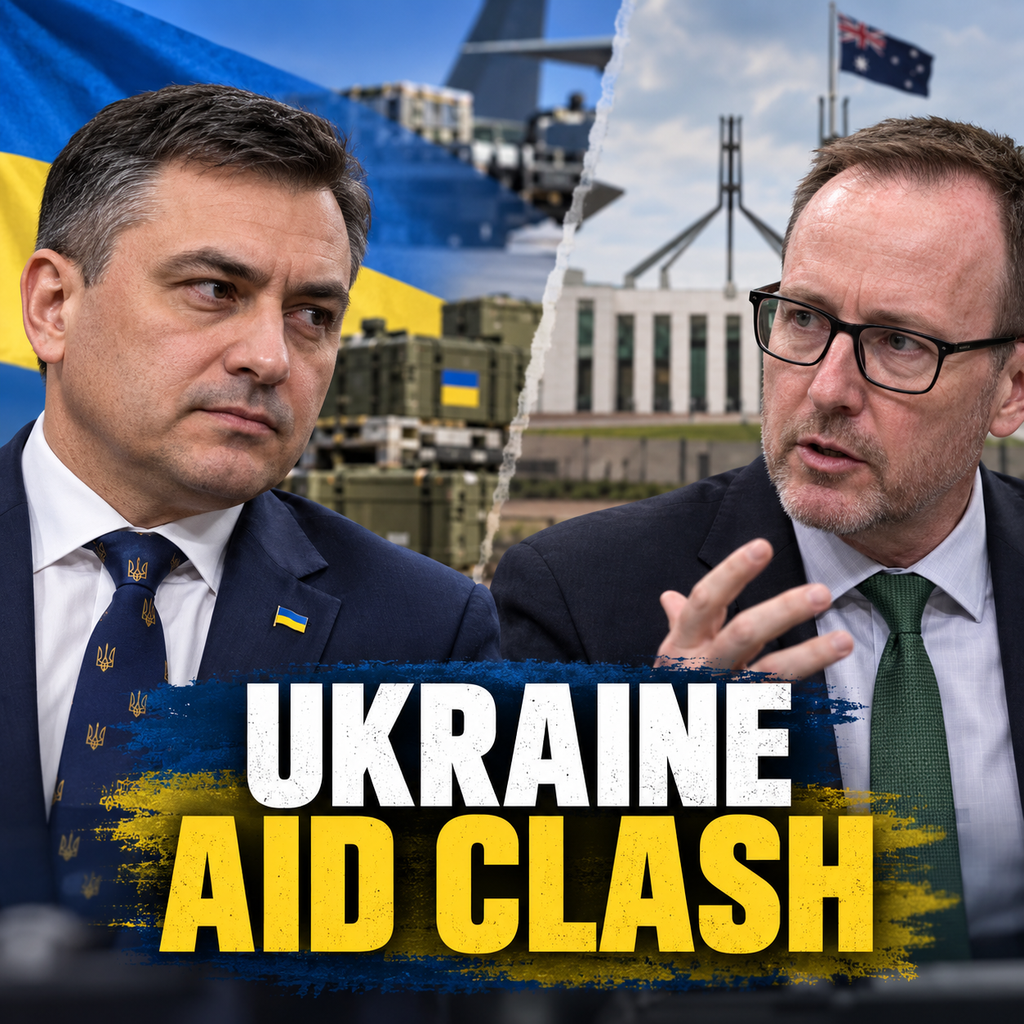
Shoebridge’s comments on military aid renewed questions about how the Greens would respond to Russia’s continuing war against Ukraine. He has described the Greens as committed to peace and non-violence and emphasised humanitarian support for Ukrainians. Critics say that stance overlooks the practical need for Ukraine to defend itself against an armed aggressor.
The ambassador responded that Ukrainians would welcome a world in which their borders and sovereignty were protected by international law without military force. The reality, he argued, is that Russia invaded and the country must protect its people. He has also pointed to the wider obligation of democracies to support Ukraine’s security.
The debate sits against a much larger commitment already made by Australia. A 24 September joint government release announced a further $60 million for Ukraine, divided into $45 million of Australian Defence Force equipment, $10 million for energy support and $5 million in humanitarian assistance. It brought the government’s stated total contribution to almost $1.9 billion. The allocation illustrates why military and civilian categories must not be conflated. Supporting repairs to energy infrastructure is materially different from supplying equipment for defence, even though both are intended to help the same country withstand invasion.
Myroshnychenko said he wanted to understand the basis for Shoebridge’s thinking and to make the case for practical defence support. He noted the history of Ukraine giving up nuclear weapons in exchange for security assurances that failed to prevent Russian aggression.
In media comments ahead of the embassy meeting, he also pointed out that many Green parties in Europe support military aid to Ukraine. His argument was that a political movement can advocate peace while recognising a state’s right to resist invasion.
Shoebridge has said the Greens support civilian and humanitarian aid and strongly oppose the illegal Russian invasion. He has urged the Australian government to take further economic steps, including addressing avenues through which Russian-origin oil can reach Australia by way of third countries.
He has also rejected criticism that the party is handing influence over Australian policy to Moscow. The disagreement is about instruments of foreign policy: military assistance and weapons on one side, non-military support and economic pressure on the other.
Australia’s bilateral security agreement with Ukraine, signed in September, provides a framework for longer-term cooperation that includes defence, cyber security, maritime matters, energy and reconstruction. It does not mean every future equipment transfer has already been specified. When politicians argue about whether military aid should continue, they are discussing one part of a wider relationship involving public money, sanctions, training and civilian relief. An opposing position on a particular category of support should be described precisely rather than being turned into blanket approval or rejection of all assistance.
The choice is consequential because Ukraine is still fighting an existential war. Aid debates are not abstract to communities living under attack, and the ambassador’s public comments reflect that urgency.
The debate has also drawn criticism from Ukrainian Greens, according to a separate report on 18 October. Their position is distinct from the ambassador’s remarks. The available reporting does not establish an agreement or a policy change following the embassy meeting.
Australia has already committed substantial assistance to Ukraine. The Department of Foreign Affairs and Trade has reported total support approaching $1.9 billion, including more than $1.6 billion in military assistance, as well as energy, humanitarian and economic support. These are different forms of assistance, rather than a single direct cash transfer.
Ukraine’s position is shaped by immediate needs. Air defence and ammunition may determine whether military units and civilian infrastructure can withstand attack. Medical supplies, shelter and energy repairs help people survive the consequences. The ambassador’s argument is that providing only the latter does not remove the threat that creates much of the humanitarian need. Shoebridge’s approach places greater weight on civilian assistance and alternatives to armed support. The dispute cannot be understood simply as a disagreement about whether helping Ukrainian civilians is worthwhile.
Military assistance includes equipment intended to help Ukraine protect its territory and population from Russia’s invasion. Civilian and humanitarian assistance addresses needs such as energy supplies, shelter, medical and emergency services. Diplomats often argue these strands are connected: repairing a hospital’s electricity supply is of limited value if it remains under attack, while military support alone cannot rebuild a damaged community. Others argue the long-term route to peace must place diplomacy and de-escalation at the centre. The ambassador and Shoebridge disagree about the role of military assistance in that balance, not about whether the suffering of civilians matters.
Australia and Ukraine also signed a bilateral security agreement in September 2026 setting out a framework for co-operation. The agreement matters as background to the dispute, but it does not mean Shoebridge approved it or that a party leader can unilaterally alter existing government commitments. Parliament, the executive government and diplomatic partners all play different roles in decisions about expenditure and foreign policy.
Public money used for military aid may go towards equipment supplied from Australian Defence Force stocks, purchases from defence manufacturers or contributions to international procurement arrangements. These are not necessarily interchangeable costs. Gifting an existing vehicle, buying fresh ammunition and supporting a foreign defence fund can involve different timelines and budget treatment. An argument about whether aid should continue therefore needs precision about what is being provided and what alternative use of the money is being proposed.
Australian manufacturers and allied supply chains can also be affected when military aid involves replacing equipment or ordering new material. But no contract, Australian jobs figure or company benefit was tied to the ambassador’s meeting in the sources used for this account.
The Defence portfolio also faces practical questions about replacing or procuring materiel supplied overseas. Equipment transferred from existing stocks may have a different budget and readiness impact from a new purchase through an international mechanism. Australian companies can be involved in production, maintenance or supply chains, but it would be wrong to treat every dollar of the announced support as a contract awarded to a local manufacturer. Parliamentary scrutiny of commitments can test what was transferred, how replacements will be funded and whether aid has reached the intended destination, without prejudging the political argument over weapons transfers.
Shoebridge’s opposition to military assistance does not mean he opposes all help for Ukrainians. Likewise, the ambassador’s appeal for weapons and defensive capabilities does not mean he is against diplomacy or humanitarian relief. The disagreement is over how Australia should respond to an invasion that is continuing to cause civilian suffering.
The practical issue for Ukraine is security under active attack. A humanitarian convoy, electricity repair crew or displaced family faces dangers that diplomatic language cannot immediately remove. That is the context the ambassador says he wants Australian political leaders to understand. Shoebridge’s publicly reported emphasis on non-military support has to be assessed against that argument, but the public record reviewed here does not contain a verified agreement between the two men or a documented change in policy after their meeting.
Australia’s defence and humanitarian commitments involve public expenditure, so parliament and voters can reasonably ask how effectiveness is assessed. The answer may vary by program. Military equipment can be evaluated against stated defence needs, while energy assistance may be assessed by whether it restores critical services. A dollar figure alone cannot measure success, but governments should still account for where funding is directed and which outcomes can be demonstrated.
Humanitarian support has its own costs and limitations. DFAT says damaged essential services and displacement have left millions of Ukrainians needing assistance. Providing energy funding or emergency supplies cannot by itself stop attacks on critical infrastructure. Conversely, military equipment requires training, logistics and maintenance to be useful. Both sides of the Australian political argument can therefore be questioned about the effectiveness and limits of their preferred support, rather than being reduced to a claim about who cares more about the war’s victims.
The public statements show a firm disagreement over military assistance, with Myroshnychenko making the case for defence support and Shoebridge favouring civilian help and economic pressure. No verified post-meeting outcome has been established.
That leaves a substantive policy debate for Australia: whether further weapons assistance would better protect Ukraine, what costs and risks it carries, and how military support should fit alongside diplomacy and humanitarian aid.






