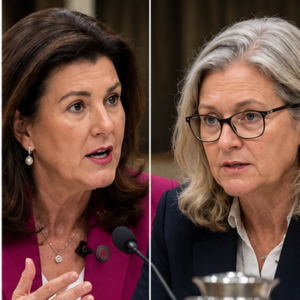
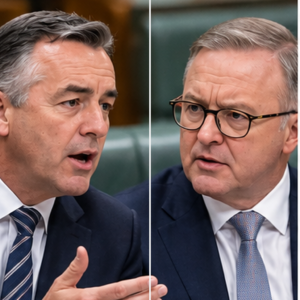
Malcolm Turnbull alleged in an ABC documentary account published in February 2024 that Scott Morrison had played a “double game” during the Liberal Party’s 2018 leadership crisis. Morrison rejected the allegation. Their conflicting recollections illuminate the chaotic fall of a prime minister, but the events themselves occurred in August 2018, not in 2026.

The dispute surfaced in interviews associated with Nemesis, the ABC series examining the Coalition’s years in federal government. Turnbull described a week of manoeuvring in which the pressure from Peter Dutton’s supporters intensified before Morrison emerged as the eventual winner. His accusation was that some people aligned with Morrison had helped inflate Dutton’s apparent support early in the contest while Morrison publicly presented himself as loyal to the sitting prime minister.
Morrison gave a different account. He denied organising or controlling the votes described by Turnbull and argued that the relevant ballot had not been known about in advance in the way his former colleague suggested. The two accounts cannot simply be merged into a single established narrative. The question of what particular MPs knew and how they voted privately is precisely what remains contested.
A leadership spill is an internal party process, not a national election. The prime minister holds office because the governing party or coalition commands the confidence of the House of Representatives, and the party can change its leader during a parliamentary term. That legal and political structure gives MPs enormous influence over who occupies the top job, even though voters have not directly cast a separate ballot for prime minister.
The 2018 crisis showed the risks. Turnbull had already taken the leadership from Tony Abbott in 2015, arguing the Coalition needed different direction. By August 2018, disagreements about energy policy, polling and conservative leadership had deepened. Dutton’s challenge became the immediate focus, but a successful challenge by him was never the only possible outcome. As support shifted, Morrison became an alternative candidate able to attract MPs who did not want Dutton or Turnbull.
The final contest produced a victory for Morrison, who became Australia’s 30th prime minister. In the ABC account, the final leadership ballot ended 45 votes to 40. The episode left relationships shattered. Turnbull later said Morrison’s public posture had not matched what he believed some of his colleagues had done. Morrison insisted the accusation was wrong and described the damage to their friendship with regret.
That personal element is central to the story. Leadership contests are often described as exercises in parliamentary arithmetic, with every signature and caucus vote treated as a move in a tactical game. But when former colleagues speak years later, the emotional vocabulary tends to be about trust, loyalty and betrayal. Those terms tell readers how a participant interpreted events, not necessarily what every other participant intended.
The ABC reconstructed the drama through multiple interviews, making it possible to compare experiences rather than rely on one voice. Such retrospective documentaries are valuable, but memories can shift with time and with the later reputations of those involved. A private ballot also limits what can be independently verified about individual votes. The most rigorous approach is to identify the participant making a claim and then present the relevant denial or corroboration.
The political consequences of a leadership change can extend far beyond the parliamentary party room. A sudden change at the top may alter cabinet membership, policy priorities and the messages given to households and businesses. Departments still administer the law and budgets still operate, yet ministers often revisit programs, funding commitments and regulatory plans once a new leadership team is formed.
Energy was particularly contentious during Turnbull’s final period. Investors considering new generation or industrial equipment need clarity about how future emissions and power-market rules will operate. Political uncertainty does not necessarily stop every project, but shifting signals from government can complicate decisions about contracts, financing and long-term capital expenditure. That makes stability valuable even for voters who are unconcerned with the personal details of a party’s internal rivalry.
The crisis also illustrated the relationship between party management and the economy. A prime minister who spends political capital surviving challenges has less room to negotiate complex reforms. Tax policy, industrial relations and major infrastructure decisions require the cooperation of cabinet colleagues and Parliament. Public disputes among senior figures can erode the authority needed to reach that cooperation.
None of that proves that the 2018 leadership contest caused a particular change in mortgage rates, electricity prices or business profits. Such outcomes depend on broader economic factors and specific policy decisions. It would be tempting, but unsound, to turn the story of a party-room vote into a direct explanation of later household bills without establishing a causal link.
The documentary’s value is instead institutional. It shows how the secrecy and speed of party-room manoeuvring can make accountability difficult even for those at the centre of government. A leader may formally possess confidence until a challenge succeeds, while colleagues privately debate whether to withdraw support. That difference between visible authority and hidden political intentions is what made Turnbull’s “double game” allegation so potent.
Morrison’s denial is just as important. He was entitled to contest the inference that colleagues’ votes represented a coordinated strategy under his direction. The fact that he ultimately won does not prove that he had orchestrated every preceding development. Journalistic fairness does not require pretending the recollections are identical; it requires preserving the distinction between an allegation and a verified ballot result.
Voters may judge the participants by how they behaved, the direction of the governments they led or the policies delivered afterwards. Those are political assessments. Establishing that a particular person deceived another behind closed doors requires more than an aggrieved recollection, even when it is vivid and plausible to an audience familiar with the turmoil of leadership politics.
The broader lesson for both major parties is that repeated internal contests can distract from matters the public expects governments to manage: public services, housing, employment, national security and fiscal discipline. MPs have the right to choose their leaders. They also have a responsibility to explain the policy consequences when they exercise it in the middle of a term.
The Turnbull-Morrison dispute remains significant because it exposes an unresolved question of political trust. Turnbull presented a theory about numbers and loyalty; Morrison rejected that theory; the formal outcome was an internal vote that replaced the prime minister. Those are separate categories of fact, recollection and denial, and each should remain separate. There was a further distinction between the first leadership challenge and the eventual outcome. An internal spill can test whether a leader still commands party confidence; it does not ensure that the challenger will ultimately secure the leadership. MPs who want change may prefer different successors. The final Morrison victory is therefore compatible with several competing explanations for what individual MPs were doing earlier in the week.
That complexity is what makes confidential party-room numbers such fertile ground for competing memories. Politicians reconstruct the sequence through conversations, public signals and impressions of colleagues’ loyalties. Some of that material may be corroborated; some cannot. A journalist can report that a former prime minister has formed a belief, while still explaining that the alleged coordination is denied and has not been conclusively established by a secret-ballot record.
The 2018 turmoil also has implications for the way governments communicate with businesses. Changes in a leader can bring new policy teams, but decisions about contracts, tax administration and infrastructure cannot simply be switched off. Departments provide institutional continuity, while ministers decide political direction. The tension becomes acute when a government is negotiating complex measures that depend on support from multiple Coalition factions.
Voters often tell pollsters they want stability, yet members of parliament may conclude that leadership change is necessary to prevent electoral defeat. That conflict between party survival and continuity of government helps explain why spill weeks become so bitter. Each camp may describe its actions as protecting the party, even as the combined result damages public confidence in the institution.
The events were not a public referendum on Morrison or Turnbull’s integrity. Australians subsequently had opportunities to judge the Coalition at national elections, but those electoral verdicts cannot reveal how each MP voted in the internal August 2018 contest. Keeping that distinction clear prevents retrospective political interpretations from being presented as documentary proof of an alleged double game.
The continuing significance is that a claim made in a documentary can become a new online dispute years after the event. As clips circulate, the words “double game” may survive while Morrison’s denial disappears. Preserving both accounts is not a matter of artificial balance; it is the difference between accurate attribution and telling readers that a contested accusation has already been proven.
The account is a retrospective of 2018, revived through interviews in 2024. It should not be framed as a fresh accusation made at a 2026 press conference or as a newly uncovered criminal wrongdoing. Its relevance today is the continuing tension between a party’s internal power struggles and the public’s demand for steady, accountable leadership.