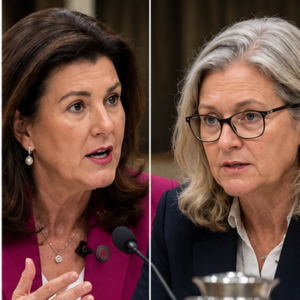
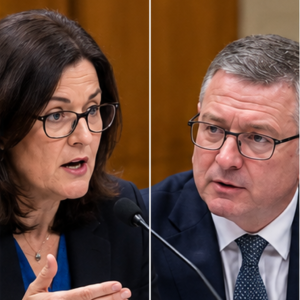
Darren Chester has revived one of Labor’s most politically sensitive cost-of-living promises, challenging Prime Minister Anthony Albanese during federal Question Time over the pledge to cut household electricity bills by $275.
Chester, the Nationals deputy leader, framed his question around household finances and political accountability. He pointed to the prime minister’s failure, in the opposition’s assessment, to deliver the promised power-bill reduction, then asked why Australians should bear the cost when a leader would not concede an error. The question combined an electricity-policy grievance with a broader claim about the government’s willingness to acknowledge mistakes.
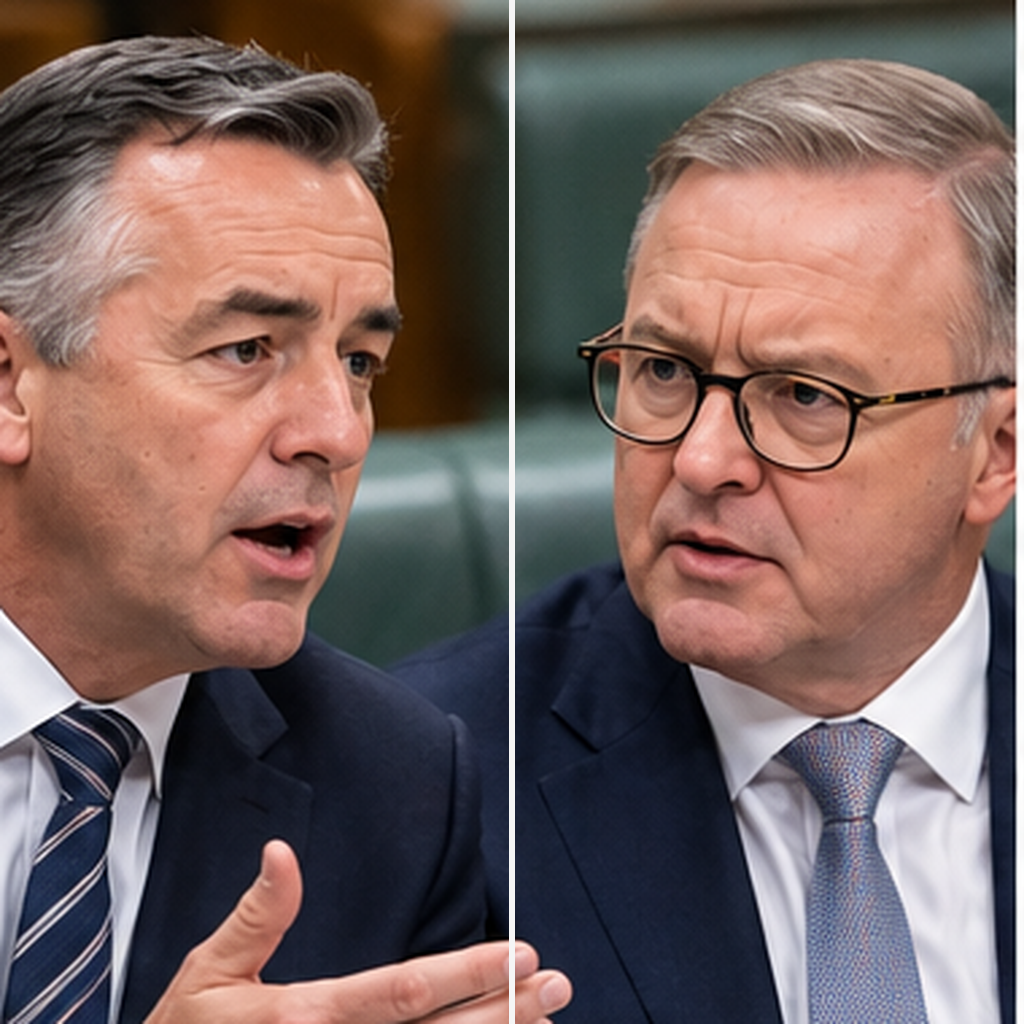
Albanese’s answer did not amount to a detailed breakdown of the original $275 calculation. In his parliamentary answer, Albanese said he was surprised to see the opposition raise migration and access to the labour market. He defended his government’s migration record, saying overseas migration had been reduced by 45 per cent, and argued that further changes could lower numbers without damaging labour-force access.
That distinction matters. A political answer on migration is not, by itself, an evidentiary rebuttal of a particular electricity-bill estimate. Nor does Chester’s question establish what every Australian household has actually paid. The outcome of the original pledge is properly assessed against the baseline, time period and type of bill used when the policy was announced.
The two politicians were therefore arguing at different levels. Chester wanted the government to account for a tangible household-dollar figure. Albanese sought to defend the government’s wider record and pivot to constraints facing the labour market. The parliamentary clash illustrates why cost-of-living debates are often difficult to resolve in a single exchange: the question is specific, while the answer ranges across the government’s full economic agenda.
Electricity prices are shaped by wholesale energy costs, network charges, retail offers, regulated pricing and usage. A household whose consumption rises may experience a higher bill even if one component of its tariff falls. Conversely, government rebates can lower the amount paid temporarily without changing the underlying retail price. Any definitive statement about the $275 claim must distinguish these effects.
Chester’s challenge also reflects the continuing political value of promises expressed as a single dollar amount. Such numbers are easy for voters to remember and easy for an opposition to test in Question Time. But measuring whether a promise has been met demands more than comparing two unrelated bills or using one suburb’s experience as a national benchmark.
For Australians struggling with energy costs, the immediate practical question is what happens to their next bill rather than who scores the parliamentary point. Consumers can compare standing and market offers, check concessions and examine whether changing plans would help. Those options do not settle the political dispute, but they show how the promise intersects with daily budgets.
Chester directly challenged Albanese in the chamber, and the prime minister responded. It does not support claiming that Albanese admitted the electricity promise was false, nor that he supplied an itemised rebuttal during the exchange. Those are important limits on any account of what happened.
The underlying accountability issue remains: should leaders be judged by the numerical wording of a campaign commitment or by broader changes to household circumstances? Chester pressed the first test. Albanese argued from the second. The difference is likely to remain part of the national cost-of-living argument.
The precise words of Chester’s question help explain why the confrontation attracted attention. In the House of Representatives on 27 October, the Nationals MP linked the power-bill commitment with mortgage expenses and the proposed treatment of working holiday makers. He alleged that new mortgage holders were paying an additional $30,000 a year as a result of interest-rate increases during the government’s term. That was an opposition claim made in a parliamentary question, not an independently established description of every borrower’s experience. That figure remains an opposition claim rather than an independently confirmed cost for all borrowers. He also repeated that the promised $275 electricity saving had been made 97 times, a claim about Labor’s campaign messaging rather than a fresh figure calculated at the hearing.
There are at least three separate tests embedded in that challenge. One concerns the actual language of an election commitment and the period in which it was supposed to operate. A second concerns the effect of policy on an individual household’s bill, which varies with region, tariffs, consumption and the timing of assistance. The third concerns whether the prime minister should acknowledge that public expectations were set too high. A response can address one of these tests without disposing of the other two. His answer on migration left the central dispute about electricity costs unresolved.
Albanese’s answer concentrated on labour supply, particularly the needs of agricultural employers. The prime minister said the government had reduced net overseas migration by 45 per cent and argued that opposition proposals risked damaging farming businesses that rely on international workers. His concern was that changes made in the name of lowering migration could reduce access to employees when crops need harvesting or regional employers struggle to recruit. His remarks defended the government’s labour-market policy rather than establishing a new finding about energy prices.
The mention of working holiday makers is relevant to the household-budget argument because it links the cost of groceries with the availability of farm labour. Farmers face uncertainty from wages, fuel, freight, weather and workforce availability. If policy changes constrain seasonal recruitment, growers and industry groups may argue that costs will rise. But the size of any eventual increase in supermarket prices cannot be inferred from the Question Time exchange. It would require detailed evidence about individual commodities, crop yields, supply chains and the extent of labour shortages.
Mortgage costs provide another example of why broad claims must be unpacked. An interest-rate increase can add substantially to repayments for a borrower on a variable-rate loan, but the effect depends on the outstanding balance, repayment schedule and timing of the loan. A new borrower with a large loan can face a much greater annual increase than somebody with a smaller balance or a fixed-rate mortgage. The $30,000 figure cited in the question does not represent a universal bill faced by Australian families. Nor should any reported rise in repayments be automatically assigned to a single government decision: the Reserve Bank sets its cash rate independently.
Electricity policy is similarly complicated by the design of the National Electricity Market and by the different circumstances of households in separate states. Prices can be affected by generation costs, network investment, retailer margins, the availability of solar power and the fuel mix. A percentage or dollar change in a standardised model bill may not describe the amount on a customer’s account. Any attempt to score the campaign pledge fairly needs the original assumptions and the subsequent comparable data, not an isolated anecdote about someone who received an unusually high bill.
There is also a distinction between cheaper power in the long run and immediate relief. A government may argue that new generation or transmission is designed to reduce wholesale costs later, while an opposition points out that households need help now. Energy rebates, if available, can reduce the near-term amount payable but may not address the ongoing price drivers. These different policy instruments are often grouped together in political speeches even though they work in different ways and over different horizons.
For a household trying to make sense of competing claims, a sensible comparison begins with the supply charge, usage price, total kilowatt-hours consumed, discounts and any government credit. An annualised estimate based on comparable consumption can be more meaningful than comparing two bills covering different seasons. Consumers also need to distinguish the cheapest advertised offer from the offer they actually qualify for, including any eligibility rules or time-limited discounts. These practical checks do not excuse governments from explaining their commitments; they prevent political arguments from concealing what the figures measure.
The Question Time exchange ultimately left several specific questions open. What was the original modelling behind the promised $275 reduction? How much of that modelling is still applicable? What would be the appropriate comparison given changing energy-market conditions? And if a pledge has not been delivered as initially presented, what explanation is owed to voters? Chester put the accountability issue at the centre of the confrontation. Albanese defended other parts of his government’s economic approach. The exchange did not resolve the disagreement over how the original pledge should be measured.
The historical record of a parliamentary question is only the starting point for a complete account. It establishes exactly who raised the issue, what proposition was put to the prime minister and how he responded at the time. Subsequent economic data might eventually offer a clearer comparison, but it cannot be retroactively inserted into Albanese’s answer as though he referred to it. The events inside the chamber and subsequent economic developments remain separate parts of the wider debate.
One further distinction is between the cost of an essential service and the government’s capacity to change it. Electricity tariffs reflect decisions by retailers, networks, markets and regulators, with federal policy only one influence among several. National policymakers can affect investment and affordability assistance, but they do not simply choose every household’s final bill. That complexity does not make an election pledge meaningless: it makes an explicit explanation of the original model especially important.
For readers following the political argument, three questions remain practical. What evidence is the opposition using to claim the savings have not been delivered? What comparison can the government produce using consistent assumptions? And if neither side supplies a like-for-like comparison, what can an independent regulator’s published data establish? Those questions offer a stronger basis for evaluation than treating a forceful parliamentary exchange as a final verdict.