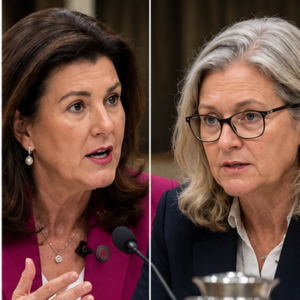
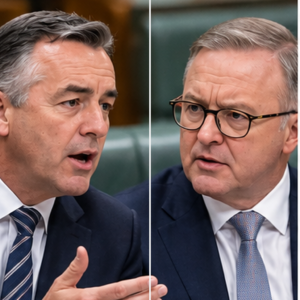
Liberal senator Sarah Henderson and senior bureaucrat Jim Betts have clashed over how parliamentary hearing footage is shared online, exposing a tension between public scrutiny and the safety of officials who give evidence.
At Senate estimates, Henderson defended the use of publicly available parliamentary video as a fundamental part of parliamentary accountability. Senators routinely use excerpts from hearings to explain their questioning to constituents and to draw attention to decisions made by departments. The public has a legitimate interest in observing officials answer questions about spending, administration and policy.
Betts, secretary of the Department of Infrastructure, Transport, Regional Development, Communications, Sport and the Arts, described a different concern. A submission from the Australian Secretaries Board to a joint committee on parliamentary standards had warned about excerpts circulating without sufficient context and generating ridicule, hostility or abuse aimed at officials.
He pointed out that many hours of estimates footage were already in the public domain. The concern, he said, was not simply publication, but selective cutting, attached commentary and the consequences when clips were presented in a way that unfairly humiliated people giving evidence. He also raised hostile and misogynistic comments directed at female public servants in comment sections on politicians’ social-media pages.
The disagreement should not be reduced to a simplistic contest between free speech and censorship. Henderson’s position rests on the importance of transparent parliamentary proceedings. Betts was arguing that transparency does not prevent a short clip being misleading when the surrounding question, answer or correction has been removed.
An edited excerpt can be a useful entry point to a public issue. It can also change the viewer’s understanding of a witness’s answer if it omits relevant context. The distinction depends on the way the material is selected, captioned and distributed. Simply recording a hearing does not immunise every later presentation from criticism.
Senate estimates exist so parliamentarians can test claims, examine departmental decisions and pursue evidence on behalf of the public. The process relies on officials being prepared to explain their work, including when questions are uncomfortable. If officials reasonably fear personalised abuse, that can undermine their willingness to participate openly.
At the same time, any rule that broadly restricts ordinary use of parliamentary recordings could make it harder for journalists, researchers and citizens to examine what happens in public hearings. Rules or guidance should therefore focus on context, attribution and harassment rather than treating all social sharing as harmful.
The exchange did not establish that Henderson herself fabricated a clip or orchestrated abusive comments. Nor did Betts argue that every social-media excerpt is improper. The disagreement concerned the potential effects of selective editing and parliamentary accountability on social platforms built around short, high-engagement content.
The practical question for Parliament is whether it can protect the integrity of evidence and the people providing it without weakening scrutiny. Full recordings, accurate captions, links to the original hearing and effective moderation may all be part of that discussion. The hearing showed why neither openness nor welfare concerns can simply be waved away.
A key feature of this dispute is that a public hearing can be both accessible and difficult to interpret. Estimates committees often sit for hours, questioning ministers and officials about departmental expenditure, the design of programs and the management of agencies. A short extract may highlight a moment of legitimate public interest, especially where a witness gives an unexpected answer or is unable to provide information. Yet a clip that removes the question’s full context or a correction given minutes later can leave an audience with a different impression from the official record.
The submission discussed at the hearing came from the Australian Secretaries Board and was addressed to a parliamentary inquiry into standards. The reported concern was that selected excerpts of proceedings could become vehicles for ridicule, hostility or abuse. It is important to distinguish the existence of that submission from any final finding or enforceable new restriction. A board warning about risks is not itself a determination that a particular senator broke parliamentary rules, and it is not a law restricting the publication of public material.
Henderson’s position reflects a genuine democratic principle. Officials exercising public authority should expect their explanations to be tested and, where appropriate, criticised. Recordings can make a formal parliamentary process visible to people who will never visit Canberra or read lengthy committee transcripts. They allow a senator to show constituents why a question was asked and what a department said. They can also help journalists follow leads, compare official statements over time and check whether an answer subsequently changed.
Betts’s position raises a separate duty of care. Public servants appear before committees as representatives of institutions, not as participants in a political campaign. They may be obliged to answer questions even when they become the focus of aggressive online attention. When criticism turns from the content of an answer to threatening, sexist or personalised abuse, it becomes much harder to defend as ordinary democratic scrutiny. The reported misogynistic comments aimed at women in the public service are particularly relevant because they can discourage employees from visible roles.
The wording placed around a video can substantially affect its meaning. A caption that accurately says an official was unable to provide a figure is different from one asserting, without proof, that the official intentionally concealed it. An excerpt showing confusion over a document is different from a claim of corruption. The underlying footage may be authentic in both cases, yet the commentary can introduce a new accusation. The words actually spoken at a hearing may convey a different impression from the interpretation added to a short clip.
This problem is not exclusive to elected representatives. Media outlets and private social-media users also rely on short video excerpts. Platforms reward attention, and attention can increase when a clip is confrontational or emotionally charged. There may be little incentive in a fast-moving feed to open the full transcript. The answer is not necessarily to remove controversial material; it may be to provide a link to the complete hearing, identify when a clip is shortened and avoid captions that go beyond what the witness actually said.
The distinction between parliamentary privilege and social-media publication also deserves care. Parliamentary proceedings operate under established rules and protections. Material repeated or republished outside that setting may raise different legal questions, depending on the jurisdiction and the circumstances. A senator cannot assume that a provocative allegation acquires the same status wherever it is reposted. Likewise, a person criticised by a public figure still retains interests in reputation and safety. This is an area where precise attribution and legal advice matter more than broad slogans.
Practical safeguards need not deprive viewers of sharp scrutiny. A politician could post the clip alongside the full recording, cite the relevant time in the hearing and describe the exact question being answered. Parliamentary services could improve how video and transcripts are searched, making corrections easier to locate. Social-media accounts could moderate threatening comments and avoid encouraging personal harassment. Such measures would not settle every disagreement about tone, but they would make selective misinformation easier to challenge.
For committees themselves, the credibility of evidence is a shared resource. Senators need officials to answer clearly and candidly. Officials need to know that their answers will not be deliberately stripped of context, even while accepting robust questioning. The public needs a reliable record that can be checked independently of either participant’s preferred framing. The Henderson–Betts exchange highlights a real tension between transparency and accountability for the way transparency is practised.
The exchange produced no finding against Henderson concerning the clips, while Betts focused on the risks of selective presentation. Each was drawing attention to a legitimate concern that can be ignored when the debate is reduced to personalities. The test for Parliament will be whether it can protect open access to hearings while also dealing with the documented problem of online abuse directed at witnesses.
The most defensible standards for clips are those that apply regardless of which party publishes them. If a government minister posts a shortened exchange about an opposition claim, viewers deserve the same access to context as when an opposition senator posts a department official’s answer. Standards that change according to the speaker’s political allegiance would not improve public confidence. Consistency is more important than the number of views an individual clip attracts.
Full committee transcripts are useful but have limits. The written record may capture spoken words while providing less information about interruptions, tone or documents held up during questioning. A full video and a transcript can therefore serve complementary purposes. When a clip makes a serious accusation, referring audiences to both helps them test its meaning. Where an official corrects an earlier answer, including the correction or linking directly to it is particularly valuable.
The online-safety component should also be handled separately. Criticism of a department’s policy, evidence or competence belongs in democratic debate. Threats and targeted harassment do not become more acceptable because they appear under a parliamentary excerpt. An account’s moderation practices can reduce abuse without censoring legitimate disagreement. That distinction, rather than an absolute choice between publication and secrecy, is the most productive way to understand the Betts–Henderson confrontation.