The Bigger Question Behind Labor’s Budget Retreat: How Should Australia Make Economic Policy?
Political battles often focus on individual policies.
A tax proposal.
A budget measure.
A government backflip.
But sometimes the most important story sits beneath the headline.
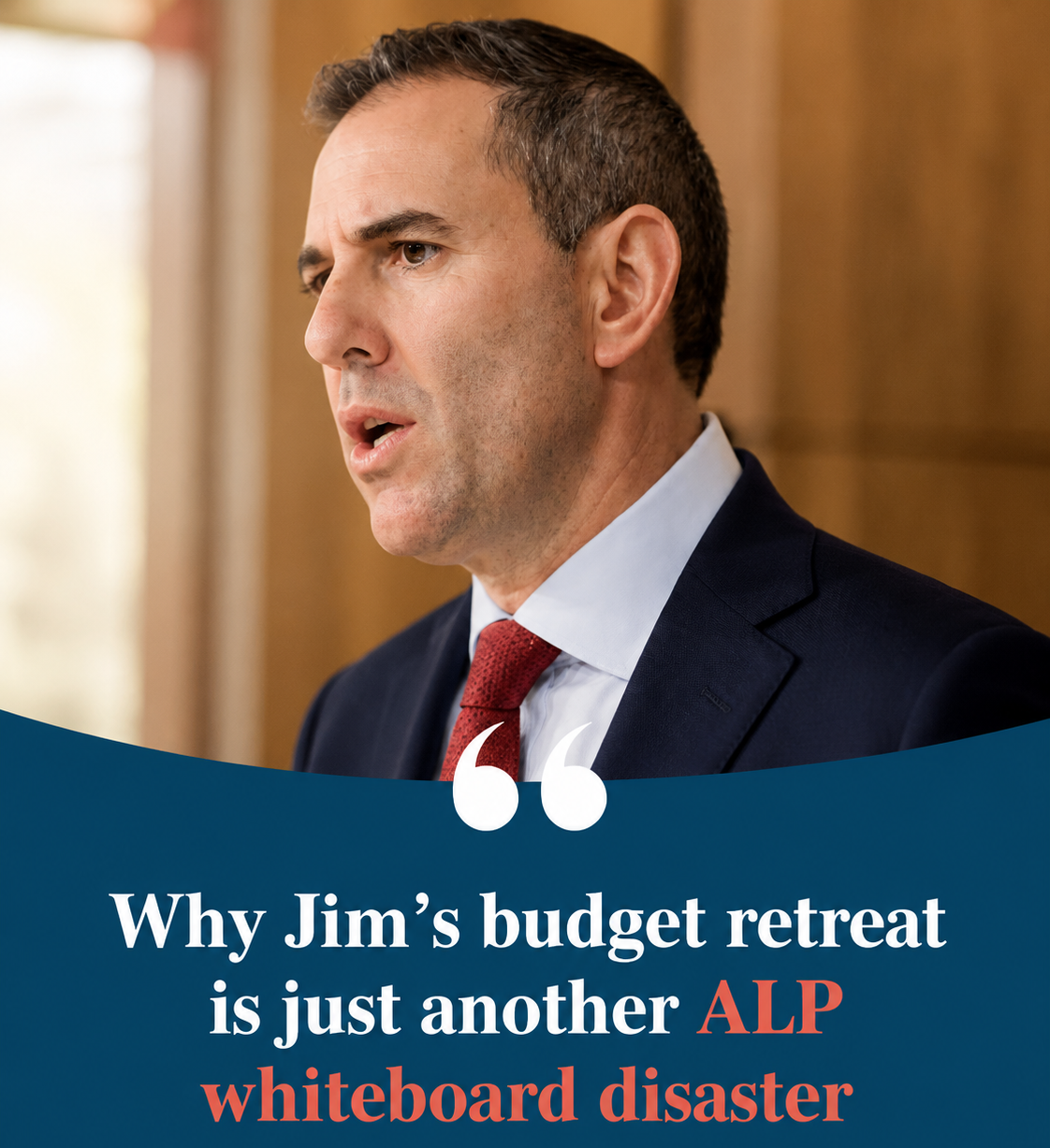
The fierce debate surrounding Treasurer Jim Chalmers’ recent budget reforms has evolved into something much larger than a disagreement over taxation.
It has become a debate about how Australia designs major economic reforms in the first place.
Recent weeks have seen intense scrutiny of several budget measures after widespread criticism from business groups, investors, accountants and industry organisations.
Some proposals were amended. Others were partially withdrawn. Critics argued the government had underestimated the reaction and failed to anticipate practical concerns that emerged once the details became public.
Supporters of the government see the situation differently.
They argue that consultation, feedback and policy adjustments are normal parts of democratic government. Major reforms rarely emerge in perfect form and governments must sometimes refine proposals when legitimate concerns are identified.
The disagreement highlights a fundamental question.
What is the best way to develop large-scale economic policy?
Should governments move quickly when they believe reform is necessary?
Or should they spend longer testing proposals before presenting them to voters and parliament?
There is no simple answer.
Every government faces pressure to act.
Economic challenges rarely wait for perfect policy design.
Housing affordability, productivity growth, tax reform and budget sustainability are issues that require decisions rather than endless discussion.
Yet history also shows that poorly designed reforms can create unintended consequences that last for years.
This tension lies at the centre of the current debate.
Several critics have argued that recent reforms appeared to be developed with insufficient consultation and limited examination of implementation challenges. Senate hearings examining the proposals exposed disputes over compliance costs, modelling assumptions and administrative complexity.
Those concerns have fuelled broader criticism about the policy-making process itself.
Some commentators argue that governments increasingly rely on theoretical modelling and political strategy while paying insufficient attention to real-world implementation.
They point to previous reform efforts where ambitious goals collided with practical difficulties once programs were rolled out.
Others reject that characterisation.
They argue that major reforms inevitably attract resistance because change creates winners and losers.
From this perspective, criticism of policy design is often difficult to separate from opposition to the reforms themselves.
The challenge becomes even greater when governments pursue politically sensitive areas such as taxation.
Tax policy affects investment decisions.
Business planning.
Property ownership.
Retirement savings.
Entrepreneurship.
Almost every sector of the economy feels the impact.
As a result, even relatively small policy changes can generate significant public attention.
Confidence plays an important role as well.
Businesses making long-term investments often value predictability as much as the specific tax rates they face.
Investors prefer stable policy environments.
Households making financial decisions want clarity about future rules.
When policies change repeatedly or appear uncertain, confidence can be affected regardless of the government’s intentions.
This is one reason why recent budget debates have attracted such strong reactions from business leaders.
Many concerns have focused not only on the content of individual reforms but also on how those reforms were developed and communicated.
Australia has faced similar debates before.
Many of the country’s most significant economic reforms were controversial when first proposed.
Some ultimately transformed the economy and became widely accepted.
Others produced outcomes very different from what policymakers originally expected.
The lesson is not that reform should be avoided.
Rather, it is that successful reform often depends as much on process as policy.
Consultation matters.
Transparency matters.
Testing assumptions matters.
Public trust matters.
When those elements are present, governments are more likely to maintain support even when pursuing difficult changes.
When they are absent, resistance can grow quickly.
The current debate surrounding Chalmers’ budget reforms therefore raises a larger issue than any single tax measure.
It asks whether Australia’s institutions are equipped to design complex reforms in an era of heightened political division, rapid news cycles and declining trust in public institutions.
That question affects governments of every political persuasion.
Future administrations will face the same challenge.
How do you deliver meaningful reform while maintaining public confidence?
How do you balance urgency with consultation?
How do you ensure policy works not only in theory but also in practice?
The answers may ultimately prove more important than any individual budget proposal.
Because while specific policies come and go, the quality of the policy-making process shapes the success of every government that follows.






