A dispute about the name of a Tasmanian primary school’s end-of-year celebration has escalated into a political argument involving Premier Jeremy Rockliff, several government figures and the union representing teachers.
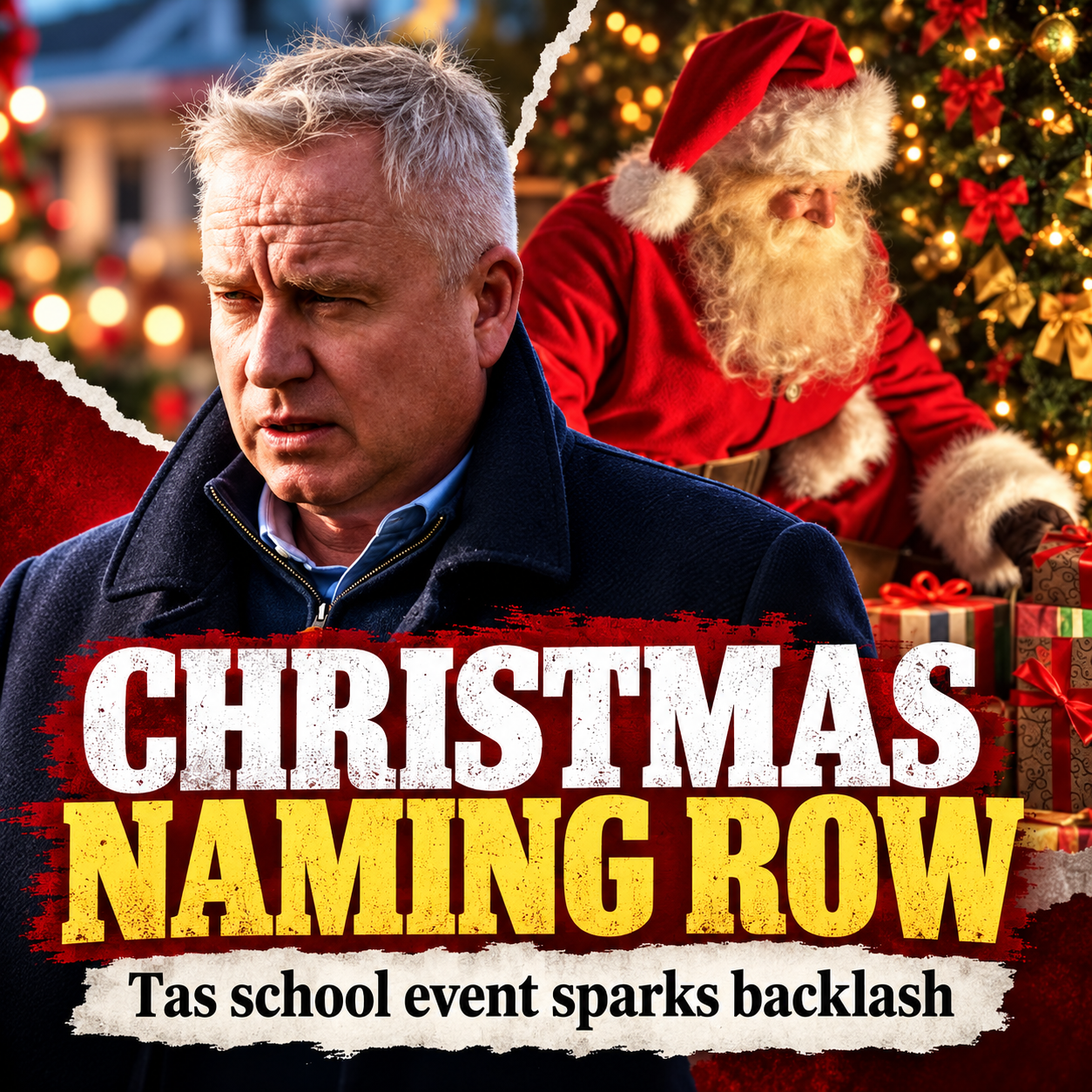
The row intensified on Tuesday, 20 October, as ministers continued posting about Christmas on social media, including an AI-generated image that critics say worsened a situation already causing stress for school staff.
The key fact often lost in the debate is straightforward: the school had planned to rename one end-of-year event, but other activities on its festive calendar continued to refer to Christmas. Claims that the school had comprehensively abolished Christmas celebrations are not supported by the available reporting.
How a school event became a state political story
The dispute concerned a northern Tasmanian school whose celebration previously called ‘Christmas on the Hill’ was being renamed ‘End of Year Extravaganza’.
Premier Rockliff posted on social media after being told that references to Christmas were being removed from end-of-year events. He said he had asked the Education Department to intervene and expressed the expectation that schools would acknowledge and celebrate Christmas.
According to ABC reporting, the premier did not initially name the school in his post. Members of the public nevertheless identified it. That mattered because an apparently general statement by the state’s most senior political leader quickly became attached to a particular school and its staff.
The school’s acting principal subsequently went on stress leave. That is a reported development, but it does not establish that one particular post was the sole cause of the leave. It does underscore why the wellbeing of school employees should not be treated as an afterthought in a public political argument.
The Australian Education Union argued that concerns about school events should have been handled directly and respectfully, rather than debated through posts that could trigger unwanted public scrutiny.
Government figures join the argument
The controversy widened when senior political figures published their own messages about Christmas. Treasurer Eric Abetz posted an AI-generated scene involving a child and the prospect of a cancelled nativity play. Police Minister Felix Ellis and other Liberal figures also commented publicly on the issue.
These posts had political significance because they reinforced the impression that Christmas traditions were under threat. Yet the reporting available on the school’s calendar indicates that Christmas had not been erased from all of its activities.
An AI-created image can communicate a political argument quickly, but it can also create an impression of an event that did not occur. A fictional distressed child in a social media graphic is not documentary evidence of what took place inside a Tasmanian school.
Anyone reporting the debate therefore needs to separate the actual decision about an event’s name from the messaging used by politicians to criticise it.
Union secretary David Genford accused government members of adding to the pressure on school workers. His complaint was about both substance and process: a disagreement involving an education workplace had become a public campaign involving senior political leaders.
Mr Rockliff, for his part, continued to defend his expectation that schools should recognise Christmas. That is a position he is entitled to put forward. The unanswered question is whether the response to this specific school’s decision was proportionate and based on a complete understanding of its calendar.
Culture war or legitimate school policy?
The competing arguments have a familiar shape. One side emphasises the importance of Christmas traditions and the role schools play in community celebrations. The other focuses on accurate information, the autonomy of teachers and the treatment of public servants by their political leaders.
Both can be examined without assuming that recognising Christmas and being inclusive of families from different backgrounds are automatically incompatible. The public deserves to know precisely what a school proposed and whether it removed anything, rather than having to rely on inflammatory summaries.
It is equally reasonable to ask how school policy is set. Teachers and principals work within education department frameworks and communicate with families. When a premier intervenes in a local matter, the intervention should rest on verified facts and be directed through appropriate administrative channels.
The controversy also tests how responsible politicians are for material they choose to post. Artificial intelligence can be used to create a satirical image or an obvious illustration, but context is essential. A dramatic picture should not be presented as a real moment witnessed by an actual child.
What happened to the school’s Christmas activities?
The available reporting establishes a proposed new name for an end-of-year event and identifies other Christmas references on the school’s calendar. It does not establish that every Christmas-related celebration was cancelled, nor that the school had banned students from acknowledging the holiday.
There may be legitimate disagreements about event names, school traditions and inclusion. Reporting becomes misleading when those disagreements are represented as facts that the school did not actually implement.
For readers, the distinction between ‘one event was renamed’ and ‘Christmas was cancelled’ is not semantic hair-splitting. They are substantially different claims about what students and families were being offered.
The distinction between school policy and social-media claims
The reported dispute began with a proposed name change for one event, not evidence that the school had forbidden every Christmas-related activity. That matters because families might make practical decisions based on claims that circulated online: whether to attend an event, what children have been told, and whether the school intends to include familiar traditions in its end-of-year calendar. Before asserting that an entire tradition has been cancelled, the relevant event list and communications should be checked in context.
A school must also communicate with families from different backgrounds while meeting curriculum and administrative responsibilities. Communities may reasonably debate the language used in school celebrations, but a single disputed title does not prove a statewide education policy. No broad ban on Christmas has been established by the reporting underlying this article. It would be inaccurate to convert comments made by individual politicians into a formal direction to every Tasmanian school.
Why AI-generated pictures complicate the story
One politician’s AI-generated image portrayed an imagined family conversation about a cancelled nativity play. Such an image can communicate a political feeling in seconds, but it is not a photograph or documentary record of what occurred at the school. If a reader mistakes a synthetic scene for real evidence, a debate over one event can be transformed into a seemingly verified story of a child experiencing something that may never have happened.
That risk is especially high when an image is shared outside its original caption. A cropped post may lose the attribution that explains who created it and what it illustrates. Political leaders have wide reach and therefore an incentive to mark illustrations clearly, distinguish confirmed facts from assumptions and resist depicting unidentified children as if they were witnesses. The criticism from the education union should be attributed to the union; it is not proof that every parent or teacher shares its view.
What respect for teachers looks like in practice
The AEU’s objection is partly about the manner in which school staff were criticised. Teachers and principals often implement decisions amid competing expectations from families, departments and public officials. Public posts by ministers can lead to a surge of messages directed at a school before its staff have had an opportunity to explain. That can turn a routine planning question into a workplace-pressure issue.
A constructive response need not exclude political scrutiny. Elected leaders can ask departments for information, clarify guidelines and state their preferred approach, while avoiding an accusation that has not been checked. The immediate question is whether decision-makers sought a complete account before commenting publicly. The longer-term issue is how schools communicate changes so parents are not surprised and teachers are not left defending a story built from fragments of a timetable.
A lesson for election-season messaging
Cultural questions can resonate with voters because they touch family routines and a sense of belonging. But the political incentive to be first and emphatic can sit uneasily with the responsibility to be accurate. Claims framed as a battle over Christmas may attract attention while crowding out the more mundane question of what pupils were actually scheduled to do. Media organisations face a similar choice: repeat a dramatic assertion or inspect the underlying documentation.
Nothing in the verified reporting establishes that the school has abandoned Christmas, that the premier ordered a general statewide ban or that social-media engagement reflects broad public opinion. What is confirmed is that the premier spoke out, other politicians posted about the issue, some synthetic imagery was used and the teachers’ union criticised the approach. Updates should track actual school plans and formal responses, not projections about a culture war outcome.
A test of political responsibility
Government minister Nick Duigan told reporters he did not welcome culture wars and favoured respectful disagreement, while saying he supported celebrating Christmas. That framing highlights the choice available to all sides: defend a position without overstating the evidence or targeting school employees.
The most productive next step would be an accurate explanation of the school’s events and an appropriately handled discussion among education authorities, staff and families. Political leaders can then debate broader school policy on its merits.
Until such clarification, the public should treat sweeping claims about ‘cancelled Christmas’ with care. The documented controversy is about the handling of one school’s event plans, the premier’s intervention and the subsequent social media campaign — not proof that Tasmanian schools have abandoned Christmas.






