Tasmanian Labor leader Josh Willie has rejected speculation about his future after fellow MP Shane Broad publicly criticised the party’s direction and called for a Labor movement capable of winning a parliamentary majority. The exchange has exposed tensions over how the opposition should respond to a minority parliament and rebuild support among voters.
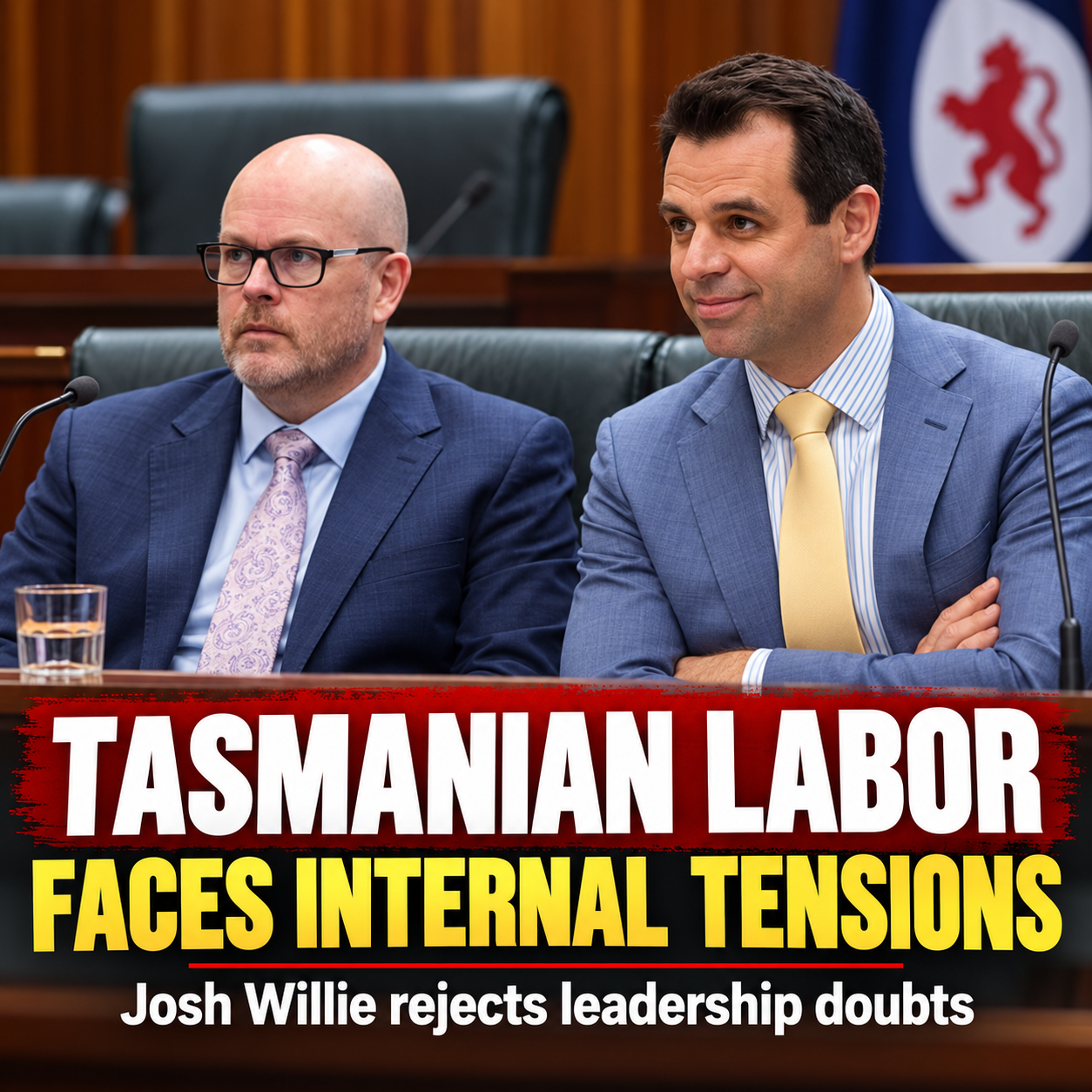
Broad, the member for Braddon, has used social media videos to question what he sees as parliamentary chaos and an excessive focus on the crossbench. He has argued that Labor should set its sights on winning enough seats to govern with a clear majority rather than accepting the current balance of power as an enduring feature of Tasmanian politics.
Willie has brushed aside suggestions that the comments amount to a challenge to his leadership. He has said he is not going anywhere and that his attention is on the everyday concerns of Tasmanians. The party leader has also acknowledged speaking with Broad, without disclosing the details of their conversation.
The comments have attracted particular attention because Labor faces a difficult task in the House of Assembly. The chamber has 35 seats, while the Liberals govern in minority with 14 members and Labor holds 10. Winning an outright majority would require Labor to persuade a much wider group of voters than those already supporting it.
Broad’s criticism reflects impatience within parts of the party about remaining in opposition. His argument is not simply that Labor should win individual debates in parliament, but that it should offer an alternative capable of controlling its own legislative agenda. In a chamber where independents and minor parties wield influence, that is an ambitious political goal.
The dispute has a financial dimension for ordinary Tasmanians because political instability can affect the delivery of services that require long-term investment. Hospitals need staffing plans, schools need reliable funding and housing projects need land, infrastructure and approvals. An opposition cannot implement those plans without winning government, but it can test whether the current administration’s proposals will work and identify credible alternatives. That is the practical standard against which Willie’s leadership argument will be judged. Voters confronting rent increases or long waits for care may have limited patience for internal disagreement that does not explain how their circumstances would improve.
Tasmania’s housing market illustrates why political parties compete over the detail of public services. People living outside Hobart can still struggle to find suitable rentals close to work, while households in the capital face their own pressures from limited availability and rising living costs. Social housing, planning rules, transport and infrastructure all play a part. A government can announce a housing target, but councils, builders, utilities and funding bodies must then bring homes into use. Labor’s challenge is to show not only that it opposes the Liberals’ approach, but which measures it would fund and how those choices would reach the people who need help.
Health is another expensive and politically sensitive service. In a geographically dispersed state, people often travel long distances for specialist appointments or hospital treatment. Staff shortages can be especially hard to address when clinicians have several employment options across Australia. More funding does not automatically translate into more trained workers, and new facilities can be of limited value without people to operate them. When Willie says he wants to concentrate on health, voters can reasonably look for details about recruitment, regional service access and the availability of emergency care rather than a broad promise to spend more.
Willie has presented a different emphasis, talking about education, health, housing and a policy program he believes will appeal to Tasmanian families. Labor has promoted proposals for expanded early learning, while its MPs continue to challenge Premier Jeremy Rockliff’s Liberal government over public services and other controversies.
The disagreement is partly about political style. Broad’s videos offer sharp criticism of the current arrangements in parliament. Willie’s response is to argue that voters will be more interested in what an opposition would do for them than in speculation about who will lead it.
Education and early learning have a direct economic effect on families as well. Accessible childcare can allow parents to take on more work, keep a job or avoid expensive travel between providers. School resources and attendance affect young people long after the immediate political debate has passed. A party seeking majority government needs to persuade households that its proposals are affordable and workable across urban and regional Tasmania. That gives Labor’s policy program a test distinct from Broad’s call for electoral victory: it must explain why people should trust the party with government, not merely why the present arrangements are frustrating.
Minority parliaments can deliver legislation, but they demand negotiation. Crossbench members may support some elements of a budget while opposing others. Committees can insist on changes, and a government may need to explain concessions to competing groups. Supporters see that process as a check on executive power; critics argue it can slow decisions and make policy direction uncertain. Broad’s frustration sits within that wider debate, while Willie is trying to build a party that can compete without appearing hostile to voters who chose independent or minor-party representatives.
Business confidence is one consequence of uncertain policy settings. A regional employer contemplating a new workshop or hospitality venue wants reasonable expectations about rates, planning rules, energy supply and local infrastructure. Investors may delay a decision if a proposal depends on a government payment or approval whose future is unclear. Yet majority government is not itself a guarantee of stable policy, and minority government is not proof of economic failure. Outcomes depend on the quality of agreements, administrative competence and the willingness of parliament to work through difficult details. Those questions matter more to small business than the personalities in a leadership dispute.
Tasmania’s fragmented parliament makes that debate unavoidable. The Liberals need support beyond their own ranks to pass legislation and maintain stable government. Labor must decide how much to cooperate with other members, how to distinguish itself from them and how to persuade voters that its own program deserves a larger mandate.
Polls and internal commentary have added pressure to those decisions. Low support in opinion surveys can unsettle a party even when no leadership ballot is proposed. But the political evidence available is a dispute about strategy and public messaging; Broad has not announced that he is standing against Willie for the leadership.
Labor’s electoral arithmetic is demanding. The House of Assembly has 35 seats, making 18 the threshold for an outright majority. With Labor holding 10 seats, Broad’s preferred outcome would require a substantial change in the way Tasmanians vote. A party may welcome the ambition without agreeing about how to achieve it. Winning seats could involve new supporters in regional communities, better results in existing strongholds or more convincing positions on jobs and household bills. The difference between an aspirational social media message and a practical electoral plan is whether voters can see a credible reason to change their preference.
Willie’s response is therefore important in more than a personal sense. A leader who shuts down disagreement may deepen divisions, while one who allows an internal debate to dominate can lose control of the public message. Broad’s comments need not amount to a formal challenge to raise legitimate strategic questions. The test is whether Labor can demonstrate that its MPs are working towards a recognisable alternative government. For voters, a useful opposition does more than criticise parliamentary negotiations; it identifies what services cost, how they should be funded and which outcomes it can realistically deliver.
Premier Jeremy Rockliff’s government faces its own scrutiny over service delivery and political choices. That offers Labor opportunities to put evidence before the public about budgets, public-sector capacity and the experience of Tasmanian households. But an opposition can lose those opportunities if coverage becomes centred on internal grievances. Broad has asked for a party capable of winning. Willie says that is the party he is leading. The competing statements will ultimately mean little unless Labor makes a convincing case on employment, housing, health and education to the people whose votes it is trying to earn.
The Liberal government has its own difficulties, giving Labor opportunities to challenge it on service delivery and political judgement. Those opportunities are less valuable if debate inside the opposition consumes attention that would otherwise go to its policies. Willie is seeking to show he can keep the party focused while facing questions from within its own ranks.
For Tasmanian voters, the larger issue is whether Labor can turn criticism of minority government into a convincing governing alternative. Broad’s call for a party that can win puts that question sharply. Willie remains leader and is arguing that the answer lies in a program for households and communities, rather than a leadership change.






