Victoria’s energy transition has become a sharp election fight over one of the state’s most contentious proposed transmission projects. Treasurer and Energy Minister Jaclyn Symes is warning that the Coalition’s commitment to scrap VNI West could place the reliability of the electricity system at serious risk. The opposition argues the project is too costly and damaging to farming communities, and says different energy sources and infrastructure should be considered.
The disagreement is about how Victoria should keep power reliable as older coal-fired generators retire and the network changes. It is also about who bears the costs of that change. For communities along the proposed VNI West route, the project is not just a line on an energy map: it raises questions about farm operations, land use, compensation, consultation and the value of agricultural land.
There is a vital difference between a minister warning that a policy could increase the risk of blackouts and a blackout actually occurring because of that policy. Symes’s statement is a political and policy prediction. It does not establish that the Coalition has already cancelled an operating line or that Victorians have lost electricity as a result. Both the VNI West proposal and the Coalition’s alternative remain subjects of political decision-making.
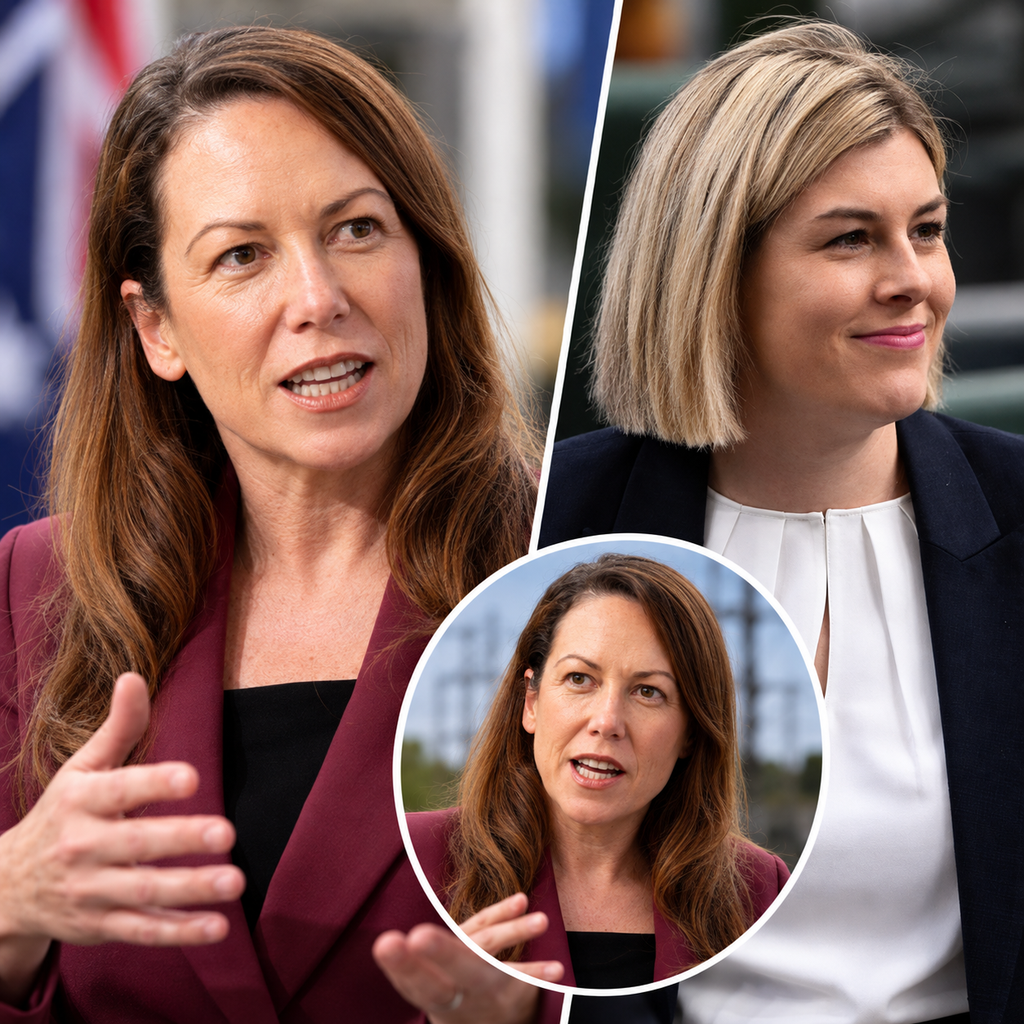
VNI West is a proposed major transmission connection designed to link Victoria and New South Wales more strongly. Its supporters argue that additional network capacity will help move electricity between regions, accommodate new renewable generation and improve the ability of the system to manage periods of high demand or changing supply. The project has attracted intense opposition over its proposed route, cost and impact on rural landholders.
The Victorian Liberal and National parties have publicly pledged to cancel the project if they win government. The position was explained by Nationals deputy leader Emma Kealy, who said the parties had reassessed its economics and preferred other options. The Coalition has discussed extending existing coal generation towards the end of its technical life, unlocking conventional gas resources and developing renewable energy closer to major demand centres.
That position answers the question of whether the Coalition intends to proceed with VNI West, but it does not establish that every proposed alternative would deliver the same capacity, timing or network benefits. An energy plan depends on engineering and delivery details as well as political intent. The cost, timing and feasibility of replacing a major transmission connection require independent assessment.
Symes takes the opposing view. She says the state cannot afford to abandon infrastructure that will be needed as ageing coal generation leaves the system. Her argument is that transmission enables electricity produced in one part of the network to reach homes and businesses elsewhere, especially when supply and demand change. She also questions uncertainty over the Western Renewables Link, another project relevant to moving renewable electricity through western Victoria.
The two projects must not be confused. VNI West is proposed as an interconnector-related transmission development linking Victorian generation and network capacity with New South Wales. The Western Renewables Link is a separate proposed line running from the Bulgana area towards Sydenham in Melbourne’s north-west. Their planning processes and physical routes are not identical, even though they form part of the wider debate about moving electricity from renewable-energy regions towards population centres.
That distinction is important for people affected on the ground. A farmer concerned about a tower location along one route should not be told a decision about another project has already resolved their case. Each project brings its own environmental studies, planning questions, landholder engagement and potential economic effects. The fact that two projects are discussed in the same political argument does not make them a single construction proposal.
Opposition to VNI West has been especially visible among farming communities. Landholders say high-voltage towers and easements could interfere with productive paddocks, machinery, future development and farm management. The Victorian Farmers Federation has welcomed the Coalition’s position, arguing that the damage to agricultural land and family farming operations has been underestimated. Those concerns involve real people and places; they should not be dismissed as mere resistance to renewable energy.
On the other side, the Clean Energy Council and environmental groups have argued that cancelling transmission without a credible replacement could make it harder to keep the system supplied with low-cost electricity as coal plants retire. They say renewable generation can only help consumers if network capacity is sufficient to transport the power. That is a legitimate engineering issue, although claims about the exact future effect on household bills or reliability should be treated as forecasts requiring evidence.
Price estimates have added to the controversy. Reporting has put the proposed cost of VNI West in a multibillion-dollar range that has shifted as project assessments developed. Figures in this debate are estimates, not the final cost of a completed project. When advocates compare the cost of VNI West with alternatives, they must consider the timeframes, grid effects, reliability requirements and construction risks of each option.
Supporters of cancellation sometimes argue that electricity should be generated closer to where it will be used. Urban solar and other distributed energy sources may reduce pressure on parts of the network, but their contribution changes by time of day, weather and available storage. Conventional gas can provide dispatchable energy, but its reliability and cost depend on supply, contracts and infrastructure. Existing coal generators may remain important during transition, but their technical condition and closure decisions impose constraints as well.
These trade-offs show why a simple promise to ‘build more renewables’ or ‘use more gas’ is not, by itself, a complete grid plan. Electricity systems need enough generating capacity, storage, transmission, distribution and reserves to meet demand under difficult conditions. A proposed interconnector has to be assessed for its contribution to those needs, alongside its cost and its effect on communities.
The Coalition’s opponents say cancellation would undermine that planning. The Coalition’s supporters argue the existing plan fails to account properly for agricultural costs and other options. Both sides should be pressed on a common set of questions: what supply would be available, where it would be built, how electricity would reach demand centres, how much it would cost, and what would happen if a major component were delayed?
The conflict also raises a question about consent and the treatment of regional Victoria. People who live far from Melbourne can carry the direct land-use impacts of infrastructure designed to serve the wider state. Meaningful consultation requires more than describing a route as necessary. Landholders need transparent compensation arrangements, credible assessments of alternatives and clear processes to challenge decisions. Energy security can be a public priority without turning affected families into an afterthought.
At the same time, every proposal to stop infrastructure needs a replacement path. Cancelling a project may avoid one set of costs while creating the need for new works or raising other risks. The best comparison is not between an expensive line and an imaginary free alternative; it is between realistic, costed options assessed against the same reliability standards.
Symes’s warning is strongest when framed as a concern that Victoria could lose an important planned component of the future grid. It becomes overstated if presented as proof that power outages are guaranteed. The Coalition’s promise is strongest when it identifies costs and local harms, and weaker if no detailed alternative is available for independent scrutiny. Neither point requires asserting that a blackout has already occurred.
For regional households, the decisions could affect both farm property and future energy prices. For metropolitan households, they may affect the reliability and cost of power delivered through the wider network. Both groups deserve a clear explanation of the options, not just rival political attacks.
The election will decide who shapes the next stage of this policy. VNI West remains a proposed project, the Coalition’s cancellation pledge remains conditional on taking government, and Symes’s reliability warning remains a contested prediction. The urgent policy question is which plan can demonstrate that it will keep electricity dependable while treating the communities affected by new infrastructure fairly.
There is a practical distinction between a project’s announced cost and the cost to consumers if it is not built. A cancelled transmission line might reduce one category of capital expenditure, yet it may change how electricity must be generated or transported elsewhere. Those alternatives can bring their own construction, fuel and network costs. Any public comparison that includes only the transmission price while omitting replacement arrangements is incomplete.
Likewise, assessments of reliability should examine extreme weather, major generator outages and periods when renewable production is low. A normal day’s adequate supply does not necessarily prove the grid can perform under stress. Independent system planning is valuable because it can compare options against a common set of reliability requirements rather than rely on political claims alone. The findings would need to be interpreted within their stated assumptions and planning horizons.
For affected farmers, even a technically sound project can feel unfair if the process is rushed or the compensation inadequate. Transparent route selection, meaningful appeals and landholder support are not merely public-relations exercises; they can influence cost, timing and social legitimacy. The Coalition’s critique of community impacts should be assessed against those realities, while Labor’s reliability argument should not excuse poor treatment of landowners.






