Greens senator Jordon Steele-John has challenged party leader David Shoebridge’s account of his absence from the party room, declaring he is not on leave while complaints about his conduct are examined. The public disagreement adds to pressure on the Greens leadership, but the complaints have not been resolved.
In a six-page statement reported by The Guardian on 18 October, Steele-John disputed Shoebridge’s earlier assertion that he had requested leave. He described the leader’s handling of the matter as a bad call and said he intended to continue his work as a senator.
Shoebridge said on 15 October that Steele-John had requested leave from the Greens party room and that the request was accepted. Steele-John disputes that account. Neither statement is a finding about the separate complaints; they are conflicting descriptions of an internal party decision.
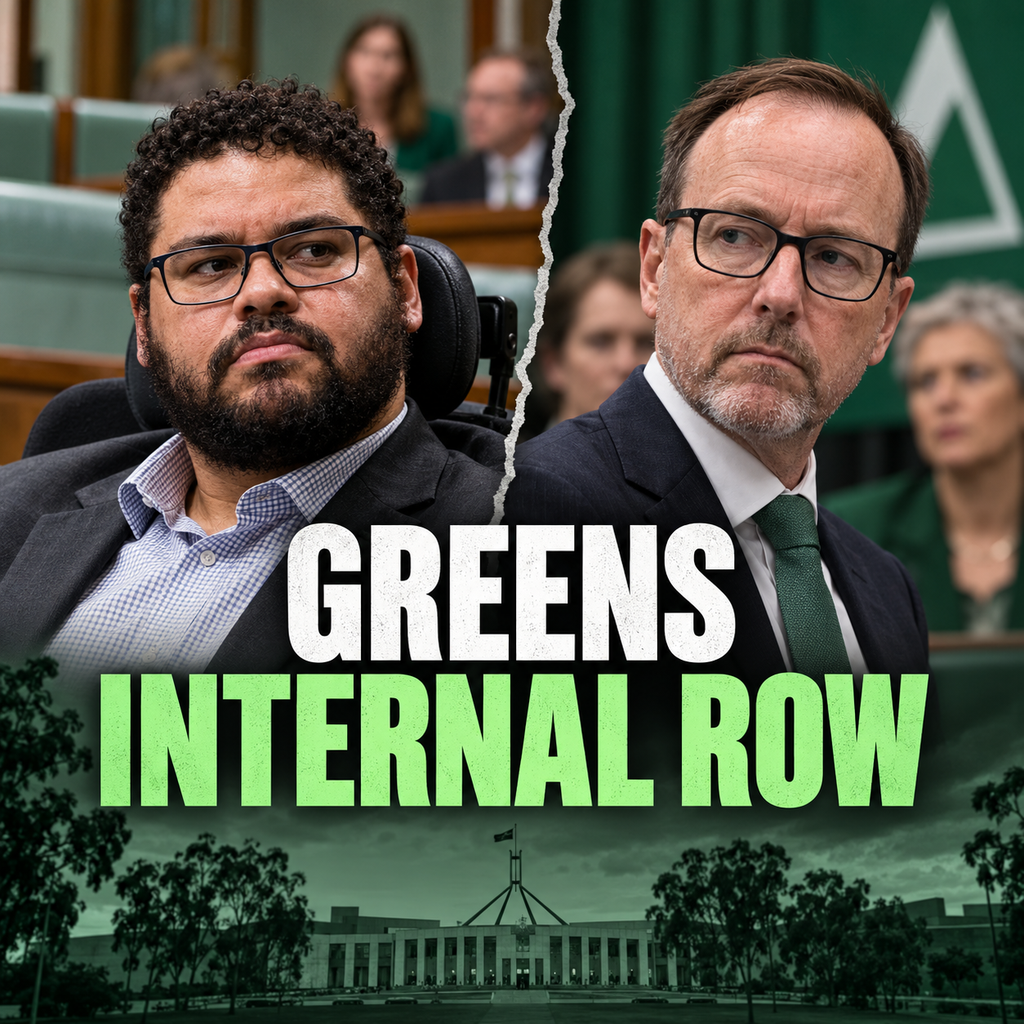
The critical point of disagreement is narrow but significant: whether Steele-John voluntarily asked to step away or was pressured by the leadership. His later statement said he had not agreed to be placed on leave in the way initially described. The leader’s earlier comments portrayed the arrangement differently.
Steele-John has indicated he intends to continue performing his duties as a senator. That does not, by itself, resolve questions about party-room participation or what internal steps may be taken while the complaints are assessed.
The distinction between parliamentary duties and party-room status is easy to miss. A senator’s right to sit and vote in the Senate does not vanish because colleagues are arguing about participation in meetings. Party leaders can, however, have influence over spokesperson roles, parliamentary coordination and opportunities to represent the party publicly. A disagreement about whether a senator volunteered to step away therefore has consequences for both internal authority and how constituents understand the senator’s position.
Seven current and former party members have sought investigation of complaints concerning alleged inappropriate comments or behaviour. Reporting says processes involving the Western Australian Greens and the Independent Parliamentary Standards Commission are examining matters. These are allegations subject to review, not proven findings of misconduct.
Steele-John rejects wrongdoing. He has also argued that elements of the controversy have been politicised and suggested that factional interests within the party may have influenced the release of material to the media. Those suggestions are his position; the available reporting does not establish that any particular faction orchestrated the public disclosure.
Shoebridge has only recently taken over the leadership of the Australian Greens. Handling an internal controversy can expose the tension between protecting people who raise concerns, being transparent with members and avoiding comments that appear to prejudge an inquiry.
The complaint process is not a referendum on party loyalty. The Independent Parliamentary Standards Commission describes an assessment stage in which it considers jurisdiction and available material before deciding whether to investigate. If an investigation proceeds, its published procedure provides for procedural fairness, an opportunity to respond to adverse preliminary findings and, in defined circumstances, review of a final decision. Those safeguards matter to people bringing complaints and to those responding to them. They do not show that any particular allegation against Steele-John has been established or even that every report has reached the same procedural stage.
The issue for the party leadership is not only whether leave was requested. It is how precisely senior figures describe what has happened while a review is running. Public remarks can shape perceptions long before the formal process has finished. A disputed account can also distract from the purpose of the investigation itself.
The political argument over who said what about leave is separate from the responsibility to examine complaints fairly. In a parliamentary workplace, allegations can have serious implications for complainants, respondents, staff and elected representatives even before a conclusion is reached. That is precisely why a public statement, an anonymous briefing or a factional dispute should not substitute for a defined complaints process in which evidence can be tested and relevant people given an opportunity to respond.
The Independent Parliamentary Standards Commission was established to handle certain complaints concerning parliamentary workplaces. The processes applying to any particular complaint depend on its nature and jurisdiction. The existence of a complaints process does not establish wrongdoing by Steele-John.
Some allegations reported publicly relate to periods before the current parliamentary behaviour code began. The commission says it can consider specified categories of historical conduct, subject to the legislation and procedures applicable at the relevant time. That is one reason it is risky to describe a referral, eligibility assessment and completed investigation as interchangeable events. Party processes may also operate alongside statutory procedures, but one body’s announcement should not be passed off as a finding by another. The public record at this point does not justify that leap.
Complaints have been referred for examination, but no final adverse finding has been announced. Steele-John denies wrongdoing. The dispute about party-room leave is a separate question from what the relevant complaint process may ultimately determine.
Steele-John remains a senator, regardless of any temporary arrangements concerning party-room participation. His office and parliamentary responsibilities are separate from questions about attendance at internal Greens meetings. That distinction matters for constituents seeking assistance or wanting to know who represents them.
The row comes at a time when Australian minor parties rely heavily on their public claims to offer an alternative style of politics. A party that speaks about integrity and workplace safety can face particularly close scrutiny of the safeguards it applies to its own parliamentary team. But political embarrassment and legal responsibility remain different questions. A leader can be criticised for communications even when the complaints process has yet to establish what happened.
Membership ballots and candidate preselections can amplify internal disputes, but the timing of an internal contest is not proof that a complaint was manufactured for political advantage. Steele-John has raised concerns about factional motives; any such claim would have to be examined on its own evidence. There is a further distinction between the rights of ordinary party members to debate leadership decisions and the rights of people involved in a confidential workplace complaint. Both interests may deserve protection, and neither can be settled through anonymous leaks to journalists.
The commission’s published guidance also makes clear that a complaint may first be assessed for eligibility and referred elsewhere, rather than automatically progressing to a formal investigation. A respondent can have rights to receive adverse findings and answer them before a final report; a complainant may have rights to confidentiality and a fair process. Those safeguards do not prevent reporting on what two named politicians have publicly said. They do mean the account of their disagreement must not be presented as a substitute for evidence about the underlying conduct.
There is also a workplace dimension beyond the Greens’ electoral fortunes. Parliamentarians employ staff and work alongside volunteers, contractors and other people who depend on clear behavioural standards. Confidentiality can protect witnesses and the fairness of an inquiry, although it may leave voters frustrated by limited information in the short term. An organisation has to explain the public status of its elected representatives without turning an unresolved workplace complaint into a political spectacle. That tension is at the heart of the unusually public disagreement between Shoebridge and Steele-John.
The commission’s public guidance says confidentiality notices can protect witnesses and sensitive information during an inquiry, without automatically restricting information that was already lawfully public. People involved can have support persons, and a decision to investigate is separate from the eventual findings. Those are general safeguards, not confirmation that a particular notice has been issued in Steele-John’s matter. They leave room for the Greens to clarify a senator’s publicly stated party-room position while protecting evidence that a formal process may need to assess privately. The public has a legitimate interest in the first question without being entitled to prejudge the second.
Questions remain about how the leave arrangement was discussed and announced, and what it was intended to cover. More clarity from the party could help settle the dispute over the announcement without interfering with the separate examination of complaints.
For constituents, there is an additional concern about continuity. They need to know whether their senator remains contactable and whether work on disability, housing and other policy matters can continue. Neither a refusal to take leave nor the creation of an investigation, on its own, tells the public what will happen to the political relationship over the coming weeks.
For a party that has argued for workplace accountability elsewhere, the standard it applies internally is likely to attract attention. But accountability does not require predicting the outcome before evidence has been tested. The useful questions are narrower: what was agreed about party-room leave, who was authorised to communicate it, and whether any formal process has reached a reportable decision. A disputed account of a meeting may be politically embarrassing; it should not be treated as proof of the allegations under consideration.
The next substantial development would be an official account of the leave decision or a formal outcome from the relevant complaints process. Until then, the confirmed political dispute is between two Greens colleagues who have given different accounts of the same decision.






