Nearly two weeks after a devastating shark attack at Sydney’s Coogee Beach left her fighting for life, Leah Stewart’s family has shared the most encouraging update yet, revealing the 34-year-old mother is awake, out of critical condition and has finally been reunited with her young daughter.
For many Australians who followed the dramatic rescue and the anxious days that followed, the latest news marks a significant turning point. While Stewart still faces months of treatment and rehabilitation, her family says the progress she has made in recent days has exceeded expectations and brought renewed hope after one of the country’s most shocking shark attacks of the year.
Stewart was critically injured during an early morning swim at Coogee Beach when she was attacked by what authorities believe was a great white shark. Lifeguards, emergency crews and bystanders worked quickly to rescue her from the water before she was flown to St Vincent’s Hospital in Sydney with life-threatening injuries.
Doctors spent days performing multiple complex operations to stabilise her condition. During that time, Stewart remained in intensive care and underwent an arm amputation as surgeons worked to save her life after the severe injuries she suffered in the attack.
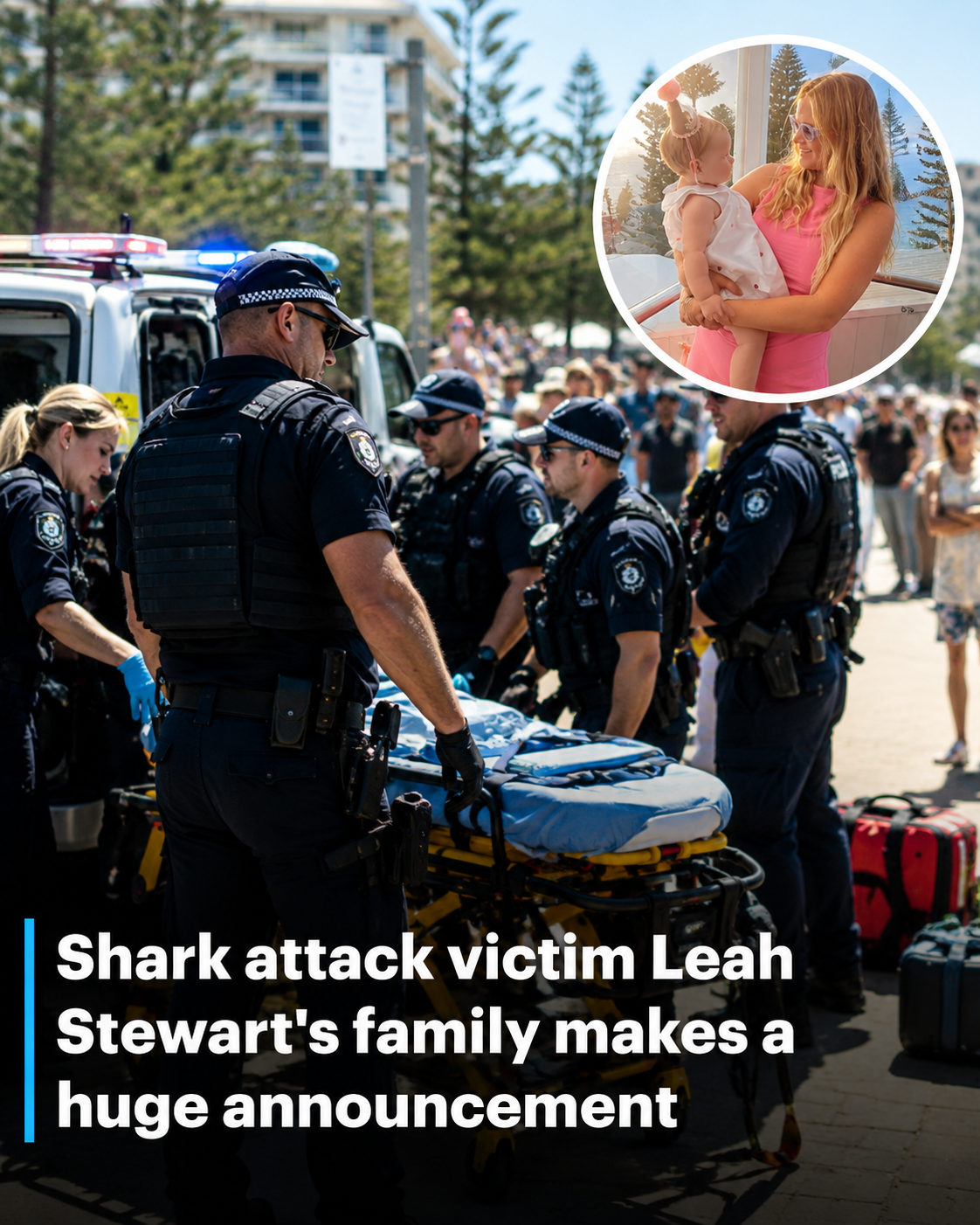
The latest family update paints a far more hopeful picture. According to her brother, Stewart is no longer in critical condition and has now been able to spend precious time with her daughter, August, for the first time since the attack. Family members described the reunion as an emotional milestone after nearly two weeks of uncertainty.
Her brother also revealed that Stewart remembers the attack in remarkable detail. Although she is continuing to recover from major surgery, he said her determination and positive attitude have impressed both relatives and medical staff as she begins the next stage of her recovery.
The physical challenges ahead remain significant. Surgeons are continuing to treat extensive injuries to her remaining arm, where tendons and nerves were also damaged. Doctors expect additional procedures will be required before rehabilitation can fully begin, followed by months of physiotherapy and long-term recovery.
Despite those obstacles, Stewart’s progress has inspired widespread support throughout Sydney. Community fundraising campaigns have attracted hundreds of thousands of dollars to assist with medical expenses, rehabilitation and the financial impact of being unable to work during her recovery. Local residents have also organised beach swims and community events to show support for Stewart and her family.
The attack has also renewed discussion about shark safety along Sydney’s coastline. In the weeks since the incident, authorities have expanded drone surveillance and continued monitoring beaches after several great white shark sightings were reported along parts of the New South Wales coast. Marine experts have noted that seasonal fish migrations can draw sharks closer to shore, increasing the likelihood of encounters during certain times of the year.
For Stewart’s family, however, the focus remains firmly on recovery rather than the circumstances of the attack itself. They have repeatedly thanked the lifeguards, emergency responders, hospital staff and members of the public whose support has helped carry them through one of the most difficult periods of their lives.
Although the road ahead is expected to be long, the latest update represents the strongest sign yet that Stewart is moving beyond the most critical phase of her recovery. What began as a story about survival is gradually becoming one about resilience, determination and the extraordinary support of a community determined to help one of its own rebuild her life.






