Fresh reporting has renewed scrutiny of decision-making during Victoria’s Big Build program, with claims that some construction contractors felt pressure to reach agreements with the Construction, Forestry, Maritime, Mining and Energy Union (CFMEU) during a major industrial dispute.
According to an investigation, the allegations relate to a period when current Victorian Premier Jacinta Allan served as the minister responsible for major infrastructure projects. The report cites internal documents and interviews suggesting that some contractors believed cooperation with the union was expected if projects were to continue without significant disruption.
The reported events occurred during a period of industrial tension affecting several major infrastructure projects across Victoria. Contractors involved in the projects allegedly believed that resolving disputes with the CFMEU was encouraged in order to minimise delays, avoid escalating industrial action and keep construction schedules on track. The article presents these accounts as allegations made by people involved in the projects rather than established findings of fact.
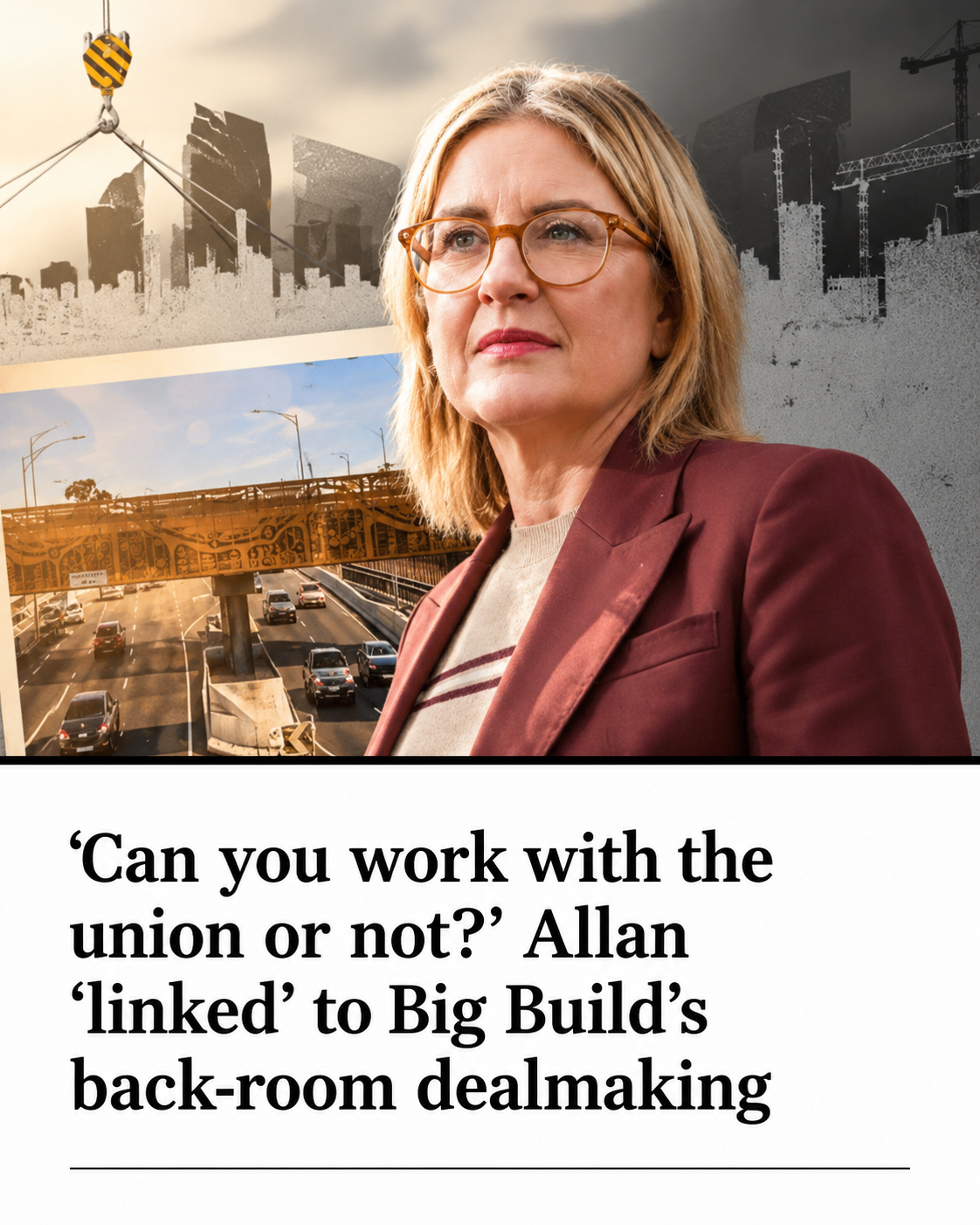
Premier Jacinta Allan’s office has rejected suggestions that she improperly pressured contractors or directed them to reach agreements with the union. Government representatives have maintained that their priority throughout the construction program was to ensure critical infrastructure projects continued while operating within Victoria’s industrial relations and procurement frameworks.
The reporting forms part of broader public debate surrounding the Big Build program, which has attracted ongoing attention over project costs, construction delays, procurement practices and the historical influence of the CFMEU within Victoria’s construction sector. Several separate reviews and investigations have examined different aspects of these issues over recent years.
Industrial relations experts note that governments overseeing large infrastructure programs frequently engage with contractors, unions and industry representatives during workplace disputes. However, determining whether discussions amount to appropriate project management or inappropriate influence depends on the specific facts and evidence available in each case.
At this stage, the matters described in the investigation remain allegations reported by the newspaper. They have not been established by a court or through a final determination by an independent judicial body. As with any contested public issue, the individuals and organisations involved are entitled to present their responses and explanations.
The continuing discussion reflects wider questions about governance, accountability and industrial relations within publicly funded infrastructure projects. As further information emerges through official reviews, parliamentary processes or other investigations, public understanding of the events may continue to develop.






