Victoria’s finances are coming under renewed scrutiny as Premier Ben Carroll unveils new spending commitments and abandons a long-term public transport revenue stream, with credit analysts warning that fiscal discipline will be crucial if the state is to protect its already weakened credit position.
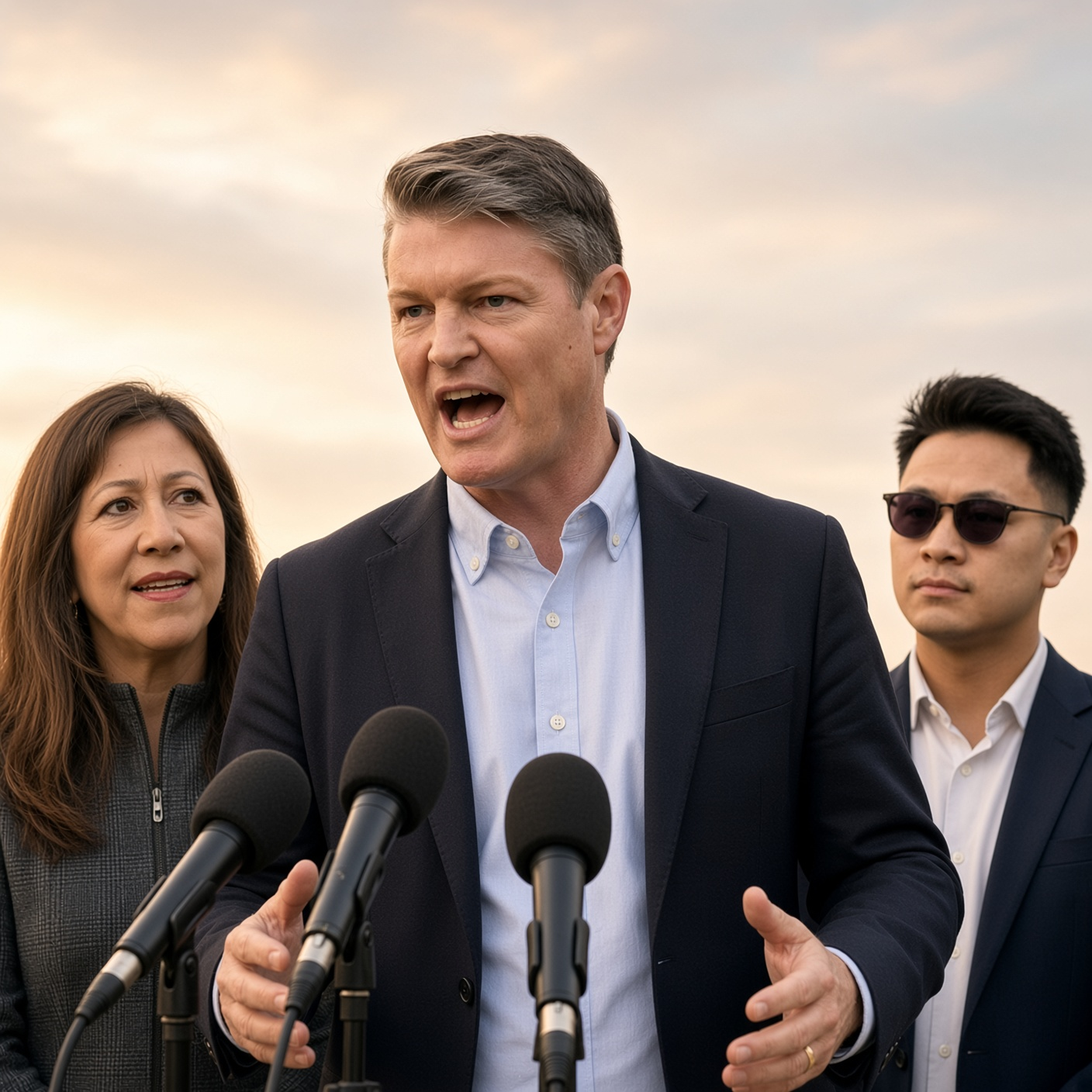
The warning comes less than three months before Victorians vote at the November 28 state election and as the new Premier attempts to distinguish his government from the administrations of Daniel Andrews and Jacinta Allan through a combination of spending restraint, local infrastructure announcements and cost-of-living measures.
But Victoria enters that campaign with less room to manoeuvre than most other Australian states.
S&P Global Ratings reaffirmed Victoria’s long-term credit rating at AA with a stable outlook in late July, but its assessment contained an unusually direct warning about the dangers of election-year spending.
The agency said fiscal discipline remained critical to maintaining the rating, particularly in the lead-up to the November election.
It specifically warned that additional spending announcements could weaken its expectations for Victoria’s fiscal recovery, including unbudgeted election commitments and upcoming wage agreements.
S&P also identified higher infrastructure expenditure, cost overruns and weaker operating margins as circumstances that could place downward pressure on Victoria’s rating.
That does not mean a downgrade is imminent.
Victoria currently carries stable outlooks from all three major agencies used by the Treasury Corporation of Victoria: S&P rates the state AA, Moody’s rates it Aa2 and Fitch rates it AA+.
But the rating agencies are watching a state whose debt position has deteriorated sharply over the past decade and which now relies on a relatively narrow path of operating surpluses, spending restraint and declining infrastructure expenditure to stabilise its finances.
S&P describes Victoria as having the highest debt burden of any Australian state.
Its July assessment estimated tax-supported debt would rise above 200 per cent of operating revenue by 2028 and reach almost 220 per cent by the following year.
Interest costs are also becoming increasingly significant.
S&P expects interest expenditure to reach about 9.7 per cent of operating revenue by fiscal 2029, more than double the proportion recorded in 2023.
That matters because every additional dollar required to service debt is a dollar that cannot be spent on hospitals, schools, police, roads or other services without increasing taxes or borrowing further.
Victoria’s own Budget presents the same underlying challenge through different measures.
The 2026–27 Budget forecasts general government net debt of $175.6 billion this financial year, rising to $183.2 billion in 2027–28, $191.1 billion in 2028–29 and $199.3 billion by 2029–30.
The government argues the more important measure is debt relative to the size of the economy.
On that basis, net debt is forecast to peak at 24.9 per cent of gross state product in 2026–27 before easing to 24.4 per cent by 2029–30.
Labor also expects to maintain operating surpluses, projecting a $1 billion net result from transactions this year, rising to $2 billion by 2029–30.
Those forecasts are central to the government’s claim that its fiscal strategy is working.
They are also why new spending decisions matter so much to ratings agencies.
S&P’s assessment assumes the government will actually deliver its planned savings, control recurrent spending and allow infrastructure investment to moderate.
The agency noted that Victoria has previously struggled to implement savings targets and has often used unexpected revenue gains to finance additional spending.
The election campaign therefore creates a test of whether Carroll can make popular commitments without undermining those assumptions.
Since becoming Premier in late July, he has already announced a series of measures aimed at outer-suburban and regional voters.
The government has committed an extra $352 million to double the number of potholes it says will be repaired, from 250,000 to 500,000.
It has also announced major road upgrades across Melbourne’s growth corridors, including hundreds of millions of dollars for projects in the north and west.
On September 6, the state committed a further $550 million towards upgrading the Western Freeway between Melton and Caroline Springs, alongside the Commonwealth’s existing $1 billion commitment.
The teacher wage agreement has also become substantially more expensive.
Public school teachers, principals and education support staff are set to receive increases of at least 28.3 per cent over four years under a revised deal negotiated after months of industrial action.
Carroll said the package, previously costed at about $5 billion over four years, would now cost somewhere between $5 billion and $5.5 billion.
He has defended that extra cost as an investment in education and the teaching workforce.
Not every recent announcement represents entirely new spending from consolidated revenue.
Carroll has simultaneously ordered savings across government and announced changes to the Suburban Rail Loop that Labor says will free money for other priorities.
The government says it has identified about $1 billion in immediate savings from reducing elements of the SRL East scope.
Those measures include abandoning underground interchanges at Box Hill and Glen Waverley, cancelling an additional Clayton station entrance and removing several pedestrian bridges and other works.
An independent technical review is intended to find another $1 billion, taking Labor’s claimed SRL savings target to $2 billion.
Some road commitments are being presented as reallocations from those savings rather than increases to the overall budget envelope.
Carroll has also promised to cut spending on consultants and external advisers by $70 million.
That makes the fiscal picture more complicated than a simple election “cash splash”.
The government is increasing spending in politically important areas while simultaneously promising savings elsewhere.
The question for ratings agencies is whether those savings are real, durable and sufficient to offset the additional commitments.
S&P has made clear that it is not simply interested in headline announcements.
Its rating assessment depends on the underlying operating balance, infrastructure costs, debt accumulation and the government’s ability to deliver savings that appear in its financial projections.
The sudden cancellation of the Rail Improvement Charge has added another uncertainty.
The levy was revealed publicly through the Victorian Auditor-General’s examination of the Suburban Rail Loop.
It involved an additional 1 per cent annual increase in public transport fares above CPI, designed to compound over decades.
The levy had been approved by government and operating since January 2025, but the Auditor-General found it had not been acknowledged in public communications accompanying the 2025 and 2026 fare increases.
Internal Treasury modelling estimated the charge would raise about $8 billion in net present value terms over 37 years to 2062.
Sixty per cent of that amount — about $4.8 billion — was intended to contribute to financing SRL East.
The levy was particularly important because Treasury considered it a source of genuinely new revenue capable of servicing project-related borrowings.
VAGO found the government had even approved removing reference to the rail improvement charge from public communications about the SRL value-capture package.
After the arrangement became public, Carroll announced that it would be scrapped.
Politically, the decision allowed the Premier to distance himself from an unpopular and undisclosed charge.
Financially, it removes a long-term revenue source at a time when Victoria is already carrying substantial debt.
The $8 billion figure should not, however, be interpreted as an immediate $8 billion hole in the current Budget.
It is the estimated present value of revenue that would have accumulated over more than three decades.
In the short term, the levy had raised very little.
The Auditor-General reported that only about $6.2 million had been collected between January 2025 and the end of February 2026, significantly below what had originally been forecast.
Its larger importance was as a future revenue stream supporting long-lived borrowings.
Removing it means the government must either reduce spending, identify another source of revenue, find larger savings or accept additional pressure on debt.
That is particularly relevant because SRL East remains financially challenging even before the levy is removed.
VAGO found the project was more likely than not to exceed its previous public upper cost estimate of $34.5 billion and produced an indicative potential outturn cost of more than $36 billion based on information available at the end of 2025.
The Auditor-General also found the project’s financing strategy was not transparent and involved significant uncertainty.
The Commonwealth has committed $6 billion towards the project, while Victoria has sought a total federal contribution of about $11.5 billion.
The remaining gap has placed additional pressure on the state to secure other sources of funding.
Carroll’s government argues its recent changes to SRL demonstrate the new Premier is prepared to make difficult decisions.
Labor has reduced the project’s announced investment estimate to $33.3 billion after the first tranche of scope reductions and says another technical review will seek further savings.
The Premier has repeatedly said he intends to treat taxpayer money with greater discipline and redirect spending towards services and infrastructure Victorians use every day.
That political strategy is understandable.
Road conditions, congestion, teacher shortages and the cost of living are immediate concerns for voters, while the financial benefits of lowering long-term debt are far less visible.
But ratings agencies are concerned precisely because election campaigns create incentives for governments to prioritise popular near-term spending over longer-term fiscal repair.
S&P said it has observed expenditure balloon at other Australian states during election periods.
Victoria is more exposed to that risk because its starting debt burden is already so high.
The agency’s downside scenario is clear.
If financial management weakens, operating margins deteriorate, infrastructure spending rises or project costs escalate, Victoria could perform worse than S&P currently expects.
That would push debt and interest costs higher and could ultimately result in a lower rating.
A downgrade would not cause a sudden financial crisis, but it could increase borrowing costs and reinforce investor concerns about the state’s long-term finances.
That effect becomes more important as Victoria refinances growing volumes of debt at higher interest rates.
S&P estimates long-term debt maturities have risen to roughly $15 billion to $16 billion a year, compared with less than $5 billion before the pandemic.
The government therefore faces a difficult balancing act over the final months before polling day.
Carroll wants to demonstrate that his premiership represents a reset: more investment in basic services and local infrastructure, tighter controls on consultants and bureaucracy, and changes to expensive megaprojects.
But each new commitment will be measured against a fiscal recovery that rating agencies already describe as lengthy and fragile.
Victoria is not currently facing a ratings crisis. Its outlooks remain stable and its economy remains large, diversified and capable of generating substantial revenue.
The warning is about what happens next.
If Carroll can genuinely fund new priorities through sustainable savings and keep the Budget on its projected surplus path, Victoria’s debt-to-economy ratio could begin to stabilise.
If election spending outruns those savings — or major projects cost more than expected — the state’s already limited fiscal buffer could shrink further.
That is why the next round of election promises will be watched not only by Victorian voters, but by the agencies that decide how financially risky the state has become.






