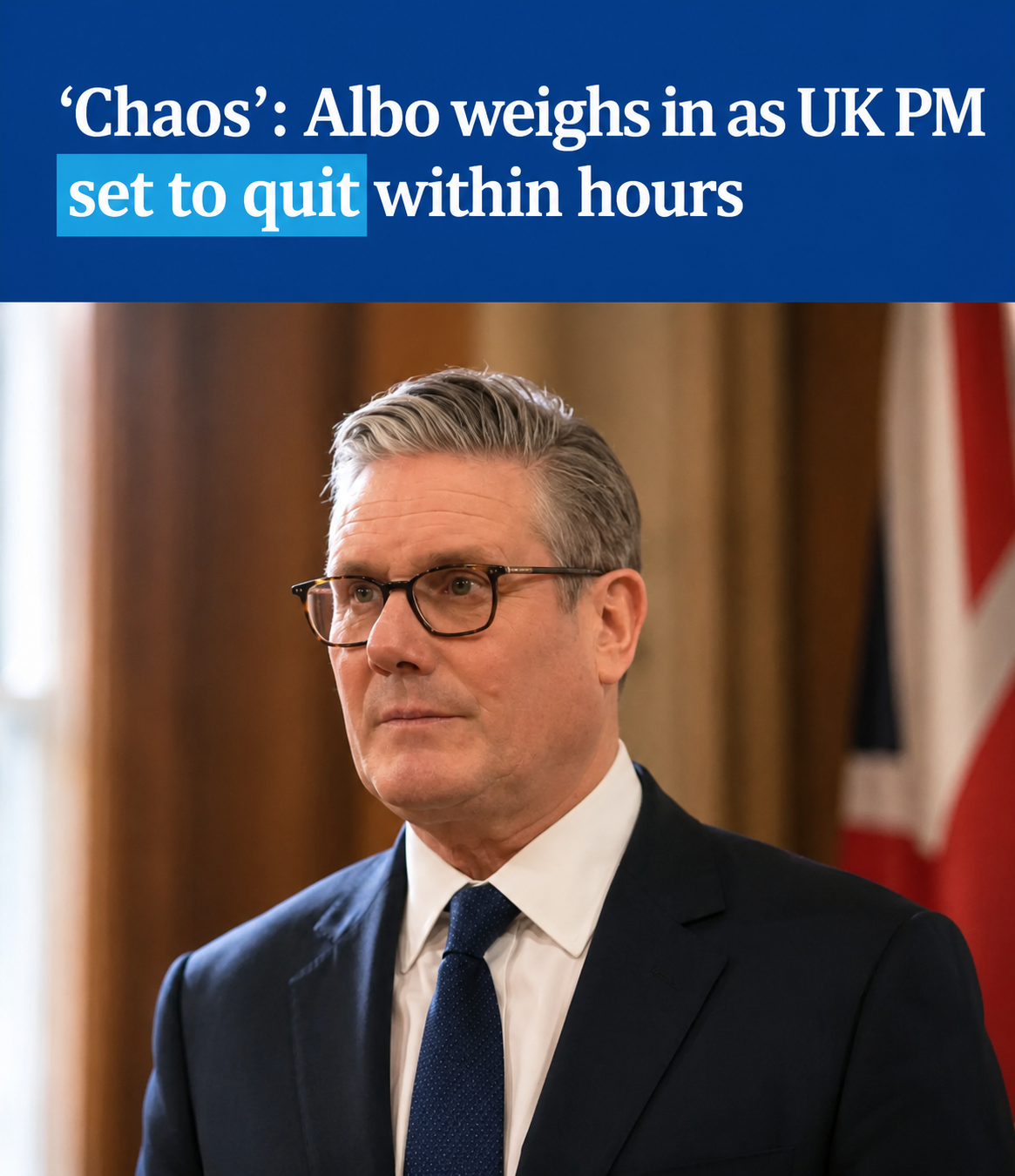
Just months after leading Labour into government, British Prime Minister Sir Keir Starmer is facing growing questions about his political future, with reports suggesting some allies believe pressure inside the party is becoming increasingly difficult to ignore.
The speculation has intensified as dissatisfaction over government decisions, economic pressures and political setbacks continues to generate headlines across the United Kingdom.
While no formal leadership challenge has emerged, reports that some figures within Labour are concerned about Starmer’s long-term position have fuelled fresh debate about the stability of British politics.
The discussion has even drawn attention in Australia, where Prime Minister Anthony Albanese has reportedly warned against yet another period of leadership turmoil in the UK.
His comments reflect wider concerns about political instability following years in which Britain cycled through multiple prime ministers in rapid succession.
For many voters, the issue goes beyond personalities.
After years of political upheaval, economic uncertainty and leadership changes, there is growing fatigue among sections of the British public who simply want stability and effective government.
That expectation helped deliver Labour a historic election victory.
But winning power and governing successfully are often very different challenges.
Like many governments around the world, Starmer’s administration has found itself confronting difficult realities including economic pressures, public spending demands, housing concerns and voter expectations that often exceed what governments can realistically deliver in the short term.
Those challenges have created political vulnerabilities that opponents have been quick to exploit.
Recent controversies have also intensified scrutiny of the Prime Minister’s leadership style and strategic direction.
Supporters argue that Starmer inherited significant challenges and requires time to implement long-term reforms.
Critics counter that governments are ultimately judged by results rather than intentions.
The debate mirrors political pressures being experienced in many Western democracies.
Across Europe, North America and Australia, voters have become increasingly impatient with governments they believe are failing to improve living standards or address concerns around housing affordability, migration and public services.
That environment has made governing more difficult for leaders across the political spectrum.
For Albanese, the developments in Britain carry particular significance.
Australia and the United Kingdom maintain close political, economic and strategic ties, and instability in one country often attracts attention in the other.
There is also a broader lesson that many political observers see in the British experience.
Frequent leadership changes can create uncertainty for voters, businesses and international partners.
While leadership challenges sometimes resolve political problems, they can also deepen divisions and distract governments from policy priorities.
The United Kingdom experienced exactly that during a turbulent period that saw multiple prime ministers come and go within a relatively short timeframe.
Many Labour supporters had hoped Starmer’s election victory would mark the beginning of a more stable chapter.
Whether that expectation is met may depend on how successfully the government responds to the issues that matter most to voters.
Cost-of-living pressures remain a major concern.
Housing affordability continues to dominate political discussion.
Public services face growing demands.
These are the same issues that have challenged governments across much of the developed world.
As a result, the speculation surrounding Starmer is not simply about one politician’s future.
It reflects broader questions about whether modern governments can meet rising public expectations in an era of economic and political uncertainty.
For now, Starmer remains in office and Labour continues to govern with a substantial mandate.
But the emergence of leadership speculation so early in a government’s term demonstrates how quickly political fortunes can shift.
The coming months may determine whether the current concerns fade away or develop into a more serious challenge to the Prime Minister’s authority.






