Queensland has become the last state or territory yet to formally sign its side of the Thriving Kids agreement, putting the state and the federal government at odds just as the first phase of the new support system is due to begin.
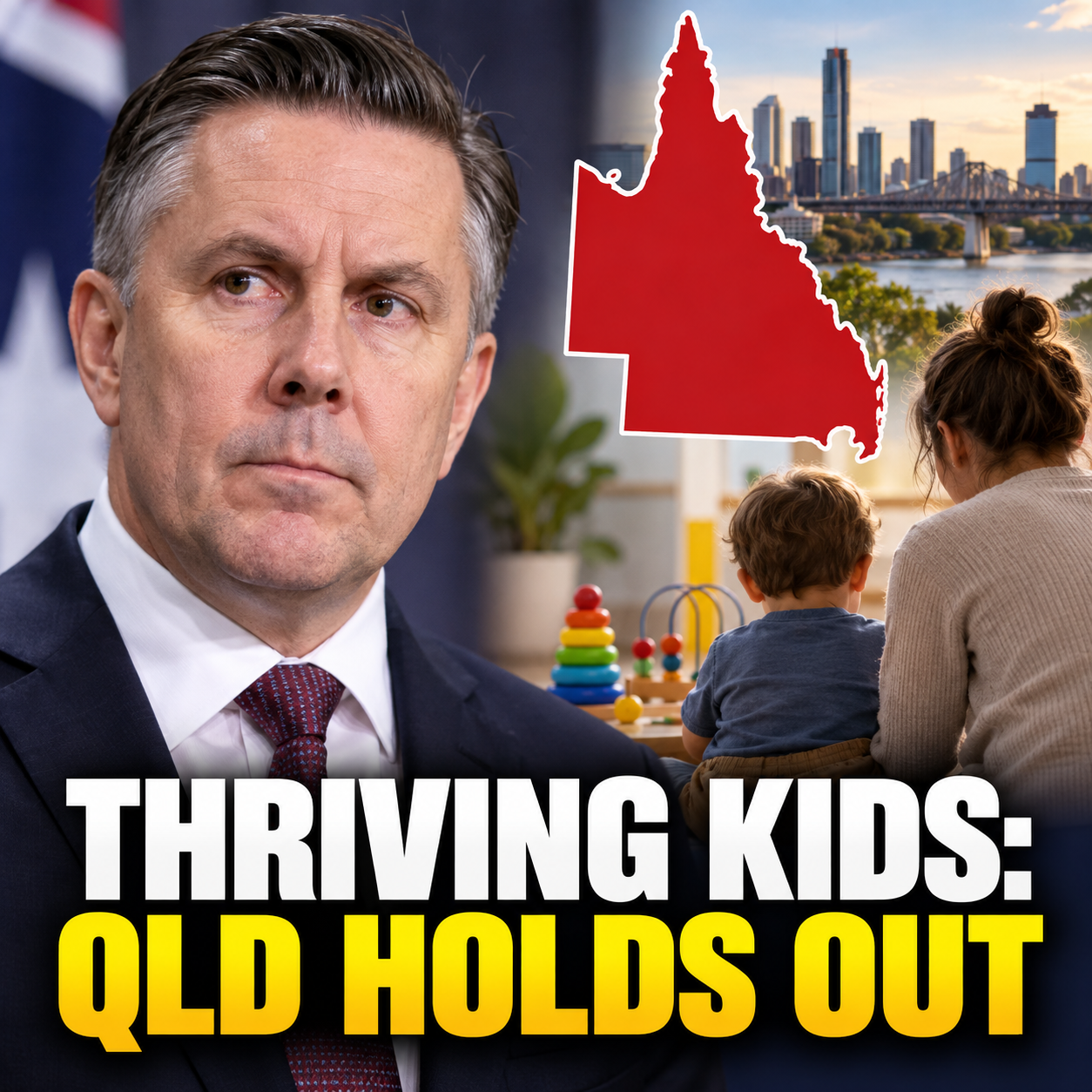
Federal Health and Disability Minister Mark Butler has publicly criticised the delay, arguing that Queensland families are losing valuable preparation time while every other jurisdiction develops its own delivery model. The Queensland government says its hesitation reflects unresolved questions about funding, responsibilities and the risk that vulnerable children could be shifted away from the NDIS before alternative supports are sufficiently clear.
The dispute matters because Thriving Kids is not a small pilot sitting at the edge of disability policy. It is a central part of the federal government’s attempt to change how Australia supports children under nine with developmental delay or autism who have low-to-moderate support needs.
Under the national model, those children are intended to receive more help through mainstream and community settings outside the NDIS, while children with permanent and significant disability, including children with higher support needs, would continue to be eligible for the scheme.
The Commonwealth says the purpose is to rebuild services that can identify developmental needs earlier and provide practical support in places where children already spend time, including health, education and community settings. The policy is also part of the government’s effort to put the NDIS on a more sustainable financial path after years of rapid spending growth.
That makes Queensland’s position significant beyond a conventional state-versus-Commonwealth funding argument. Families need to know who will provide services, what those services will look like, when they will become available and how the transition will work if a child’s needs change over time.
The national model has been developing for more than a year. The federal government first announced Thriving Kids as a way to create an alternative pathway for younger children whose needs may be better met through early intervention and broader community supports than through an individual NDIS package.
An advisory group led by child-development experts recommended a model focused on earlier identification, family-centred support and services delivered in everyday settings. The government has said the model should recognise that children’s needs are not fixed and can change as they grow.
National Cabinet later agreed to the final design, and the Commonwealth committed $2 billion over five years toward the program. The federal government says state and territory governments will play a major role in delivery, reflecting their existing responsibility for health, education and many community services.
The rollout is staged rather than immediate. The first phase is due to start on October 1, with full implementation planned by January 1, 2028. That timetable is important because the government has repeatedly said children already enrolled in the NDIS will not simply be removed en masse when the new model begins.
According to federal government material, children under nine who are enrolled in the NDIS before January 1, 2028 for developmental delay or autism with low-to-moderate support needs will remain subject to the reassessment arrangements in place before that date. Children with permanent and significant disability, including those with high support needs, are intended to remain within the NDIS.
Butler has also said the government does not want children to fall between systems. In earlier public comments, he said there must be working supports in place before the transition takes effect and described the new program as a way to rebuild services that had weakened or disappeared as the NDIS became the default destination for many families.
Queensland’s Liberal National government has not rejected the idea of additional early-development supports. Its dispute is about the agreement around them. The state has raised concerns that the Commonwealth could be shifting costs and responsibilities to states without enough certainty about who qualifies, what services must be provided and how those services will be funded over time.
One of the key unresolved questions identified publicly by Queensland is how “low to moderate” support needs will be defined. That phrase is central to the program because it helps determine which children are expected to use Thriving Kids and which children may remain on the NDIS.
For families, that is not an abstract classification. A child’s developmental profile can be complex, and needs can change significantly between toddlerhood and school age. Parents and disability advocates have therefore focused on whether the assessment process will be consistent, whether there will be clear pathways back to the NDIS when needs are more significant, and whether local services will actually exist when families are referred to them.
The federal government’s position is that the model has been designed precisely to avoid a cliff-edge. It says the program will be rolled out progressively and that children with significant and permanent disability will continue to have access to the NDIS.
But Queensland argues that signing a bilateral agreement before all of the operational detail is settled could leave the state carrying financial and service risks that should remain with the Commonwealth.
That disagreement has become sharper because every other jurisdiction has formally signed. Butler has used that fact to pressure Queensland, saying Liberal and Labor governments elsewhere are already preparing their programs and that a large, geographically dispersed state cannot afford to lose time.
Queensland, however, says the number of jurisdictions that have signed does not answer its concerns about the substance of the deal. The state has argued that families need certainty about services, not simply an agreement between governments.
The political language on both sides can obscure the practical challenge. Thriving Kids will require coordination across health, disability, early childhood education, schools, allied health and community services. Those systems are funded and managed differently in each state, which means implementation will inevitably vary even under a national framework.
That variation can be useful if states build services around local needs, but it also creates a risk of uneven access. A family in regional Queensland may face very different service availability from a family in inner Brisbane, just as access differs between metropolitan and regional communities in other states.
Workforce capacity is another issue. Early intervention relies on professionals such as speech pathologists, occupational therapists, psychologists, paediatricians, educators and other developmental specialists. In areas where those workforces are already stretched, creating a new program does not automatically create additional practitioners.
The government’s response is that Thriving Kids is meant to use a broader mix of services than the individual therapy model many families associate with the NDIS. Group programs, parent coaching, school and early-learning support, community-based services and earlier screening could all form part of the system.
For disability advocates, the quality of those alternatives will be the real test. A program that is easier to access but too generic would not solve the problem. Nor would a system that pushes families between agencies when a child does not fit neatly into one category.
The funding structure is also central to the dispute. The Commonwealth has linked Thriving Kids to a broader National Cabinet deal covering hospital funding and NDIS reform. Butler has argued that states received substantial additional hospital funding while agreeing to cooperate on reforms designed to slow NDIS growth and rebuild supports outside the scheme.
Queensland’s position is that broader intergovernmental agreements do not remove the need for clarity on the specific costs and obligations of Thriving Kids. That is why the disagreement has continued even as the national rollout date approaches.
There is also a wider policy question about the original purpose of the NDIS. The scheme was created for Australians with significant and permanent disability, but over time it became a major source of developmental support for young children because other systems often did not provide enough help.
The federal government argues that this created an unhealthy dependency on one expensive insurance-style scheme for needs that could sometimes be supported more effectively through universal and community services. Critics worry that governments may use that argument to reduce NDIS access before the replacement system proves it can meet demand.
Both concerns can exist at the same time. The NDIS can be financially unsustainable in its current trajectory while families can also be legitimately worried about losing reliable support. The success of Thriving Kids will depend on whether governments can solve both problems rather than choosing one over the other.
For Queensland families, the immediate issue is therefore not whether the national policy exists. It is whether the state and Commonwealth can resolve their funding and implementation dispute early enough for services to be designed, staffed and communicated clearly.
The October start is only the first stage, and full implementation remains scheduled for 2028. That gives governments time to refine delivery, but the planning window is shrinking.
Butler’s criticism is that Queensland is wasting that window. Queensland’s answer is that signing without enough detail could create a different problem later.
The next step is likely to be continued negotiation over the bilateral agreement and the practical definition of responsibilities. Families will be watching for more than political statements: they will need details about eligibility, referral pathways, service locations, safeguards and what happens when a child’s support needs increase.
Thriving Kids is designed to become a major new part of Australia’s disability and child-development system. Whether it works will depend less on the name of the program than on whether families can find real support when they need it. Queensland’s holdout has put that implementation question at the centre of the national debate.