A public dispute between Liberal frontbencher Andrew Hastie and One Nation leader Pauline Hanson over a political cartoon has widened into a broader argument about political rhetoric, personal responsibility and the treatment of veterans in Australian public life.
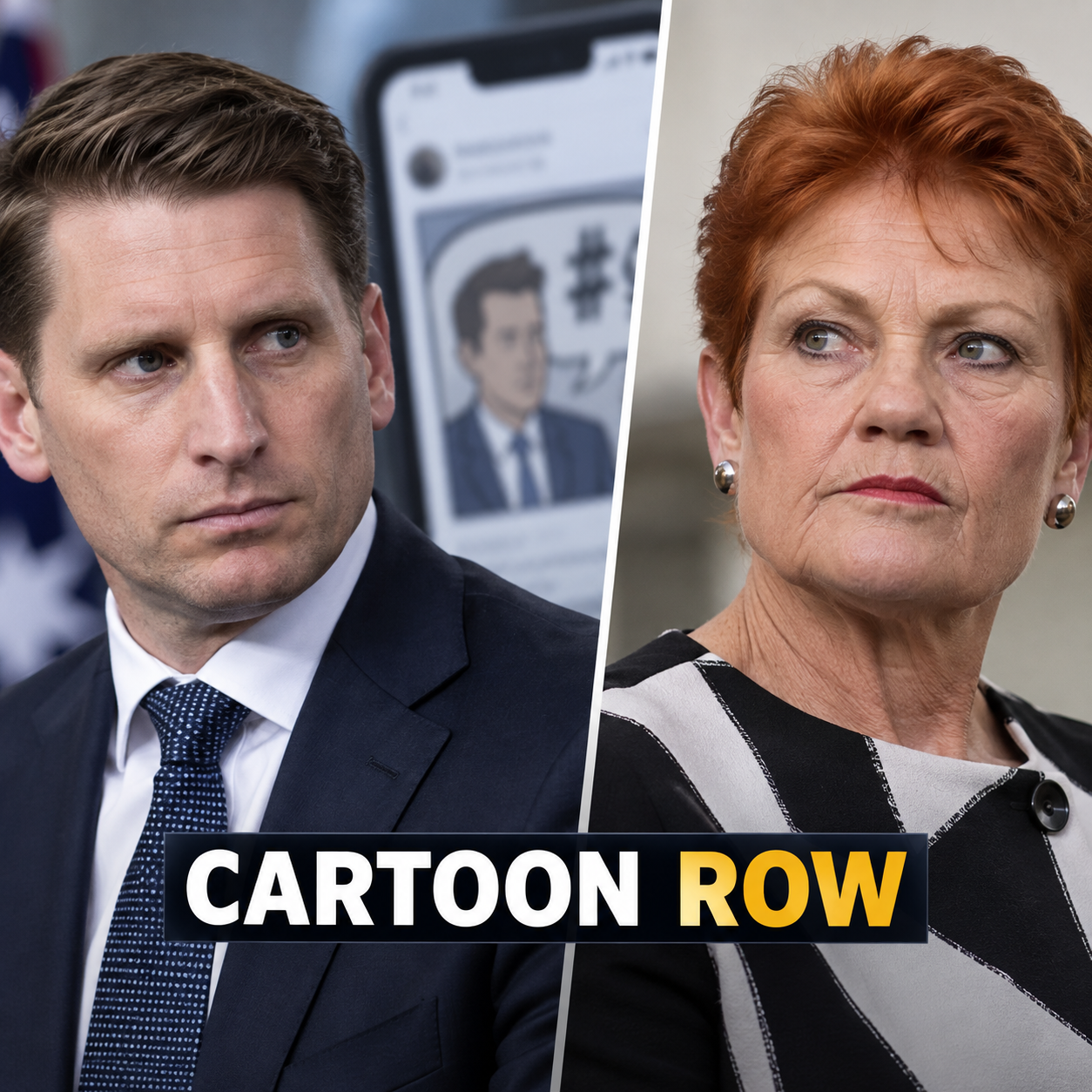
The dispute centres on a cartoon video published on Hanson’s social media account that repeatedly described Hastie, a former Special Air Service soldier, with the word “traitor”. Hastie demanded that the video be removed and accused Hanson and One Nation MP Barnaby Joyce of refusing to take responsibility for the language.
Hanson and Joyce have both said they did not personally call Hastie a traitor. Hanson has described the video as satire and refused to remove it. Joyce has also said he had not previously seen the cartoon and has argued that he did not use the label himself.
Those distinctions matter. The video used the term, and it was published through Hanson’s social media presence. Hanson’s position is that the material is satirical and should not be treated as a literal personal allegation from her. Hastie’s position is that keeping the cartoon online means the party and its leader remain responsible for the content they distribute.
The disagreement has attracted criticism from politicians across party lines and from figures with military backgrounds, partly because of Hastie’s service record and the seriousness of accusing someone of betrayal in a national-security context.
Hastie served in the SAS and later entered federal parliament. The cartoon dispute also touches on his involvement in legal proceedings connected to former soldier Ben Roberts-Smith, where Hastie was subpoenaed to give evidence for the defence in a defamation case.
One Nation’s video used that history in a satirical political attack. Hastie has argued the label goes beyond ordinary political criticism and amounts to a slur against his character and military service.
Hanson has rejected that interpretation. She has said she did not personally use the term and has framed the video as exaggerated political satire rather than a factual statement that Hastie committed treason or betrayed Australia.
The distinction between satire and factual allegation is central to the controversy. Political cartoons have a long tradition of exaggeration, ridicule and provocative imagery. They are often designed to attack reputations or ideas in ways that would be understood differently from a straight news report or formal accusation.
But satire does not remove all responsibility for the words or images used. Public figures can still challenge content they believe crosses a line, and publishers can still be criticised for choosing to distribute material that uses highly charged language.
That is effectively where the dispute sits. Hastie is not merely objecting to criticism of his politics. He is arguing that a specific label carries a meaning serious enough that Hanson should either stand behind it as her own position or take the content down.
Hanson’s response is that the cartoon should be understood as satire and that Hastie is overreacting. She has said the video will remain online.
Joyce has taken a similar line on personal responsibility, saying he did not call Hastie a traitor. He has also suggested Hastie’s reaction is political and connected to competition between the Liberal Party and One Nation.
That motive claim is Joyce’s political interpretation, not an independently established fact. The verifiable issue is the content of the cartoon, Hastie’s objection, and Hanson and Joyce’s responses.
The dispute has been amplified because several other politicians have condemned the video. Independent senator Jacqui Lambie, a former soldier, criticised the use of the term and argued the cartoon was unacceptable. One Nation’s own Western Australian leader also distanced himself from the material and called for political debate to be less heated.
Those reactions show that the controversy is not confined to a simple Liberal-versus-One Nation argument. It has raised a broader question about how parties use social media material that is designed to provoke attention and whether traditional standards of political accountability apply differently to cartoons, memes and animated videos.
Digital political communication can blur those boundaries. A party can publish content that is informal, humorous or deliberately outrageous, while still reaching very large audiences under the party leader’s name and branding.
That creates a practical accountability problem. When content attracts criticism, a politician can argue it was satire or produced by a broader media team. Critics can respond that publishing it through an official or leader-linked account makes the political organisation responsible for the message regardless of who wrote every line.
Hastie has taken the latter view. His demand is simple: if Hanson does not personally stand by the label, the video should be removed.
Hanson has rejected that demand. Her response effectively separates the cartoon’s satirical voice from her own literal words and treats the video as a form of political commentary that can remain online even if she would not use the same description in a direct statement.
The argument also illustrates why loaded words require careful handling in news coverage. The fact that a cartoon uses a term does not make the term an accurate description of the person targeted. Reporting should attribute the label to the cartoon and make clear that Hastie disputes it.
No evidence has been presented that Hastie committed treason or any comparable offence. The controversy is about political messaging, not a criminal finding.
The legal context is also narrower than some online discussion suggests. Hastie said he did not plan to pursue court action over the cartoon. That means the current dispute is being fought primarily in parliament, media interviews and social media rather than through a court judgment on the meaning or legality of the publication.
That does not prevent the parties from invoking legal concepts such as defamation or reputation, but no current court proceeding has established liability over this particular video.
For veterans and serving personnel, the language has an additional resonance because military service is tied to duties of loyalty and national service. Critics of the cartoon have argued that using a term associated with betrayal against a former soldier is particularly inflammatory.
Hanson’s defence is that political satire routinely uses exaggerated language and that viewers should understand the format. That argument raises a familiar free-expression question: how much latitude should political actors have to mock or attack opponents, and when does provocation become irresponsible?
Australian politics does not have a single formal rule answering that question. Parties and politicians are generally free to use harsh rhetoric subject to laws such as defamation, electoral rules and other legal limits. Much of the accountability is political and reputational rather than regulatory.
That is why reactions from other politicians matter even when no legal action is taken. Public condemnation can create pressure on a party to remove or modify content, while refusal to do so can become part of a wider argument about judgment and political standards.
The episode also shows how social-media content can outlast the event that produced it. A provocative video can remain pinned, shared or reposted, keeping a dispute active after the original statements were made.
For Hastie, that continuing availability is part of the problem. For Hanson, keeping the material online is consistent with her refusal to accept that the satire should be withdrawn.
The policy differences between the two politicians are not the central subject of this story. The dispute is about rhetoric, responsibility and the meaning created when a party publishes a personal attack in cartoon form.
Readers should therefore separate three things: the cartoon’s language, the politicians’ own direct words, and any factual allegation that could be independently proved. The cartoon used the label. Hastie objected and demanded removal. Hanson and Joyce denied personally using the term and defended the material as satire.
Everything beyond that — including arguments about motive, electoral strategy or what the video says about either politician’s character — is political interpretation.
The controversy may continue because neither side has retreated. Hastie has said the publication should be owned or deleted. Hanson has said she will not remove it. That leaves the cartoon online and the disagreement unresolved.
What the episode demonstrates most clearly is that the format of a message does not eliminate political consequences. A cartoon can be satirical and still trigger a serious dispute over the words it uses, especially when those words are attached to a recognisable public figure and distributed through a major political account.
It also underlines the need for careful attribution in any follow-up coverage. Reporting the existence of the cartoon is not an endorsement of its description, and reporting Hanson’s satire defence is not a finding that the material is harmless. The public record supports a documented dispute over content and responsibility; it does not support turning either side’s characterisation into an independent conclusion.