Pauline Hanson’s extraordinary political surge has suffered its first serious wobble in months, with One Nation slipping in a major national poll and Anthony Albanese reclaiming the lead as Australia’s preferred prime minister.
But anyone expecting Hanson’s rise to simply collapse may be getting ahead of the numbers.
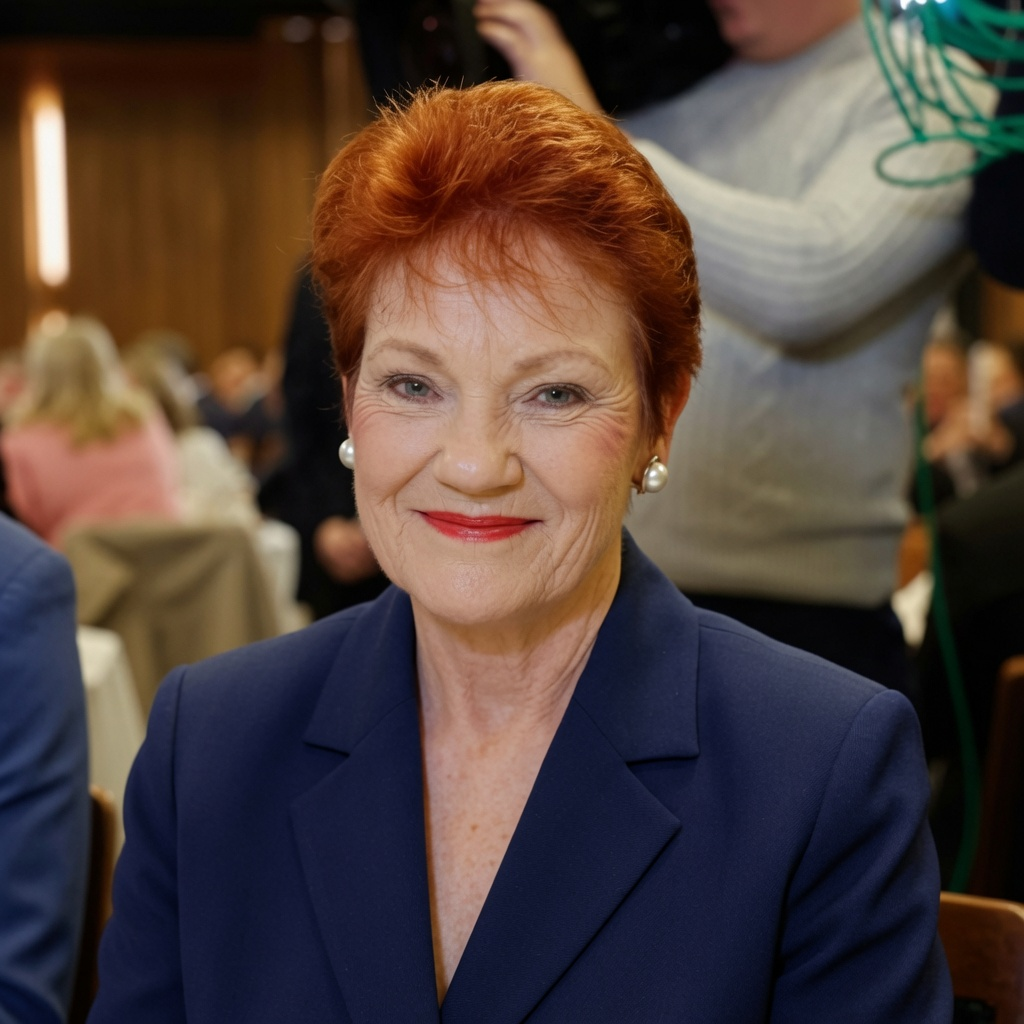
The latest Resolve Political Monitor has One Nation down three percentage points to 26 per cent of the primary vote, ending a four-month run of growth that had transformed the party from a minor force into a direct threat to the Coalition and, at least in polling terms, a challenger to Labor.
Labor held steady on 28 per cent, enough to return to first place, while the Coalition recovered three points to 23 per cent. The Greens remained unchanged on 12 per cent.
The leadership numbers produced an even sharper reversal.
Prime Minister Anthony Albanese climbed four points to 33 per cent as preferred prime minister. Hanson, who had briefly overtaken him in the previous Resolve poll, fell eight points to 25 per cent. Opposition Leader Angus Taylor improved from 16 per cent to 21 per cent.
It is a clear setback for Hanson. It is not yet evidence that the One Nation phenomenon has run its course.
For perspective, the Australian Electoral Commission recorded One Nation on just 6.40 per cent of House of Representatives first preferences at the 2025 federal election. A party polling at 26 per cent nationally is operating in a dramatically different political universe, even after a three-point fall.
The central question is no longer whether One Nation has grown. It is whether Hanson can hold together the unusually broad and sometimes contradictory voter coalition that produced that growth.
Where Hanson appears to have lost ground
Resolve pollster Jim Reed identified women and immigrants as two of the groups where Hanson suffered her largest losses.
That is politically significant because One Nation’s recent surge had challenged some of the oldest assumptions about the party’s electoral ceiling. Hanson was no longer drawing support only from a familiar base of older, regional or deeply conservative voters.
Previous polling suggested the party had begun reaching voters motivated by housing pressure, immigration levels, the cost of living and dissatisfaction with the major parties. Hanson’s support had also made inroads among some migrant voters concerned about the pace of population growth and its effect on housing and infrastructure.
Reed previously described part of that phenomenon as a “drawbridge effect” — the idea that some migrants already established in Australia may themselves support lower future immigration.
But Hanson’s more recent interventions appear to have tested the limits of that coalition.
Her promotion of the idea of an Australian “monoculture” sparked a national argument over multiculturalism and Australian identity. The Resolve polling found 39 per cent opposed the proposition that Australia would be better off as “monocultural”, compared with 33 per cent who supported it.
Comments around abortion and parental leave have also placed social questions back into the political conversation surrounding One Nation.
Reed argued the party had lost some of its shine as voters were exposed to a wider range of its positions, rather than simply its messages on immigration, government spending and economic pressure.
That distinction may prove crucial.
A protest party can grow quickly when an election is framed around voter anger. Becoming a prospective party of government is a different test. The larger One Nation becomes, the more scrutiny shifts from Hanson’s strongest political issues to the party’s entire policy platform.
Voters who agree with Hanson on migration may not agree with her on workplace policy. Those attracted by attacks on government waste may be uncomfortable with her language on multiculturalism. Others may support a tougher approach to the NDIS or fuel costs while rejecting socially conservative positions.
The latest poll suggests some of those tensions may finally be appearing.
A setback from an extraordinary high
The scale of Hanson’s previous result is important when assessing the latest fall.
In June, Resolve put One Nation at 29 per cent, five points higher than the previous month and ahead of both major political blocs. Hanson also reached 33 per cent as preferred prime minister, compared with Albanese on 29 per cent and Taylor on 16 per cent.
That was a remarkable moment in Australian federal politics.
Hanson is a senator, not a member of the House of Representatives, and the constitutional and parliamentary mechanics of becoming prime minister are more complicated than a popularity question in an opinion poll. But the political symbolism was unmistakable: a One Nation leader had overtaken the sitting Labor prime minister on a major leadership measure.
One month later, Albanese has regained the advantage and Hanson has fallen eight points.
Voter expectations about who will actually form government have also shifted. The latest polling found 35 per cent expected Albanese to remain in The Lodge, while only 19 per cent expected One Nation to win government and 18 per cent tipped a Coalition victory.
That gap highlights a persistent problem for Hanson. Voters can tell a pollster they intend to give One Nation their first preference while still doubting the party can assemble a government.
Those two views are not contradictory.
A vote for One Nation can be an expression of genuine support, a rejection of the Coalition, a protest against Labor or an attempt to force the political system towards a harder position on particular issues. The same voter may still expect one of the traditional major parties to ultimately control the House of Representatives.
Why 26 per cent does not automatically mean dozens of seats
Australia’s preferential voting system makes national primary vote figures an imperfect guide to the number of seats a party will win.
In House of Representatives elections, voters must rank candidates in order of preference. If no candidate receives an absolute majority of first preferences, the lowest-ranked candidates are excluded and their ballots are transferred according to voters’ next preferences. The process continues until one candidate has more than 50 per cent of the remaining formal vote.
For One Nation, geography matters enormously.
A party can receive millions of votes nationally but struggle to win lower-house seats if those votes are spread too evenly across the country. Winning 20 or 25 per cent in a large number of electorates may put One Nation into the final stages of a count without delivering the 50 per cent required after preferences.
Conversely, concentrated support in regional and outer-metropolitan seats could produce a much larger parliamentary breakthrough.
Recent analysis of One Nation’s rise has suggested the party could be among the final three contenders in more than 100 electorates, compared with only a fraction of that number at the previous election. That would create highly unusual preference contests and make traditional Labor-versus-Coalition modelling far less reliable.
Amy Remeikis, chief political analyst at the Australia Institute, has warned against assuming Hanson’s support has simply disappeared because of one weaker poll.
On the current numbers, One Nation could still take seats from the Coalition without winning enough electorates to dominate parliament.
That scenario could be devastating for the Liberal and National parties.
If One Nation defeats Coalition candidates in a group of regional or outer-suburban electorates but fails to build a path to government, Labor could remain the ultimate beneficiary of a divided conservative vote and a dramatically reshaped preference landscape.
The Coalition therefore faces a strategic problem with no simple solution.
Attack Hanson too aggressively and it risks alienating voters who have already abandoned the Liberal and National parties for One Nation. Move closer to Hanson and the Coalition may reinforce the argument that voters can simply choose One Nation directly.
Taylor has recently chosen confrontation.
The Opposition Leader has attacked One Nation’s economic policies as unaffordable and accused the party of failing to present a credible plan to pay for major promises. His criticism has focused on proposals involving migration, tax arrangements, fuel excise and defence spending.
Hanson responded by urging Taylor to stop denigrating One Nation and work with her against Labor and the Greens.
The latest Resolve numbers offer Taylor some immediate encouragement. The Coalition rose three points to 23 per cent and his preferred prime minister rating increased five points.
But the recovery remains modest when viewed against the larger political shift.
One Nation is still three points ahead of the Coalition on primary support in the Resolve poll. A party that received 6.4 per cent of House first preferences at the last federal election is now polling above the traditional centre-right opposition.
That is not a normal polling fluctuation.
Barnaby Joyce says polls are only an “indicator”
One Nation MP Barnaby Joyce has played down the significance of the fall, describing polls as an “indicator” rather than a vote.
Joyce defended Hanson’s direct political style and argued Australians wanted cultural “guardrails” that protected the ability of people to interact while respecting the liberties and views of others.
His response points to the argument One Nation is likely to make if the poll decline continues: that Hanson’s language may create controversy, but the underlying voter concerns that powered the party’s rise have not been resolved.
There is evidence for that argument.
Separate Roy Morgan polling released in early July also recorded a fall in One Nation support, putting the party at 22.5 per cent after a 3.5-point decline. Labor was unchanged at 28 per cent and the Coalition sat at 21.5 per cent.
Different pollsters use different methodologies and produce different headline figures, but the broad picture is notable. One Nation may have retreated from its peak while remaining at a level of support that would have seemed extraordinary only a year earlier.
The issues that helped create that support have not vanished.
Housing affordability remains a powerful political concern. Population growth and immigration continue to generate arguments over infrastructure and rental pressure. Cost-of-living frustration remains central to voter attitudes. The NDIS, government spending and trust in the major parties continue to provide fertile ground for political challengers.
Hanson does not need every voter to accept every One Nation policy to remain politically dangerous to the major parties. She needs enough voters to continue believing that Labor and the Coalition are failing to respond to their most important concerns.
The next polls will matter more than this one
One poll can identify movement. It cannot establish a permanent trend.
The next phase will show whether Hanson’s fall is the beginning of a sustained retreat or simply a correction after an unusually rapid surge.
If One Nation continues sliding and the Coalition keeps recovering, Taylor may argue his decision to directly challenge Hanson’s economic credibility is working. Albanese, meanwhile, will have reason to believe greater scrutiny of One Nation benefits Labor by reminding voters that choosing a government involves more than registering anger at the political establishment.
But if Hanson stabilises in the low-to-mid 20s, the strategic crisis facing the major parties will remain.
At 26 per cent, One Nation is not a fringe party in polling terms. It is competing with the political organisations that have dominated federal government for generations.
Its path from a large national vote to a large bloc of House seats remains uncertain. Preferences, candidate quality, geographic concentration and the Coalition’s performance will all matter. The Australian electoral system has repeatedly shown that national vote share cannot simply be converted into a neat seat total.
That is why warnings against declaring Hanson’s wave over deserve attention.
The latest numbers show the first meaningful damage to her momentum. They suggest some voters, particularly women and immigrants, may be reconsidering One Nation as Hanson broadens the political conversation beyond the issues that initially attracted them.
Yet the party remains on 26 per cent in Resolve and above 20 per cent in other recent polling — multiples of its 2025 federal election primary vote.
Hanson has lost her brief lead as preferred prime minister. One Nation has lost first place on the primary vote. The Coalition has finally recovered some ground.
For the major parties, however, the most uncomfortable number in the latest poll may still be 26.
Pauline Hanson’s wave has receded from its peak. There is not yet enough evidence to say it has broken.






