Pauline Hanson has officially launched One Nation’s Victorian state election campaign by unveiling Warren Pickering as the party’s Victorian leader and introducing its first group of candidates, while simultaneously defending a controversial decision to exclude journalists from the ABC and The Guardian from the campaign’s opening media event.
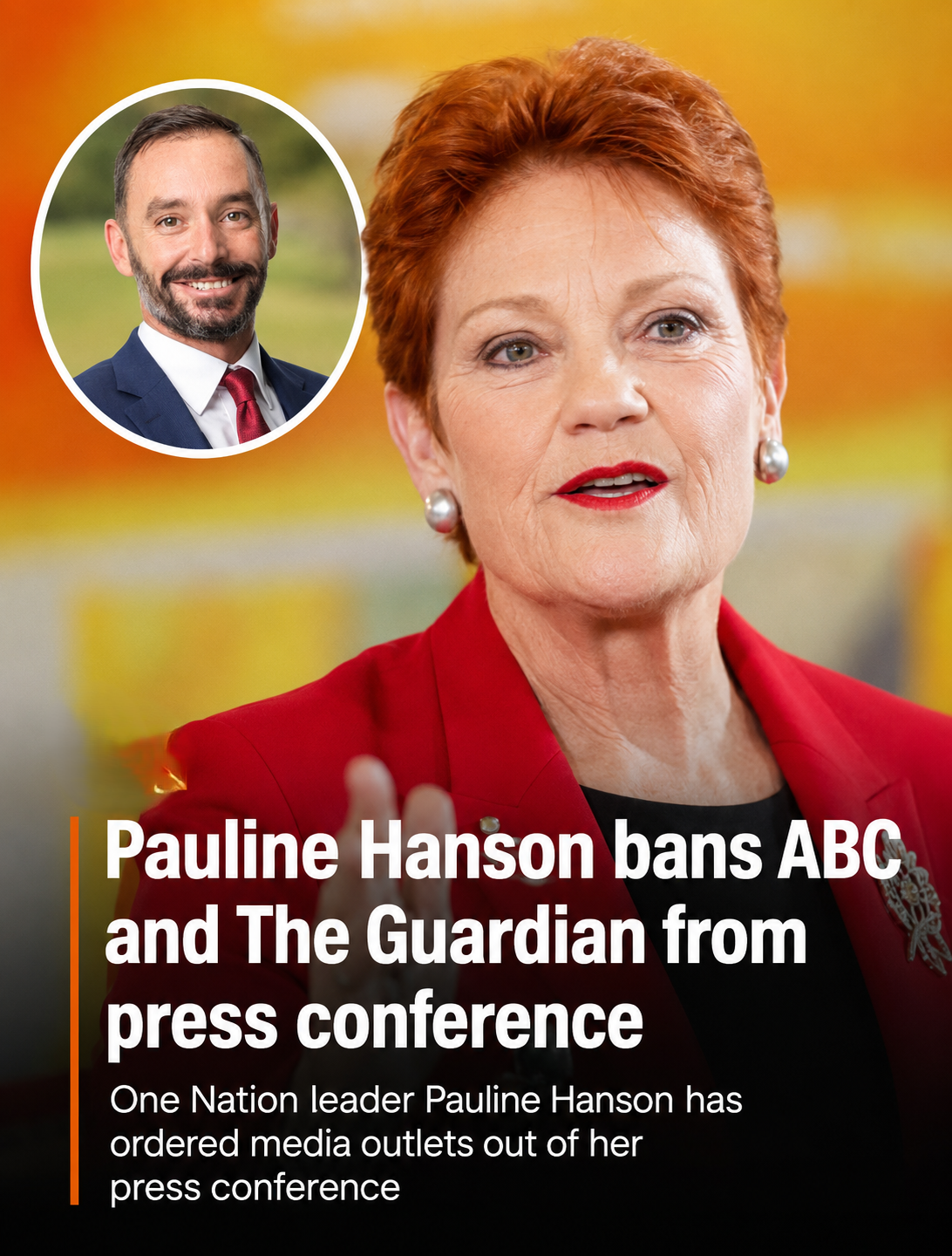
The announcement marks the formal beginning of One Nation’s campaign for the November Victorian election, with the party seeking to significantly expand its parliamentary representation across the state.
Army veteran Warren Pickering will lead the Victorian campaign after serving as the party’s state president, with Hanson describing him as the right person to head One Nation’s push toward polling day.
“Warren has done a great job as state president of One Nation in Victoria,” Hanson said.
“He’ll be an effective leader to take the wider team to the election.”
Pickering, 43, has previously spoken publicly about leaving his former employment during the COVID-19 pandemic because of workplace vaccination policies.
Under his leadership, One Nation intends to contest a broad range of seats across Victoria, with the party aiming to build on its existing parliamentary presence through Northern Victoria MP Rikkie-Lee Tyrrell.
Speaking during the campaign launch, Pickering declared that One Nation was entering the election with ambitious goals.
“We intend for this to be a November to remember and we are contesting to govern,” he told reporters.
The first group of candidates announced by the party includes a diverse range of backgrounds.
Among them are incumbent Legislative Council member Rikkie-Lee Tyrrell, former Liberal Party member Colleen Harkin, animator Mark Nicholson—best known for producing One Nation’s Please Explain cartoon series—and former police officer and Geelong councillor Chris Burson.
Party officials indicated that additional candidates would be announced before nominations close for the election.
However, the policy announcements were overshadowed by Hanson’s decision to prevent reporters from the ABC and The Guardian from attending the official press conference.
The excluded organisations were not advised of the time or location of the event, while other media outlets were invited to attend.
Defending the decision, Hanson accused the two organisations of repeatedly treating her party unfairly.
“I am not putting up with their rubbish. I am not putting up with their spin, their lies whatsoever,” she said.
“I want truth and honesty, you get it from me, I expect it from the media.”
According to Hanson, the exclusion follows a series of disputes over what she regards as inaccurate or misleading reporting involving One Nation and her own public comments.
She has previously argued that sections of the mainstream media rely on selective quotations and “gotcha moments” rather than providing fair coverage of the party’s policies.
Supporters of the decision argue that political parties have the right to determine who attends privately organised campaign events and note that complete recordings of the press conference were made available through alternative media channels.
Critics, however, argue that restricting access to major news organisations undermines public accountability and limits opportunities for independent scrutiny during an election campaign.
The controversy quickly prompted political criticism.
Employment and Workplace Relations Minister Amanda Rishworth said political leaders should be prepared to answer difficult questions from all accredited media organisations rather than selecting which journalists may attend campaign events.
Other opponents similarly argued that democratic accountability depends upon open access to press conferences regardless of editorial disagreements.
One Nation rejected those criticisms, maintaining that the party remained willing to answer questions from attending journalists and that the exclusion was directed only at organisations Hanson believes have repeatedly misrepresented the party.
The Melbourne launch also outlined the broad themes that will underpin One Nation’s Victorian campaign.
Party leaders said policy announcements would be released progressively over coming weeks, focusing on crime, policing, corruption, agriculture, energy, education and cost-of-living pressures.
Pickering argued that Victoria required significant political change after years of Labor government and said One Nation intended to present itself as a serious alternative for dissatisfied voters.
Outside the official launch, the campaign generated further attention when protesters gathered at a separate One Nation function later that evening in Hawthorn.
Victoria Police deployed Public Order Response officers and mounted police to maintain separation between demonstrators and party supporters after some protesters reportedly breached initial police barriers.
Despite the demonstrations, Hanson said One Nation would continue campaigning extensively throughout Victoria and would not be deterred by protests or criticism.
The Victorian election campaign comes at a time when One Nation believes it has growing momentum following improved polling in several jurisdictions and increasing public debate around housing affordability, energy prices, crime and the cost of living.
While opinion polls cannot predict election outcomes, the party hopes to convert that momentum into additional parliamentary representation when Victorians vote in November.
Whether One Nation succeeds will depend not only on its policy platform but also on its ability to expand support beyond its existing voter base.
At the same time, Hanson’s decision to ban the ABC and The Guardian has ensured that debate over media access and political accountability will remain one of the defining issues surrounding the opening days of the campaign.
For supporters, the decision represents a stand against what they see as persistent media bias.
For critics, it raises broader questions about transparency and the role of independent journalism during election campaigns.
As Victoria’s election draws closer, both One Nation’s policy agenda and its relationship with Australia’s mainstream media are likely to remain firmly in the public spotlight.