Australian screen legend Paul Hogan has publicly distanced himself from comments made by One Nation leader Pauline Hanson after she cited him as an example of what she described as Australia’s “monoculture”, adding another chapter to an ongoing national debate about identity, immigration and multiculturalism.
The exchange followed Hanson’s recent speeches calling for Australia to become a “monocultural” society while arguing that people from diverse backgrounds should share one common national culture. During those remarks, she referred to Paul Hogan and comedian Norman Gunston as examples of traditional Australian identity that she believed reflected that vision.
Hogan rejected the comparison when approached for comment. The actor said he did not agree with Hanson’s position, describing the proposal as “so racist” and referring to the One Nation leader as “a pelican”, an Australian slang expression often used humorously to describe someone behaving foolishly. He also questioned the idea that Australia either is or should become a monocultural society.
Reflecting on his own life, Hogan noted that before becoming internationally famous through Crocodile Dundee, he worked alongside migrants who had settled in Australia during the post-war decades. He said those experiences shaped his understanding of Australian society and reinforced his belief that immigration has long formed part of the country’s identity. According to Hogan, Australia’s diversity is a strength rather than something that should be reversed.
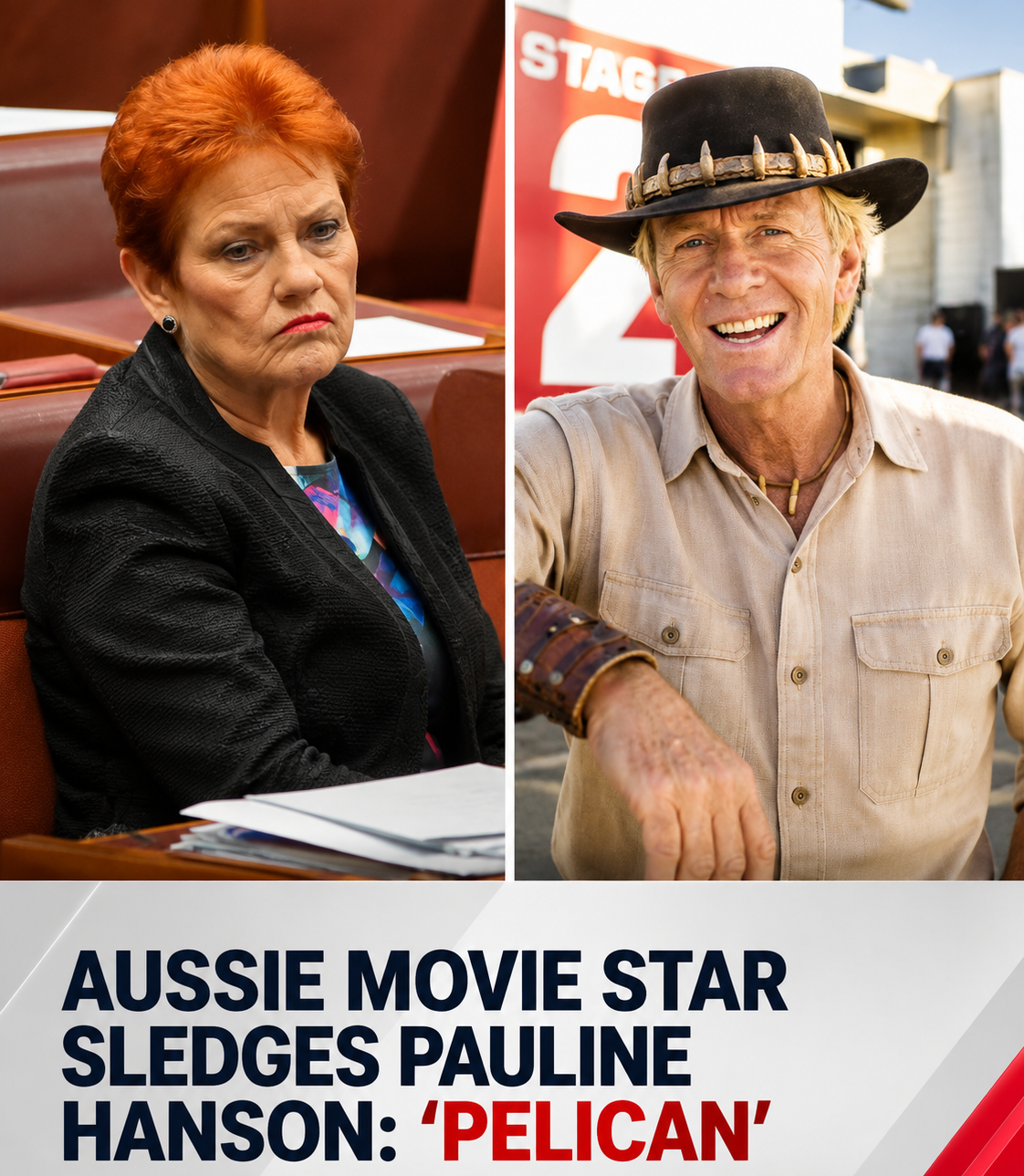
Pauline Hanson has defended her position by arguing that her use of the term “monoculture” refers to Australians sharing common civic values rather than having identical ethnic backgrounds. She has repeatedly said Australia is a multiracial country but believes people should unite under one national culture, while also criticising aspects of Australia’s multicultural policies. Those comments have generated extensive political debate since her address to the National Press Club.
The disagreement has drawn responses from politicians, commentators and public figures across the political spectrum. Supporters of multiculturalism argue Australia’s cultural diversity has contributed significantly to its economic development, international outlook and national identity. Others believe stronger emphasis should be placed on shared civic values and social cohesion, although they differ over whether the term “monoculture” accurately describes that objective.
Political analysts note that debates over multiculturalism have periodically emerged throughout Australia’s modern history, particularly during periods of rapid migration and demographic change. While successive governments have generally supported multicultural policies for decades, public discussion continues over how best to balance cultural diversity with national unity and social integration.
Hogan’s response attracted significant attention because of his longstanding association with Australian popular culture. Through the global success of Crocodile Dundee, he became one of Australia’s most internationally recognised entertainers, making his comments particularly prominent within the broader discussion about national identity. His remarks also underscored that public figures referenced in political debate may not necessarily share the political positions associated with them.
The broader conversation is likely to continue as political parties outline their respective approaches to immigration, cultural integration and national identity. While opinions remain sharply divided, the exchange between Hogan and Hanson has highlighted how questions about Australia’s identity continue to resonate beyond Parliament and into wider public life.






