Opinion: Warren Pickering has now told Victorians something no political candidate would volunteer for a campaign brochure.
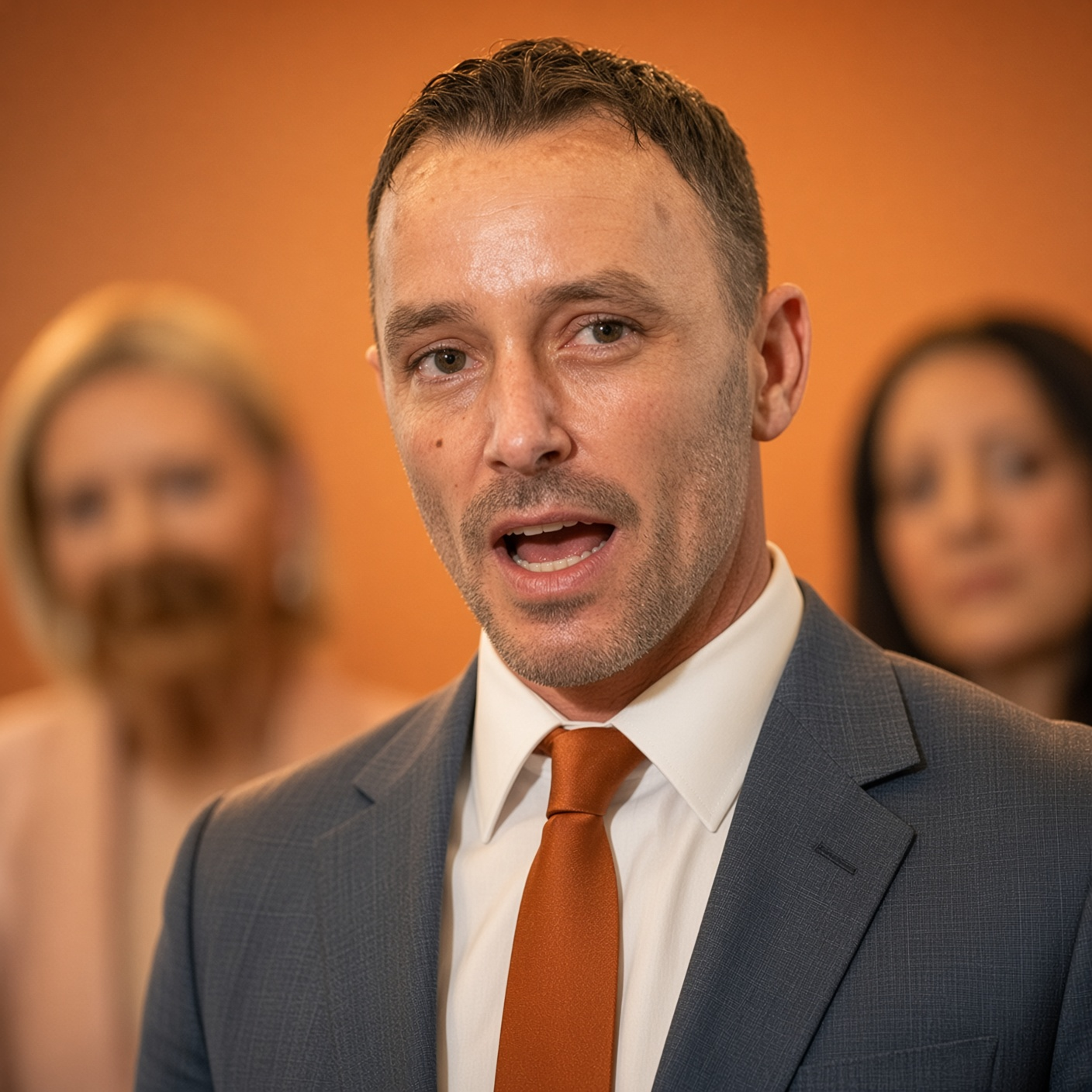
He used illegal drugs when he was younger. He made serious mistakes with alcohol. He lost his driver’s licence three times for drink driving. He hurt people close to him and, by his own account, eventually decided he had to live differently.
That history deserves scrutiny.
But scrutiny should not require pretending that every mistake made in a person’s 20s carries exactly the same weight for the rest of their life.
Pickering, now 43 and leading One Nation’s Victorian campaign, told reporters on September 8 that he had used speed, amphetamines, ecstasy and marijuana when he was younger.
“I did use them as a young man and I’m not proud of that,” he said.
He also acknowledged losing his licence for drink driving at about 18, again at 20 and once more roughly a decade later.
Those are not trivial admissions, particularly the drink driving. Getting behind the wheel after drinking exposes strangers to risks they never consented to take. A candidate asking voters for public responsibility should expect questions about conduct showing poor judgement.
But Pickering has also drawn an important line around what he is admitting.
He denies ever being a drug addict. He disputes his former partner’s allegations that he regularly used ice, or crystal methamphetamine, and denies using ice while children were in the home.
Those allegations remain allegations.
They cannot responsibly be folded into the things Pickering has admitted simply because both involve drugs.
Admission is not the same as accepting every allegation
Part of the confusion has come from drug terminology.
Australian health authorities distinguish speed and ice as different forms of illicit methamphetamine. Speed is generally a lower-potency form, often found as powder or pills, while ice is the more potent crystalline form commonly called crystal meth.
So when Pickering acknowledges speed or amphetamine use but disputes an allegation about habitual ice use, journalists should report both parts rather than collapsing them into a single claim.
That is not giving a politician special treatment.
It is applying the same evidentiary standard that should apply to anybody.
What a person admits can be reported as an admission. What another person alleges must remain attributed unless independent evidence establishes it.
At Tuesday’s press conference, Pickering said he had stopped using drugs long before joining the Australian Defence Force and credited military service with helping change the direction of his life.
He says his previous drug use and driving history were disclosed during the security-clearance process. That is his account; publicly available reporting does not independently establish every detail of what the ADF was told at the time.
One Nation’s biographical material says Pickering went on to serve for about a decade in the Army as a combat engineer, alongside work in farming, construction and mining.
That later record does not erase what came before.
But neither should what came before automatically erase everything that came afterwards.
Politics needs a standard for redemption
Australian politics regularly speaks the language of rehabilitation.
We tell offenders that the purpose of rehabilitation is to stop offending. We tell people struggling with addiction that recovery is possible. We tell young Australians that one reckless period should not necessarily determine their entire future.
That principle becomes meaningless if it disappears the moment somebody seeks public office.
The reasonable test cannot be that every politician must have lived an immaculate life from the age of 18.
Very few voters could meet that standard themselves.
The better questions are harder.
How serious was the conduct? How long ago did it happen? Was anybody harmed? Was it repeated? Has the person been truthful about it? Is the behaviour continuing? Did the person genuinely change? And does the past conduct expose hypocrisy or dishonesty in what that person is asking voters to believe today?
Those questions allow accountability without pretending rehabilitation is impossible.
On the facts currently established, there is no evidence before the public that Pickering is currently using illicit drugs.
His admitted drug use relates to his younger years.
The more serious allegations made by his former partner remain contested.
That distinction should survive even in the middle of an election campaign.
The drink-driving record deserves a harder conversation
Supporting the principle of redemption does not require minimising everything Pickering has disclosed.
Three incidents involving drink driving deserve more scrutiny than a vague admission that somebody experimented with marijuana or ecstasy decades ago.
Pickering described them as low-level offences, but voters are entitled to consider repeated drink driving differently from occasional recreational drug use.
Greens leader Ellen Sandell has argued the record should disqualify him from public office.
Others have taken a different view. Victorian Finance Minister Enver Erdogan has publicly acknowledged the value of Pickering fronting the issue honestly, while Pauline Hanson has strongly defended him as someone who changed his life.
Those competing reactions expose the real question.
At what point does accountability end and permanent punishment begin?
There is no mathematical answer.
A repeated pattern continuing into the present would obviously be relevant. A lie told during candidate vetting would be relevant. Evidence that a politician concealed behaviour directly affecting his fitness for office would be relevant.
But if serious misconduct stopped years ago and a person genuinely rebuilt his life, the passage between those two versions of the person should also form part of the assessment.
His politics still have to withstand the hypocrisy test
Pickering should not receive a free pass simply because his story can be described as one of rehabilitation.
He leads a party that takes a hard line on drug policy.
Recent reporting says Victorian One Nation opposes supervised injecting facilities and pill testing, while Pickering has proposed redirecting harm-minimisation spending towards measures including random drug testing of elected officials.
His personal history therefore creates legitimate policy questions.
If someone who used illicit drugs in his youth believes people can change, what does that experience teach him about addiction policy?
Does it make him more convinced that strict deterrence works, or should it make him more sympathetic to evidence-based harm reduction?
Would the policies he now supports have helped the younger Warren Pickering or simply punished him more severely?
Those are better questions than treating the mere fact of old drug use as proof that he is unfit for office.
Political hypocrisy is established by inconsistency that cannot be honestly explained, not by the fact that a person’s views changed after experience.
A former smoker can campaign against cigarettes. A recovering alcoholic can argue for stricter alcohol rules. Someone who once broke the law can support law enforcement.
What matters is whether that person acknowledges the contradiction and can explain why their experience led them to their present position.
Redemption also requires transparency
There is another complication for Pickering and One Nation.
At the same press conference where he attempted to confront his past publicly, reporters from the ABC and Guardian Australia were excluded after identifying their organisations.
That was a mistake.
If Pickering’s best defence is that voters should judge the complete person rather than sensational allegations, openness is his strongest weapon.
Blocking journalists makes an argument about transparency harder to sustain.
A candidate cannot reasonably demand that allegations be reported with nuance while supporting a media strategy that decides some news organisations are not entitled to ask questions.
Redemption is strengthened by scrutiny, not weakened by it.
If Pickering’s account survives hostile questioning, that gives voters more reason to trust it.
Pakenham gives the controversy real electoral weight
This story would attract less attention if Pickering were an obscure candidate in an unwinnable seat.
He is not.
He is One Nation’s Victorian leader and is contesting Pakenham, one of the most marginal electorates in the state.
Labor’s Emma Vulin won the newly created seat at the 2022 election with 50.39 per cent after preferences to the Liberal candidate’s 49.61 per cent.
One Nation received only 3.4 per cent of first preferences then.
The political environment heading into the November 28 election is very different.
One Nation has invested heavily in Victoria, Pauline Hanson has campaigned personally in Pakenham and the party is attempting to convert its national polling surge into lower-house representation.
That makes Pickering’s character a legitimate electoral issue.
Voters are not merely deciding whether they sympathise with his personal history. They are deciding whether they trust him with legislative power and potentially a significant role in a finely balanced parliament.
That requires more than sympathy.
It requires honesty, policy competence, judgement and transparency.
But voters should be allowed to judge the man he is now
There is an ugly tendency in modern politics to treat any imperfection discovered in a candidate’s past as a final answer to the question of character.
Sometimes it should be.
Certain conduct is so serious, so recent or so inconsistent with public responsibility that voters can reasonably conclude a candidate is unsuitable.
But if every failure becomes permanent, society sends a strange message to anyone trying to rebuild a life.
We cannot simultaneously tell Australians that people can recover from drugs, alcohol, criminal behaviour and personal collapse while insisting that recovery counts for nothing once the person becomes visible enough for the old story to be rediscovered.
The distance travelled matters.
So does the honesty with which somebody describes the starting point.
Pickering does not deserve to have unproven allegations converted into established facts.
He also does not deserve to have his admitted conduct waved away as irrelevant merely because it happened years ago.
Both extremes fail the voter.
Victorians should know that he used illegal drugs when he was younger. They should know about the drink-driving history he has now acknowledged. They should know that his former partner has made additional allegations and that he disputes them.
They should also know that he says he stopped using drugs, joined the Army, served for years and rebuilt his life around family and public service.
Then they should judge him on the whole record.
That is what rehabilitation is supposed to mean.
Not forgetting the mistake.
Not pretending it never mattered.
But refusing to believe the worst chapter of a person’s life must automatically become the final one.






