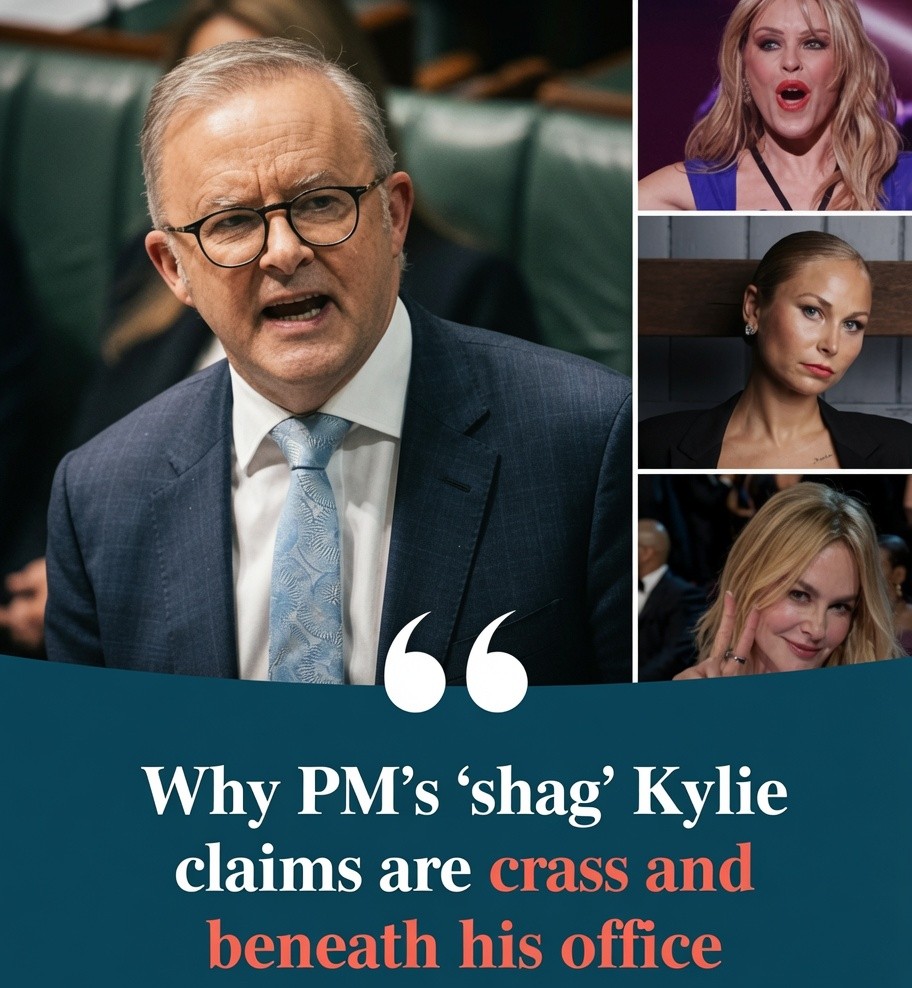
Public debate surrounding Prime Minister Anthony Albanese’s podcast interview has continued after a new opinion article criticised his comments about Australian music icon Kylie Minogue and questioned whether they reflected the standards expected of a national leader.
According to published reports, the commentary argues that Albanese’s remarks were inappropriate for someone holding Australia’s highest elected office and suggests similar comments made by previous prime ministers would likely have generated comparable criticism. These views represent the opinion of the article’s author rather than independently established factual conclusions.
The controversy began after Albanese participated in a podcast interview that included a light-hearted “shag, marry or date” segment involving Kylie Minogue. Following widespread public reaction, the Prime Minister acknowledged that his response was inappropriate and issued a public apology, stating that his comments did not meet the standard he expected of himself.
The incident has since developed into a broader discussion about leadership, professionalism and political communication. Some commentators argue that elected leaders should maintain the same standards regardless of whether they are speaking in Parliament, at a press conference or during an entertainment-focused podcast. Others suggest that while informal interviews encourage more relaxed conversation, politicians remain accountable for every public statement they make.
Political communication specialists note that podcasts have become an increasingly important platform for Australian politicians seeking to reach audiences outside traditional news broadcasts. These appearances can provide opportunities for longer, more personal conversations but also create greater scope for spontaneous remarks that later become the focus of public debate.
Media analysts observe that public apologies have become a common feature of modern political life when comments attract significant criticism. Whether an apology changes public perceptions often depends on a wider assessment of leadership, policy performance and the issues voters consider most important.
The Albanese Government continues to pursue its broader policy agenda, including housing affordability, taxation, healthcare, energy reform and cost-of-living measures. Although the podcast controversy has received substantial media attention, analysts generally note that long-term political outcomes are shaped by a combination of leadership, policy implementation, economic conditions and public confidence.
The opinion article has also prompted renewed discussion about consistency in political accountability, with some commentators arguing that comparable standards should apply to all elected leaders regardless of political affiliation. Others emphasise that opinion pieces represent individual viewpoints intended to contribute to public debate rather than definitive assessments.
As political leaders continue embracing podcasts, social media and other digital platforms to communicate with voters, scrutiny of informal public appearances is likely to remain high. The episode illustrates how comments made outside traditional political settings can quickly become part of Australia’s wider national conversation about leadership, public conduct and accountability.






