One Nation’s plan to let millions of Australians redirect part of their compulsory superannuation into their weekly pay has ignited a much bigger argument over whether the country’s $4.8 trillion retirement savings system is still working for people struggling long before they reach retirement.
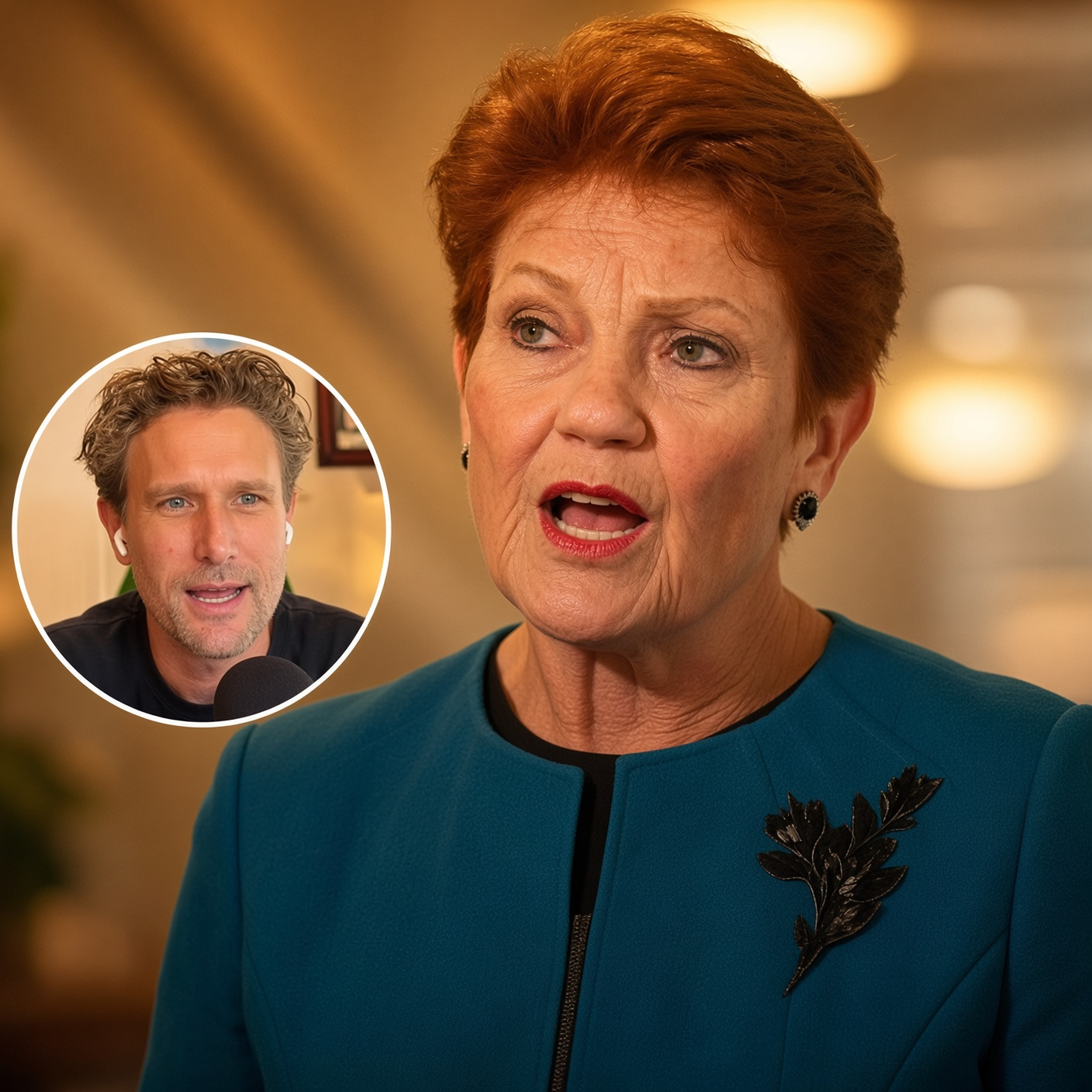
Pauline Hanson has proposed allowing Australians who pay rent or a mortgage to divert three percentage points of their compulsory 12 per cent super contribution into take-home income for up to three years.
Employers would continue making the full compulsory contribution, but under One Nation’s proposal nine percentage points would remain invested for retirement while the equivalent of three percentage points could be returned to an eligible worker.
The payment would retain superannuation’s concessional 15 per cent tax treatment rather than being taxed as ordinary salary.
One Nation says a full-time worker earning about $90,500 could receive roughly $2,300 extra a year after tax, or about $44 a week. A working couple earning a combined $168,000 could receive about $4,300 a year.
Hanson says the policy is about giving Australians breathing room while rents, mortgages and everyday expenses are putting household budgets under severe pressure.
The response has been explosive.
Super industry groups have warned it could worsen inflation and leave workers tens of thousands of dollars poorer in retirement. Labor has portrayed the proposal as an attack on one of Australia’s most important social and economic institutions.
Yet the controversy has also exposed something more complicated: a growing intellectual and political argument over whether every worker, at every stage of life and regardless of their financial position, should be required to put exactly 12 per cent of wages aside for decades.
What One Nation is actually proposing
The proposal is not a general right to empty an existing super account.
Instead, eligible renters and mortgage holders would be able to redirect a quarter of their future compulsory contributions — three percentage points out of the current 12 per cent — for a maximum of three years.
Existing super balances would remain invested.
One Nation estimates about seven million Australians could potentially qualify because they rent or are paying off their home, although party Treasury spokesman Barnaby Joyce has argued actual participation would be much lower because not everyone eligible would need the money.
There would not necessarily be a requirement to prove that every dollar withdrawn was spent directly on rent or mortgage repayments. That means the additional cash could increase household spending more broadly.
That feature sits at the centre of economists’ inflation concerns.
Hanson and Joyce argue the money is already workers’ money and that redirecting a relatively small portion for a limited period would give households immediate relief without destroying their retirement savings.
Their critics argue it is precisely because households would have extra money to spend now that the policy could create problems.
Why economists are worried about inflation
Australia is again dealing with elevated inflation and higher interest rates, making a broad injection of household spending power particularly controversial.
Association of Superannuation Funds of Australia chief executive Mary Delahunty described the policy as “economically disastrous”, arguing that putting more money into an economy already fighting inflation would increase rather than reduce cost-of-living pressure.
Judo Bank chief economic adviser Warren Hogan made a similar argument.
A worker receiving another $50 or $60 a week may use it to meet bills, buy groceries, reduce debt or spend elsewhere. Multiplied across potentially millions of households, that represents additional demand.
If the economy cannot increase supply quickly enough to meet that demand, prices can rise.
That is why critics say the policy could produce an uncomfortable feedback loop: workers access super because inflation and interest rates are hurting them, their additional spending adds to demand, and inflationary pressure makes it harder for interest rates to fall.
Joyce rejects the suggestion that Australians would simply spend every extra dollar and has argued the inflationary impact would be very small.
But the dispute has been made harder for One Nation by the absence of detailed modelling.
When repeatedly questioned this week about the effect on inflation and retirement balances, Joyce acknowledged the party had not produced comprehensive economic modelling of the scheme.
That admission has given Labor and industry critics a straightforward line of attack: a proposal potentially affecting millions of workers should be subjected to more analysis before being presented as a national cost-of-living solution.
The price paid at retirement
The second major criticism concerns compound investment returns.
Taking several thousand dollars out of super in someone’s 20s or 30s does not merely reduce their account by that amount. It also removes decades of potential returns that money could otherwise earn.
Super Members Council modelling estimates a 30-year-old full-time worker earning about $90,500 who uses the One Nation option for all three years could retire with approximately $25,000 less in super.
For a couple, the council estimates the combined reduction could exceed $50,000.
The organisation represents super funds and therefore has a direct stake in the debate, but independent analysis has reached a broadly similar conclusion.
University of Newcastle finance academic Mardy Chiah estimated a worker on approximately $90,000 could receive about $6,900 over three years but lose around $23,000 to $24,000 in investment income by retirement.
The exact result would depend on a worker’s age, investment returns, wages and future super settings.
For someone close to retirement, the compounding impact would be substantially smaller than for a 25 or 30-year-old.
For Hanson, that trade-off is the entire point of the policy.
Her argument is that telling someone they will have more money at 67 provides little comfort if that person is struggling to keep a roof over their head today.
That is a politically potent message during a period of high rents and mortgage pressure.
Australia’s super pool is now worth almost $4.8 trillion
The argument matters because Australia’s compulsory super system is enormous.
Latest Australian Prudential Regulation Authority figures put total superannuation assets at $4.767 trillion at June 30, 2026, up 9.5 per cent over the previous year.
About $3.4 trillion was held in APRA-regulated funds, while self-managed super funds held more than $1.1 trillion.
The compulsory Superannuation Guarantee reached 12 per cent on July 1, 2025, completing a long increase from the 3 per cent rate introduced in the early years of Australia’s universal super system.
Its legal objective is also now explicit.
Federal law defines the objective of superannuation as preserving savings to provide income for a dignified retirement, alongside government support, in an equitable and sustainable way.
That does not make changes to access rules impossible.
Australians can already access super early in tightly defined circumstances including severe financial hardship and some compassionate grounds.
But the principle of preservation is central to the system, and One Nation is challenging how strictly that principle should apply when workers face financial stress decades before retirement.
Some economists do want a much bigger rethink
Not every critic of the existing system supports Labor’s argument that compulsory super at 12 per cent must be defended essentially unchanged.
Independent economist Cameron Murray has argued for years that compulsory super should eventually be unwound.
His criticism is broader than Hanson’s proposal.
Murray argues that compulsory saving can make younger workers poorer during the period of life when housing, children and other costs are highest, while forcing them to accumulate wealth for a later period when many may already own a home and face fewer major expenses.
He has also criticised the tax concessions attached to super, arguing that their benefits are skewed towards higher-income households.
Other economists who would not abolish super have questioned whether a universal 12 per cent contribution is optimal.
Research cited in the debate has argued that some Australians may accumulate more retirement wealth than they need while accepting lower disposable income during their working years.
The particularly difficult group is low-income households.
Forcing someone struggling with rent and food bills to save more for retirement can create immediate hardship. But allowing that same person to withdraw retirement savings can leave them more dependent on the Age Pension decades later.
There is no cost-free choice.
Flexibility is gaining advocates — abolition is another matter
The One Nation proposal has also intersected with debate inside the Coalition.
Liberal Senator Andrew Bragg has publicly questioned elements of compulsory super and has advocated allowing retirement savings to play a greater role in home ownership.
Separate proposals discussed within Liberal ranks have included allowing workers to use super as mortgage collateral, place money in a mortgage offset or redirect part of compulsory contributions towards wages.
None of those ideas currently amount to an adopted Coalition policy to abolish compulsory super.
That distinction matters.
There is clearly growing political debate about flexibility, housing and whether 12 per cent should always be locked away.
There is much weaker evidence that Australians broadly want compulsory super abolished.
Recent polling promoted by the Super Members Council found 84 per cent of Australians opposed allowing people to withdraw their super whenever they wanted.
AustralianSuper research has found 87 per cent believe the super system is valuable in helping Australians save for retirement.
A National Seniors Australia survey of older Australians found 96 per cent supported the compulsory nature of employer super contributions.
Those surveys should not be treated as neutral referendums: two are associated with organisations that strongly support the existing super system, while the National Seniors research represents older Australians rather than the entire electorate.
But they make it difficult to substantiate any claim that there is currently majority public support for ending compulsory super.
Labor sees an election weapon
Treasurer Jim Chalmers has seized on the debate and is attempting to turn superannuation into a defining political dividing line ahead of the next federal election.
He has accused One Nation of threatening workers’ retirement security and described its latest proposal as an “absolute shambles”.
Chalmers has previously said the future of compulsory super could effectively become a referendum at the next election.
That strategy is unsurprising.
Compulsory super is deeply connected to Labor’s economic legacy, and the current government has strengthened the system by lifting the guarantee to 12 per cent, legislating its formal objective and extending super payments to government-funded paid parental leave.
One Nation is trying to attack the same system from the opposite political direction.
Its message is less about institutions and more about individual control: workers should be trusted with more of their money when they need it.
That contrast is likely to become increasingly important if Hanson’s party maintains its recent rise in opinion polling.
The real debate is no longer simply ‘super or no super’
One Nation’s plan may ultimately prove too inflationary, too expensive in lost retirement savings or too lightly modelled to survive sustained scrutiny.
But it has succeeded in reopening questions that were largely treated as settled once the compulsory contribution rate reached 12 per cent.
Should a 25-year-old renter under financial stress be forced to save at the same rate as a 55-year-old homeowner?
Should people be allowed to choose between greater retirement wealth and greater financial security today?
Would greater access actually help households, or would it simply push more money into rents, property and consumer prices?
And if people retire with smaller balances, how much of the eventual cost would be transferred back to taxpayers through the Age Pension?
Those questions are more complicated than either side’s slogans suggest.
Australia’s compulsory superannuation system has accumulated almost $4.8 trillion and helped millions of workers build assets they might otherwise never have saved.
It has also locked away a growing share of workers’ remuneration during one of the most severe housing and cost-of-living squeezes in decades.
One Nation’s proposal forces those two realities into the same debate.
For Hanson, the political opportunity is immediate: tell Australians under pressure that their money should help them now.
For Labor, the counterargument is equally simple: money taken now is money lost from retirement later.
The difficult task for voters is deciding which risk they fear more.






