A dramatic protest that interrupted Pauline Hanson’s National Press Club address has evolved into a much larger political battle, with One Nation now calling for significant restrictions on activist group GetUp following what it describes as a serious security breach.
The controversy began during Hanson’s highly anticipated appearance at the National Press Club when a banner was remotely deployed behind the stage, interrupting the live event and instantly becoming one of the most talked-about moments in Australian politics that week. GetUp quickly claimed responsibility for the stunt, saying it was intended to draw attention to policy issues and challenge Hanson’s political messaging.
What might otherwise have been remembered as a brief protest has instead triggered an ongoing national discussion about security, political activism and the increasingly confrontational nature of modern campaigning.
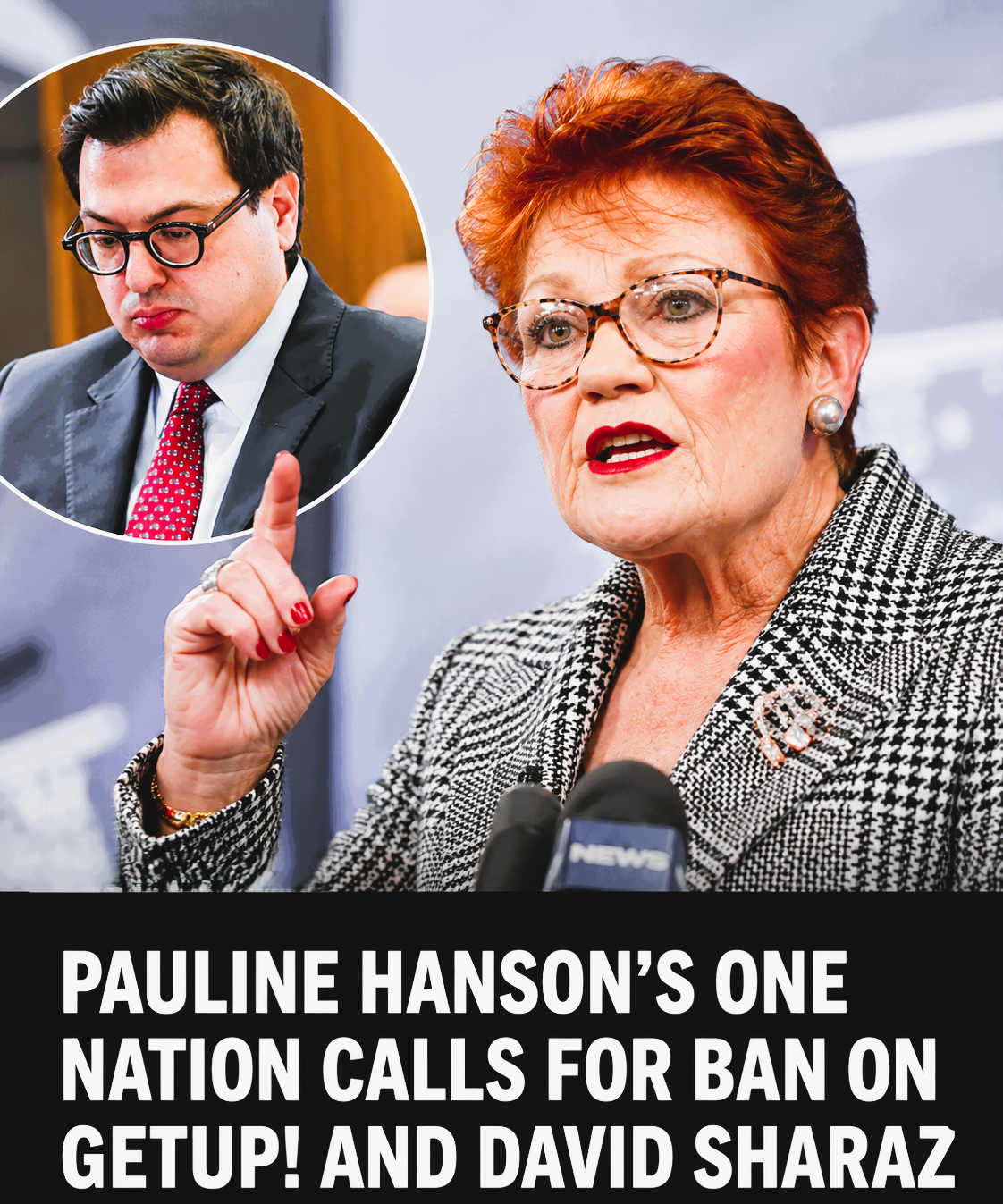
One Nation argues the incident exposed vulnerabilities that extend far beyond a simple political demonstration.
Party representatives have expressed concern that individuals were allegedly able to gain access to the venue before the event, install equipment and later activate the banner during a nationally televised address. Those concerns have led the party to call for stronger action against GetUp and individuals associated with the operation.
The security implications have become a central part of the debate.
Critics of the protest argue that political events require robust protections not only for elected representatives but also for journalists, staff and members of the public attending such gatherings. Some have questioned what could happen if security systems are successfully bypassed for purposes that are far more serious than a protest banner.
Those concerns have gained additional attention because the matter is now being examined by law enforcement authorities.
The Australian Federal Police and relevant authorities have been asked to investigate the circumstances surrounding the incident, while the National Press Club has conducted its own review and considered further action relating to the disruption.
For GetUp, however, the incident is being framed very differently.
The organisation has defended the protest as a form of political activism designed to hold elected representatives accountable and draw attention to issues it believes deserve greater public scrutiny. Supporters argue that protest has always been part of democratic politics and that attention-grabbing tactics are often necessary to break through crowded media cycles.
The disagreement highlights a broader tension that has become increasingly visible in Australian politics.
Most Australians support both democratic participation and public safety. The challenge emerges when those principles appear to collide.
Where should the line be drawn between legitimate protest and unacceptable disruption?
At what point does political theatre become a security concern?
And who gets to make that determination?
These questions now sit at the centre of the national conversation surrounding the incident.
The episode has also placed renewed attention on GetUp itself.
Once regarded as one of Australia’s most influential activist organisations, the group has spent recent years attempting to rebuild its profile and fundraising base following a period of declining donations and reduced staffing. The organisation’s recent campaigns have increasingly focused on confronting the rise of One Nation and challenging Pauline Hanson directly.
That political context helps explain why the latest clash has attracted so much attention.
What began as a dispute over a single protest now reflects a much larger struggle between two organisations representing very different visions of Australia’s political future.
For One Nation supporters, the incident demonstrates why stronger protections are required around political events.
For GetUp supporters, it demonstrates why activism remains necessary in an increasingly polarised political environment.
The outcome of the police investigation may answer some questions about how the stunt was organised.
It is unlikely, however, to end the wider argument.
As Australia’s political landscape becomes more competitive and more fragmented, clashes between activist groups and political parties are becoming increasingly common. The real question may not be whether similar incidents happen again, but how institutions, political movements and voters respond when they do.
That debate is likely to continue long after the headlines surrounding this particular protest fade away.






