Pauline Hanson’s One Nation has opened its biggest primary-vote lead over Australia’s major parties in the latest News24/YouGov Pulse, with new demographic figures suggesting the party’s support is expanding well beyond the voter groups traditionally associated with it.
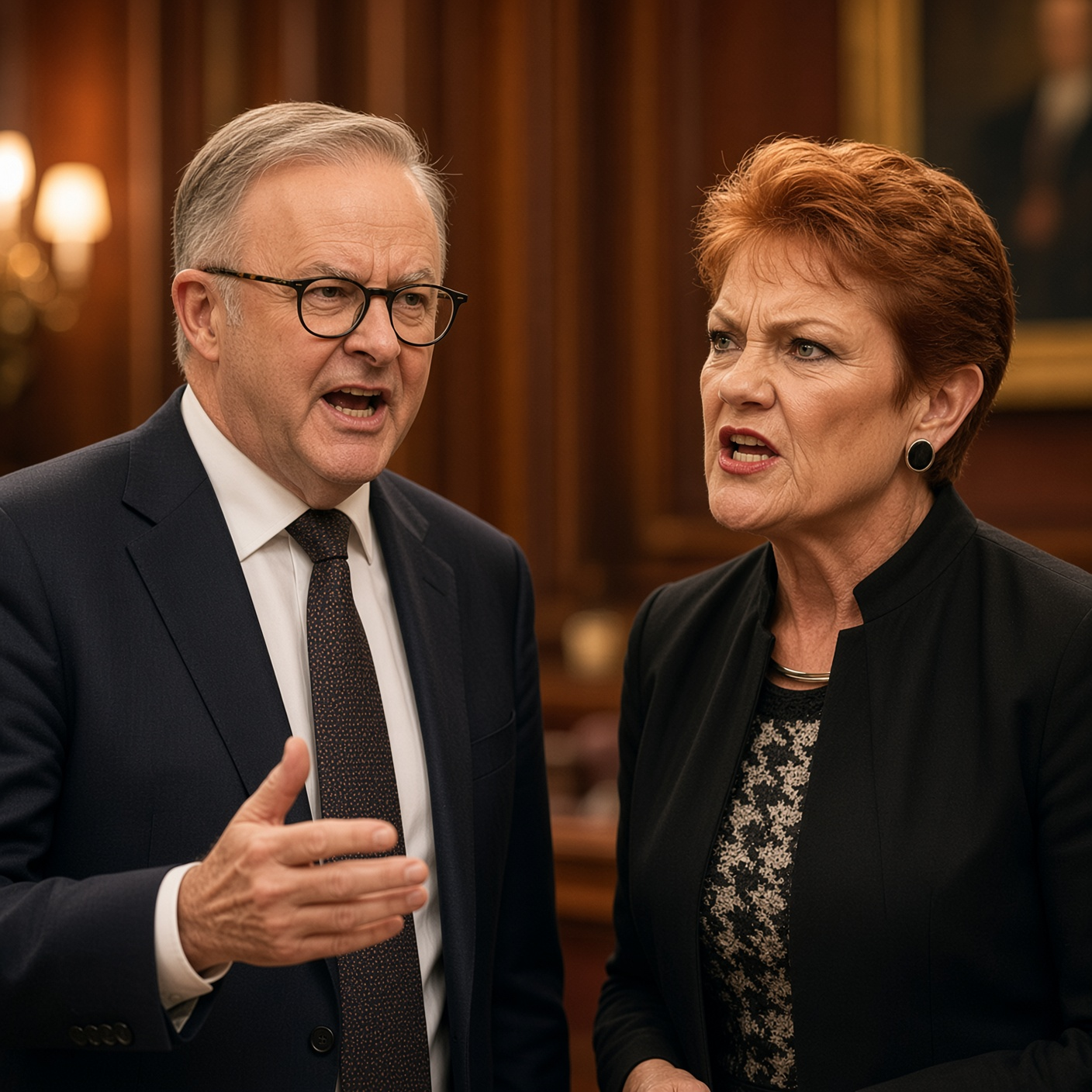
The national poll puts One Nation on 30 per cent of the primary vote, four points ahead of Labor on 26 per cent and well clear of the Coalition on 18 per cent.
The Greens remain on 12 per cent, while independents and other parties account for the remainder.
The YouGov survey was conducted between September 1 and September 8 among 1,510 Australian voters and represents One Nation’s equal-highest primary vote in the poll series.
More significantly, the four-point advantage over Labor is the largest lead One Nation has recorded in the News24 Pulse.
Labor’s result is also its equal-lowest in the series, while the Coalition remains close to the weakest primary-vote position it has recorded.
The headline numbers alone represent a major disruption to Australia’s traditional political order. But the demographic shifts behind them could prove even more important if they persist.
One Nation gains among voters few would once have considered its natural base
Analysis of the polling published by News24 shows One Nation has made substantial gains since November across a number of voter groups.
Some of those changes are relatively easy to explain.
Support in outer metropolitan areas has reportedly risen 10 percentage points to 29 per cent, while One Nation’s vote among households earning less than $50,000 has surged 19 points to 38 per cent.
Those figures fit an increasingly familiar political pattern in which households under pressure from housing, energy, food and transport costs become more willing to abandon established parties.
But some of the other movements are much less predictable.
Among Millennials, One Nation support is reported to have risen from 11 per cent in November to 26 per cent now.
Support among people living in households where a language other than English is spoken at home has also reportedly doubled, from 12 per cent to 24 per cent.
Those results complicate the assumption that Hanson’s party draws overwhelmingly from older, Anglo-Australian and regional voters.
If the movements are sustained across future polling, they would suggest One Nation is beginning to assemble a more diverse electoral coalition than it has managed during previous periods of political success.
That does not necessarily mean those voters are embracing every element of One Nation’s platform.
Some may be motivated primarily by dissatisfaction with Labor, the Coalition or the economic conditions confronting their households. Others may be responding to particular policies such as migration reductions, housing, taxation or cost-of-living relief rather than adopting a broader ideological identification with the party.
The distinction will matter as the next federal election approaches.
Labor’s problem is broader than losing votes to Hanson
The latest result is particularly uncomfortable for Labor because the decline is not confined to one obvious demographic or geographic bloc.
Its national primary vote has fallen to 26 per cent in the YouGov poll, three points below the previous News24 Pulse.
The result follows months in which political debate has been dominated by living costs, housing affordability, migration, interest rates and the pressure on household budgets.
Prime Minister Anthony Albanese also continues to record weak personal approval numbers.
In the latest poll, 36 per cent of respondents said they were satisfied with his performance and 59 per cent dissatisfied.
Yet Albanese remains ahead when voters are asked who they would prefer as prime minister.
He leads Opposition Leader Angus Taylor 43 per cent to 39 per cent and leads Hanson 51 per cent to 40 per cent.
That creates an unusual picture: voters are increasingly willing to support One Nation as a party while a substantial number are still not ready to place Hanson ahead of Albanese as their preferred national leader.
Labor also retains an important advantage once preferences are taken into account.
On a hypothetical head-to-head contest between Labor and One Nation, the latest YouGov figures give Labor a 53–47 lead after respondent preferences.
Against the Coalition, Labor leads 52–48.
Those numbers are an important warning against interpreting a 30 per cent One Nation primary vote as meaning Hanson would currently be on course to form government.
Australia uses compulsory preferential voting for the House of Representatives, and the distribution of preferences can produce an outcome very different from a simple ranking of first-preference support.
It also remains unclear how a three-way contest involving Labor, the Coalition and One Nation would play out in individual electorates, particularly where one conservative party finishes third and its preferences decide whether the other survives.
Another poll shows the same direction, but not the same leader
The latest Roy Morgan federal poll provides useful context because it was conducted over an overlapping period.
Morgan surveyed 1,541 electors between August 31 and September 6 and recorded Labor on 27 per cent, One Nation on 26.5 per cent and the Coalition on 21.5 per cent.
In that poll, One Nation rose three points while Labor fell 2.5 points.
So Morgan does not confirm the YouGov finding that Hanson has a clear national primary-vote lead.
It does, however, reinforce the broader trend: One Nation is gaining ground while Labor has weakened and the Coalition remains far below the level normally expected of a major opposition party.
Morgan also found 62 per cent of Australians believed the country was heading in the wrong direction, compared with only 24 per cent who believed it was heading in the right direction.
Political dissatisfaction on that scale creates fertile territory for parties presenting themselves as alternatives to the major-party system.
One Nation has benefited from that environment despite experiencing a difficult run of headlines.
Policy controversies have not stopped the surge
Recent weeks have exposed One Nation to sustained scrutiny over whether its rapidly expanding support is being matched by policy discipline.
Migration has been one of the clearest examples.
One Nation MP David Farley triggered confusion in August when he discussed a proposed net overseas migration figure of about 130,000 while also advocating a rotating workforce of at least 100,000 people.
Farley conceded that the combined figure would not be dramatically different from Labor’s future migration ambitions, prompting Hanson to intervene and restate the party’s position.
Migration remains politically favourable territory for One Nation despite the episode.
The latest YouGov poll found 66 per cent of voters wanted immigration reduced, including 42 per cent wanting a large decrease and another 24 per cent supporting a smaller reduction.
Only 7 per cent wanted immigration increased.
When voters were asked which party would best manage immigration, One Nation was selected by 36 per cent, while Labor and the Coalition each recorded 18 per cent.
That helps explain why confusion over the technical details of One Nation’s migration policy has so far done limited damage to its broader political advantage on the issue.
The party’s new superannuation proposal has generated another significant policy fight.
One Nation wants Australians paying rent or a mortgage to be able to redirect a quarter of their compulsory super contributions — effectively three percentage points of the current 12 per cent contribution — into take-home income for up to three years.
Hanson argues the measure would provide immediate breathing room to households struggling with living costs.
Critics, including Labor and major superannuation industry groups, argue it could add to inflation and leave participants with less money in retirement.
Barnaby Joyce, One Nation’s Treasury spokesman, has acknowledged the party had not modelled the policy’s full impact on retirement balances or inflation when challenged over the proposal.
Despite those controversies, there is little sign in the latest YouGov result of voters punishing the party.
The Coalition faces an even bigger strategic problem
While Labor has immediate reason to worry about One Nation’s growth, the Coalition’s position may be even more difficult.
At 18 per cent in the latest YouGov poll, its primary support is now 12 points behind One Nation.
The political right is therefore no longer dealing simply with a minor party taking several percentage points from the Liberal and National parties.
If figures around this level were reproduced in a federal election, One Nation could finish ahead of Coalition candidates across a significant number of seats.
That would transform preference negotiations and could force Liberals and Nationals to confront contests in which they are fighting simply to reach the final two candidates.
The scale of that potential disruption is one reason pollsters and election analysts caution against trying to translate national primary-vote figures directly into seat numbers.
Australia’s electoral geography matters enormously. A party can accumulate substantial support nationally without winning a proportional number of lower-house seats if its voters are spread widely rather than concentrated in winnable electorates.
But the political significance of One Nation’s rise is difficult to dismiss.
For years, both Labor and the Coalition could assume that the central contest at a federal election would ultimately reduce to one major party against the other.
The current polling raises the possibility that this assumption may no longer hold in every part of the country.
A surge, not an election result
There are still roughly two years until the next federal election is due, and Australian polling has already moved sharply several times during the current parliamentary term.
An Essential poll conducted in late August, for example, placed One Nation lower than the latest YouGov result and showed a different balance between the parties.
That volatility is a reminder that no individual survey should be treated as a forecast of the final election result.
But when separate pollsters repeatedly show One Nation competing with or overtaking the major parties, the trend becomes harder for Canberra to dismiss as temporary protest sentiment.
The most consequential finding may not ultimately be the 30 per cent headline figure.
It may be where those votes are now coming from.
If Hanson can retain low-income and outer-suburban supporters while continuing to make significant gains among younger and culturally diverse households, One Nation’s current surge could develop into something structurally different from its previous peaks.
Labor’s challenge will be to win those voters back without simply chasing One Nation’s positions, while the Coalition faces the more fundamental task of proving it remains the dominant alternative to Labor on the political right.
For now, the News24/YouGov Pulse shows both major parties confronting the same uncomfortable reality: more Australians are prepared to put Pauline Hanson’s party first than at almost any point in One Nation’s history.






