Indian Prime Minister Narendra Modi’s appearance before a crowd of thousands in Melbourne has sparked debate well beyond the stadium, after he opened his speech with an Acknowledgement of Country during a major community event attended by Australian Prime Minister Anthony Albanese.
The remarks, delivered during the Melbourne Meets Modi event at Marvel Stadium, quickly attracted attention online, where Australians expressed a wide range of opinions about the use of land acknowledgements by visiting foreign leaders.
Addressing the audience, Mr Modi began by recognising the Traditional Owners of the land before paying respect to Elders past, present and emerging. Similar acknowledgements are commonly made at government functions, universities, sporting events and public ceremonies across Australia.
While many attendees viewed the statement as consistent with established Australian protocol, others questioned whether it was appropriate for an overseas leader to include such remarks during a speech delivered to a large public gathering.
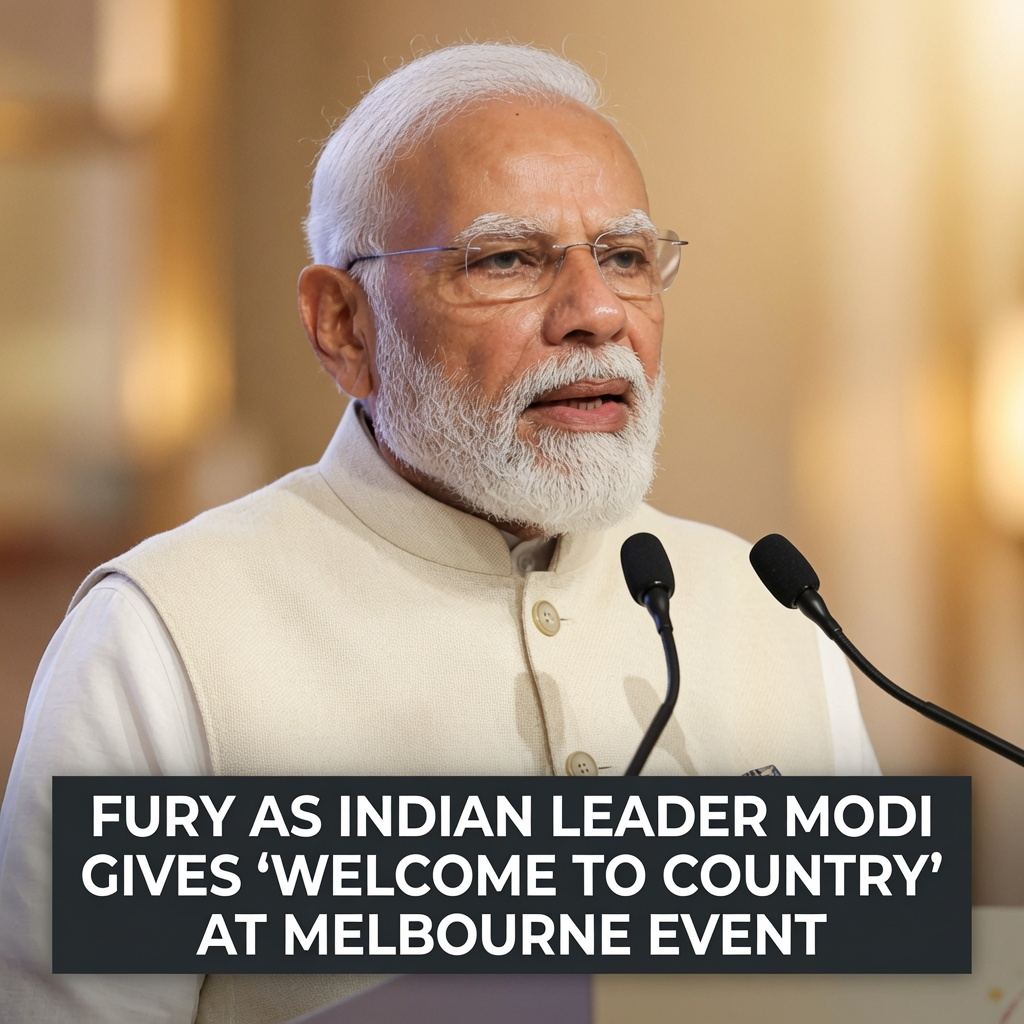
The differing reactions soon spread across social media, where the discussion expanded beyond the speech itself to broader debates about national identity, immigration, multiculturalism and Indigenous recognition. Supporters argued the acknowledgement reflected respect for Australian customs, while critics suggested it highlighted wider political disagreements over the role of these ceremonies in public life.
The Melbourne event itself attracted significant attention long before Mr Modi took the stage. Thousands of supporters gathered inside Marvel Stadium, while several separate protest groups assembled outside the venue.
Among those protesting were Sikh activists, human rights campaigners and other demonstrators raising concerns about issues affecting India’s government. Police maintained a strong presence throughout the event, with demonstrations remaining largely separate from proceedings inside the stadium.
Prime Minister Anthony Albanese welcomed Mr Modi during the visit and spoke positively about the growing relationship between Australia and India. The two leaders have repeatedly described the partnership as strategically important across trade, education, defence and regional security.
Australia and India have significantly expanded cooperation in recent years, with both governments pursuing closer economic ties and increased collaboration throughout the Indo-Pacific region. India has also become one of Australia’s fastest-growing sources of international students, skilled migrants and tourism.
Mr Modi’s Melbourne appearance formed part of a broader program celebrating the relationship between the two countries and Australia’s large Indian-Australian community. Organisers estimated that tens of thousands of people attended the event, making it one of the largest gatherings of its kind.
During the visit, the Australian and Indian governments also announced further cultural cooperation, including agreements relating to the voluntary return of certain human remains and culturally significant items held in museums in both countries.
The online discussion following Mr Modi’s speech illustrates how acknowledgements of Traditional Owners continue to generate differing opinions within Australia. While many public institutions regard them as an important expression of respect, others have questioned their growing use in official settings and political events.
Those differing perspectives have increasingly become part of wider national conversations surrounding constitutional recognition, Indigenous policy, multiculturalism and Australia’s future identity. The debate has remained active across political parties, community organisations and social media platforms.
As Australia’s relationship with India continues to deepen, high-profile visits such as Mr Modi’s are likely to attract attention not only for their diplomatic significance but also for the broader public conversations they generate at home.






