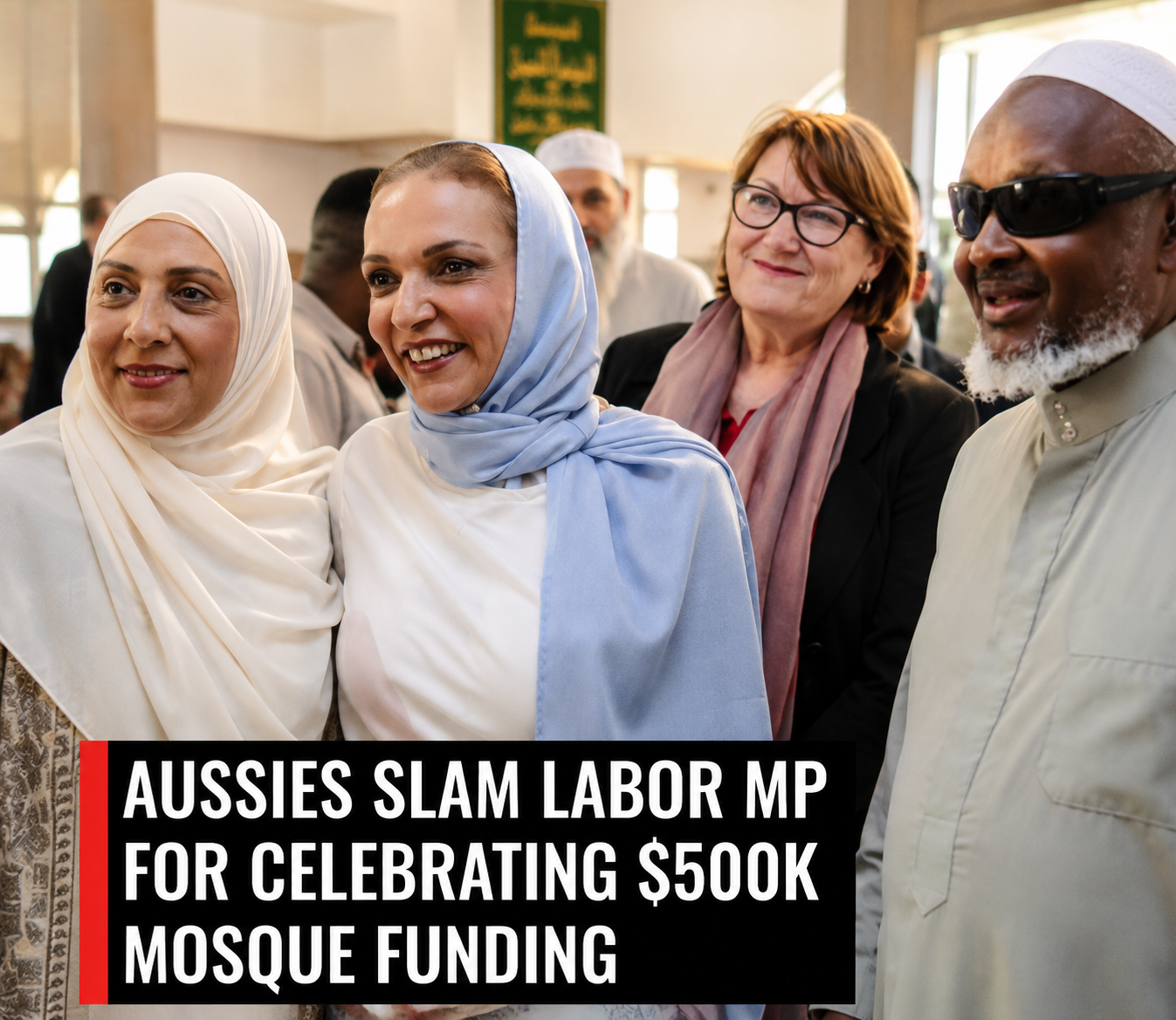
A decision to provide $500,000 in funding toward the expansion of a mosque in Melbourne has sparked a heated debate about government spending, community grants and the priorities of elected officials.
The funding, announced as part of the delivery of an election commitment, quickly attracted attention online after a Labor MP celebrated the allocation. While supporters described the grant as an investment in community infrastructure, critics questioned whether taxpayer funds should be directed toward the project at a time when many Australians remain concerned about housing costs, household budgets and pressure on public services.
The reaction highlights how even relatively modest government spending decisions can become politically charged when they touch on broader issues such as religion, multiculturalism and public finances.
For supporters of the funding, the argument is straightforward.
Community facilities often receive grants from governments at different levels, whether they are sporting clubs, cultural organisations, religious institutions, community centres or volunteer groups. Advocates say these projects can strengthen local communities, provide gathering spaces and support social programs that benefit residents.
From that perspective, the mosque expansion is viewed as another example of a community infrastructure project receiving public support.
Critics see the issue differently.
Many argue that governments should be particularly cautious when allocating taxpayer money to projects associated with religious organisations. Others question whether funding decisions of this kind align with the concerns they believe Australians are prioritising, particularly during a period of ongoing cost-of-living pressures.
The strength of the reaction reflects a broader trend in Australian politics.
Increasingly, government spending is being examined not only on the basis of the amount involved but also on what that spending symbolises.
In an environment where voters are closely watching public finances, even relatively small grants can become focal points for larger political debates.
Questions about migration, multiculturalism and national identity have also become more prominent in recent years.
As a result, funding decisions involving cultural or religious institutions often attract attention that extends far beyond the local communities directly affected.
Supporters of multicultural policies argue that Australia has long benefited from investing in diverse communities and helping organisations provide services, facilities and support networks.
They contend that community grants should be assessed according to their merits rather than the religious or cultural background of the groups involved.
Opponents argue that governments must carefully balance those objectives against other spending priorities and ensure public confidence in the fairness of funding decisions.
The debate surrounding the Melbourne project therefore extends beyond a single grant.
It touches on larger questions about how governments allocate resources, how election promises are delivered and what Australians expect from public spending.
Those questions have become particularly important as governments at both state and federal levels face growing demands from competing priorities.
Healthcare, education, housing, transport and community programs all require funding, while taxpayers increasingly expect greater transparency about where public money is being directed.
That reality means funding announcements that might once have attracted little attention can now become significant political stories.
For elected representatives, it also creates a challenge.
Every spending decision is likely to be viewed through a broader political lens, especially when it involves issues that already generate strong public opinions.
As discussion around the mosque funding continues, supporters and critics alike are likely to focus on a common question: how should governments determine which community projects deserve taxpayer support?
The answer may differ depending on political views, but the debate itself highlights the growing scrutiny being applied to public spending decisions across Australia.
With cost-of-living concerns, government budgets and social cohesion all remaining major topics of discussion, controversies of this kind are unlikely to disappear any time soon.






