More than 100 protesters gathered outside a high-profile charity event attended by Pauline Hanson and her supporters, creating a tense atmosphere that eventually required a significant police presence.
Despite the demonstrations, the event went ahead and ultimately raised more than $500,000 for charitable causes, turning what many expected to be a night dominated by controversy into one that also delivered a substantial fundraising result.
The gathering highlighted the unique position Pauline Hanson occupies in Australian public life.
Few political figures attract the same combination of passionate support and determined opposition.
While supporters view the One Nation leader as someone willing to challenge political orthodoxy and raise issues they believe are being ignored, critics argue her policies and rhetoric contribute to division and social tension.
That divide was clearly visible outside the venue.
As guests arrived for the event, protesters assembled nearby to voice their opposition. Police were called in to manage the crowd and maintain order as tensions escalated.
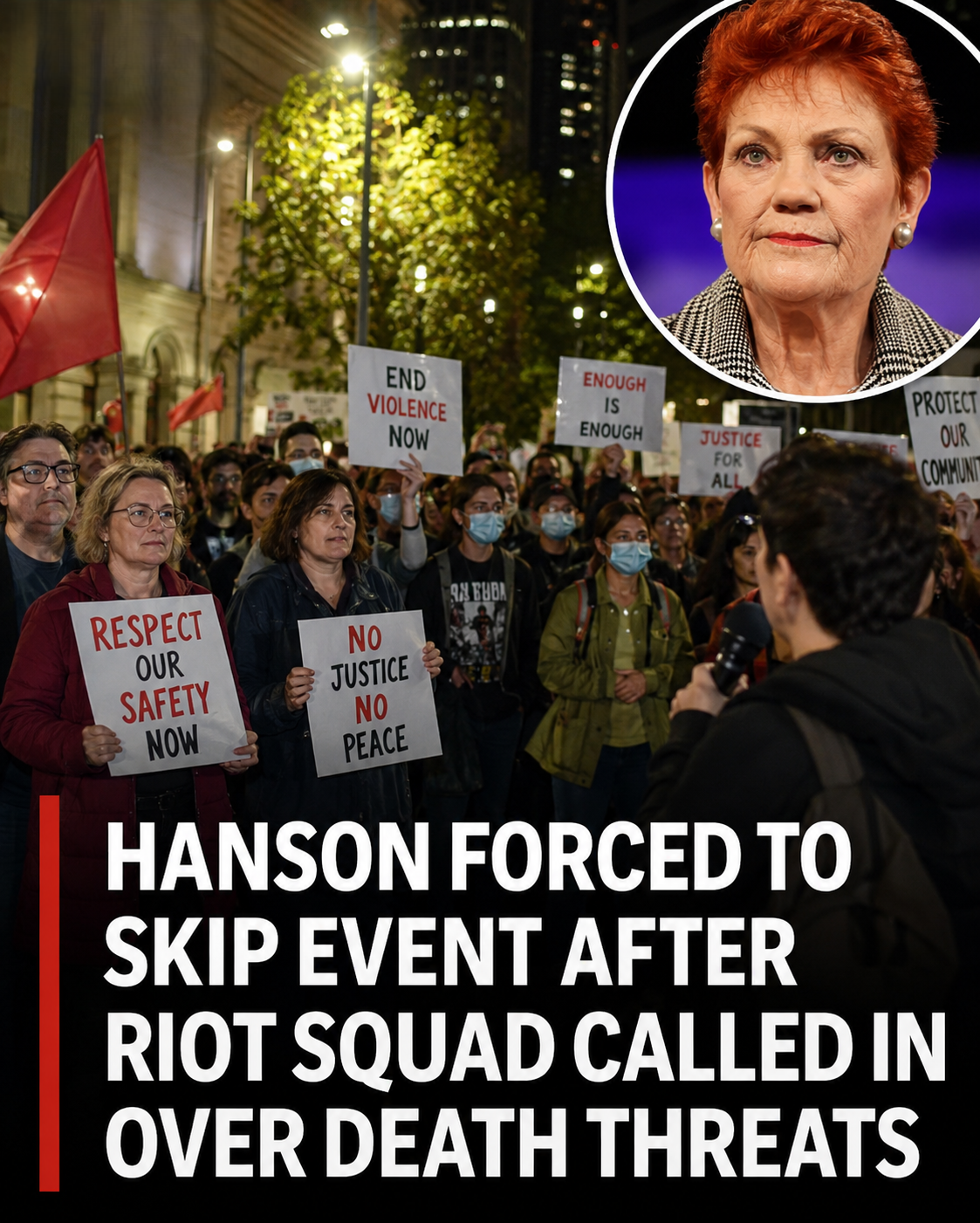
The deployment of specialist police resources underscored concerns about maintaining public safety while allowing both the event and the protest to proceed.
Australia has long protected the right to peaceful protest, but authorities also face the challenge of ensuring demonstrations do not spill over into confrontations that place attendees, organisers or members of the public at risk.
What made the night particularly notable was the contrast between what was happening outside and what was happening inside.
Outside, protesters were expressing their opposition to Hanson and her political movement.
Inside, attendees were contributing to a fundraising effort that organisers say generated more than half a million dollars for charity.
The result raises an interesting question about the political influence of controversy itself.
For many public figures, intense criticism can damage support.
For others, it can energise supporters who feel their views are under attack.
Political analysts have often observed that highly polarising figures can benefit from increased attention, particularly when supporters believe criticism from opponents reinforces their existing beliefs.
That dynamic has been visible throughout Hanson’s political career.
For decades, she has remained a prominent figure despite repeated predictions that her influence would fade.
Instead, she has continued to generate headlines on issues ranging from immigration and multiculturalism to government spending, cost-of-living pressures and national identity.
Recent months have seen Hanson receive renewed attention following major policy speeches, growing media coverage and debates about the future direction of Australian politics.
Supporters argue that her continued relevance reflects widespread frustration with the major parties.
Critics argue that her popularity demonstrates the growing influence of populist politics.
Regardless of where Australians stand on Hanson herself, the Sydney event highlighted how emotionally charged political discussions have become.
Increasingly, political disagreements are extending beyond parliament and into public spaces, community events and social media.
That trend is not unique to Australia.
Across many democracies, political identities have become more deeply connected to personal values, making disagreements feel more intense and more personal than in previous decades.
The scenes outside the charity event reflected that reality.
For protesters, the demonstration was an opportunity to publicly challenge a politician they strongly oppose.
For attendees, the event was a chance to support causes they believed in while standing alongside a political figure they support.
Both groups arrived with very different views of what the night represented.
Yet despite the tensions, the event proceeded and achieved its fundraising goal.
That outcome ensures the story will be remembered not only for the large protest and heavy police presence, but also for the significant amount of money raised during one of the most politically charged charity events seen in Sydney this year.






