Health Minister Mark Butler has rejected claims Australian schools are promoting an “anti-boy” ideology, arguing that teachers are being unfairly blamed for a problem increasingly driven by social media algorithms and toxic online influencers targeting young males.
The federal minister entered an escalating national argument over boys, education and the online “manosphere” during an appearance on Sunrise on Friday, after senior Coalition figures questioned whether elements of the school curriculum were alienating boys and pushing some towards extreme voices on the internet.
Butler flatly rejected the suggestion that lessons about consent and respectful relationships were responsible.
Instead, he turned his criticism towards major technology platforms and people who exploit recommender algorithms to place increasingly hostile or misogynistic material in front of young users.
He referred to such operators as “monsters” and said parents, teachers and governments were engaged in a difficult fight against a stream of harmful material reaching children through their screens.
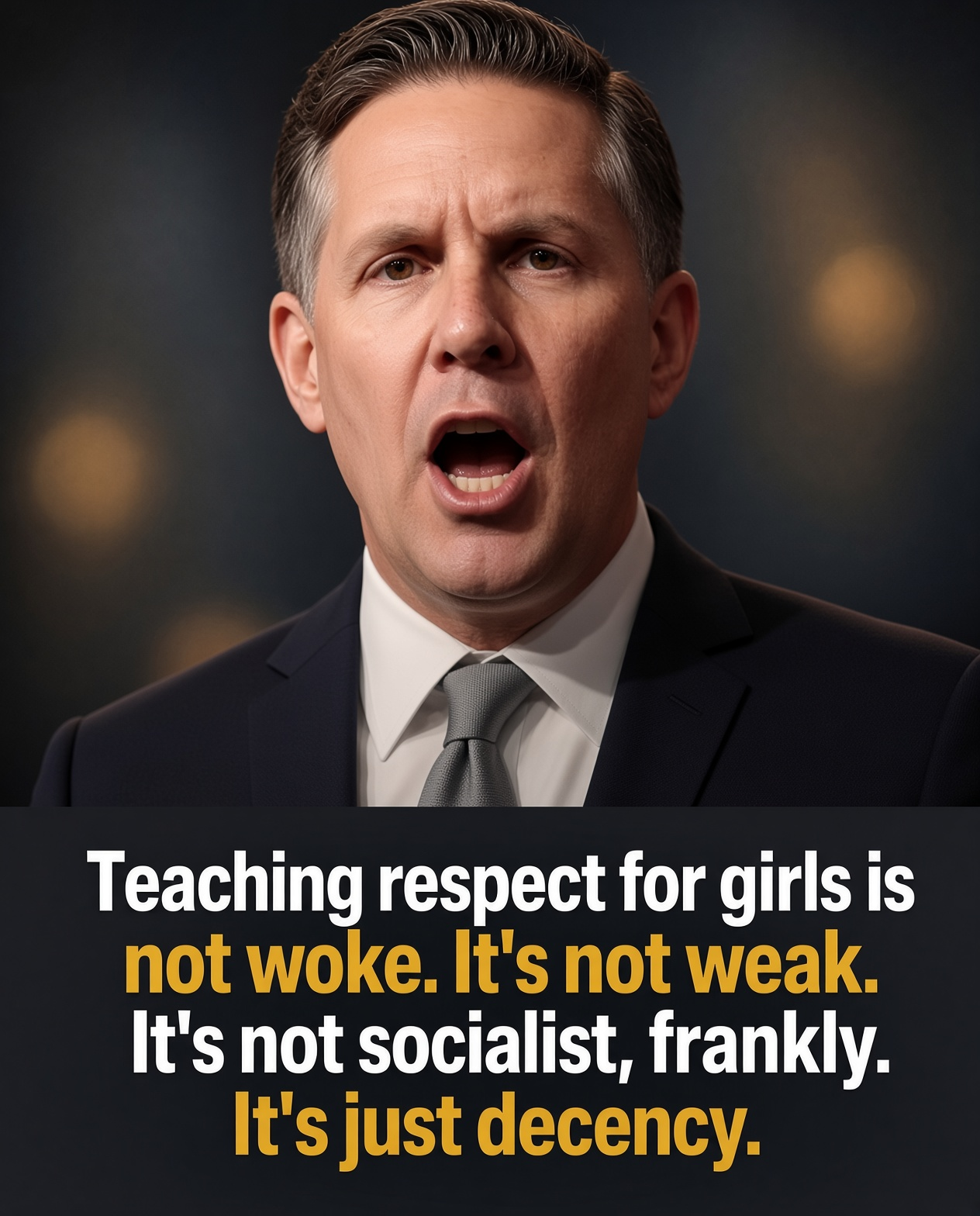
“Teaching respect to girls is not woke,” Butler said, arguing that the principle at the centre of respectful relationships education was basic decency rather than an ideological attack on boys.
The dispute has opened a broader political argument over two questions that are not necessarily the same: whether Australian boys face genuine problems at school, and whether the school system itself is responsible for driving some of them towards misogynistic online communities.
Canavan says some boys feel lectured rather than supported
The controversy intensified after Nationals leader Matt Canavan criticised what he described as the “feminisation” of parts of the curriculum.
Canavan argued that some boys were being lectured about gender rather than given the guidance and encouragement they needed, and said programs intended to promote respectful relationships could have counterproductive consequences if boys interpreted them as blaming males collectively.
He described what he regarded as an “anti-boy ideology” in schools and suggested alienated young males could then look online for people offering them recognition, support and a more positive sense of male identity.
Canavan went as far as describing some approaches to respectful relationships education as effectively becoming a recruitment ground for figures such as Andrew Tate, whose online persona has become closely associated with the international manosphere and highly controversial views about women.
Opposition Leader Angus Taylor subsequently broadened the criticism, saying he believed political agendas were being advanced by some teachers.
Taylor also said consent should be taught and acknowledged the importance of respectful relationships education, but argued there needed to be greater balance and less politicisation in classrooms.
Deputy Opposition Leader Jane Hume took a more cautious position during the Sunrise discussion. She praised teachers and said she supported consent education, while maintaining that parents should be able to raise concerns if they believed political activism was entering their children’s classrooms.
Asked directly whether she believed that was occurring, Hume said she did not know.
What the national framework actually says
The debate has generated significant argument about what schools are formally being asked to teach.
The Australian Government released its National Respectful Relationships Education Framework in March 2026 to guide primary and secondary schools in delivering age-appropriate, evidence-based education about consent, equality and healthy relationships.
The framework was developed following expert work and national consultation and is intended to support schools rather than prescribe one identical lesson for every classroom.
Importantly, the national framework does not use the phrase “male privilege”, despite that term becoming prominent in the political dispute.
It asks schools to help students consider how identity, experience, power and inequality can affect relationships in ways appropriate to their age and development.
It also expressly includes helping boys and young men explore concepts of masculinity in healthy ways.
The framework forms part of a wider federal investment in consent and respectful relationships education linked to Australia’s National Plan to End Violence against Women and Children.
That does not mean every lesson delivered in every Australian school will be identical to the wording of the national document. Education systems, schools and individual programs can differ, and parents remain entitled to debate how sensitive subjects are taught.
But the national framework itself provides little support for the suggestion that its stated objective is to portray boys as inherently responsible for gender-based violence.
Boys do face measurable educational challenges
One reason the political argument has resonated is that concerns about educational outcomes for boys are not invented.
Australian data shows real differences between male and female students in several areas.
Australian Bureau of Statistics figures for 2025 show the apparent full-time retention rate from Year 7 or 8 through to Year 12 was 77.6 per cent for males, compared with 85.3 per cent for females.
For Year 10 to Year 12, the corresponding figures were 78 per cent for boys and 85.2 per cent for girls.
Literacy results also show gender differences. In the 2025 NAPLAN results, female students achieved higher average writing scores than males in every tested year group. In Year 9, for example, 69.1 per cent of female students were assessed as Strong or Exceeding in writing compared with 53.9 per cent of males.
The picture is not uniformly one-sided. Boys have generally performed better in numeracy, illustrating why broad claims that one sex is simply being failed by the entire education system can obscure a more complicated pattern.
There is also concern about the gender balance of the teaching profession. Only about one in four Australian teachers are men, and Canavan has called for more male educators and role models in schools.
Education Minister Jason Clare has agreed that attracting more men into teaching would be beneficial.
Where the government and Coalition figures diverge is over the cause of boys’ difficulties and whether respectful relationships lessons are worsening them.
Existing retention and academic data can establish that gender gaps exist. They do not, by themselves, demonstrate that consent education or a “feminised” curriculum caused those gaps.
Teachers say misogyny is entering schools from outside
Teachers and researchers have increasingly raised the opposite concern: rather than schools driving boys into misogynistic internet communities, online misogyny is already entering Australian classrooms.
The Australian Education Union described the recent political characterisation of teachers as fundamentally inaccurate and warned that accusing educators of indoctrinating students could intensify hostility towards a profession already dealing with serious behavioural problems.
A recent Monash University survey involving about 2,600 teachers found 78 per cent had observed or experienced sexism or misogyny in school settings.
One in three respondents said gendered violence sometimes made them consider leaving teaching.
Researchers studying the influence of Andrew Tate and similar personalities have reported cases in which teachers encounter male students repeating misogynistic language, challenging female authority or adopting rigid ideas about masculinity they have absorbed online.
That evidence has become central to the government’s response to the “anti-boy” argument.
For Butler and Clare, schools are not the principal source of the problem. They are among the institutions trying to deal with attitudes that children are encountering elsewhere.
Why the algorithms matter
Official research from Australia’s eSafety Commissioner provides significant support for concerns about the role of recommender systems.
Its research into young men online found that the internet can offer boys valuable opportunities for connection, guidance and positive discussions about masculinity.
At the same time, it found some young men can be vulnerable to online spaces that offer validation and belonging before gradually introducing more hostile messages about women, feminism and relationships.
Recommender systems are particularly important because users do not necessarily need to search for explicitly misogynistic material.
According to eSafety, boys can begin with ordinary interests such as fitness, self-improvement, dating or confidence and then be recommended progressively more extreme content.
Its May 2026 position paper says manosphere material is consistently recommended to boys and young men, including in circumstances where they did not deliberately seek it out.
The commercial mechanics of social media are part of the concern. Platforms commonly optimise recommendations around engagement, and provocative or polarising content can be highly effective at keeping users watching, commenting and sharing.
That is the environment Butler was referring to when he accused people of using algorithms to push a “toxic” stream of content into the screens of young boys.
Chanel Contos pushes the debate beyond classrooms
The political confrontation also follows a major intervention by consent campaigner Chanel Contos, founder and chief executive of Teach Us Consent.
In a National Press Club address on September 2, Contos argued that schools face an uphill battle if students receive consent education in class but are simultaneously exposed to algorithmically recommended misogynistic material for hours outside school.
Her argument was not that education should be abandoned. Rather, she said governments should confront the technology systems capable of undermining those lessons.
Contos has advocated stronger controls over algorithmic feeds, including a model under which users would have to actively choose personalised recommendation systems rather than receiving them by default.
Prime Minister Anthony Albanese has expressed support for giving Australians greater control over what algorithms serve them, although the government has not committed to the precise opt-in model proposed by Contos.
The issue is likely to become a significant next stage of Australia’s online safety debate.
Australia has already imposed world-first restrictions
The argument is occurring after Australia took the unprecedented step of restricting social media accounts for children under 16.
Since December 10, 2025, platforms including Facebook, Instagram, Snapchat, TikTok, X, YouTube, Reddit, Threads, Twitch and Kick have been required to take reasonable steps to prevent Australians under 16 from creating or maintaining accounts.
Companies can face penalties of up to $54.6 million for systemic failures to comply.
eSafety reported that millions of under-16 accounts were removed or restricted during the early implementation period, although regulators have stressed that age restrictions are not a complete solution to online harm.
The latest argument goes further than simply asking whether children should have social media accounts. It asks what platforms should be allowed to do with the attention of users who are old enough to access them.
That distinction matters because the manosphere is not a single website that can simply be blocked. It is a loose ecosystem of influencers, podcasts, videos, memes, discussion forums and self-improvement material that can move between platforms and blend mainstream advice with increasingly extreme messages.
A debate in danger of becoming too simple
The political temptation is to reduce the issue to competing slogans: schools are failing boys, or Big Tech is poisoning them.
The evidence suggests the reality is more complicated.
Boys have legitimate educational challenges. Their school retention is lower than girls’, their literacy performance is weaker in important areas and Australia would benefit from having more male teachers and mentors.
At the same time, there is growing evidence that algorithms can amplify misogynistic content and that teachers are dealing with the consequences inside classrooms.
Those two realities can exist simultaneously.
Supporting boys does not require abandoning lessons about respect and consent, just as teaching respectful relationships does not eliminate the need to examine whether boys feel supported, engaged and valued at school.
The unresolved policy question is how responsibility should be divided between families, schools, technology companies and government.
Butler has made clear where he believes the immediate political focus should fall.
Rather than attacking teachers for explaining respect and consent, he argues Australia should scrutinise the systems capable of feeding young boys a personalised stream of resentment, misogyny and grievance — and the companies profiting from keeping them watching.






