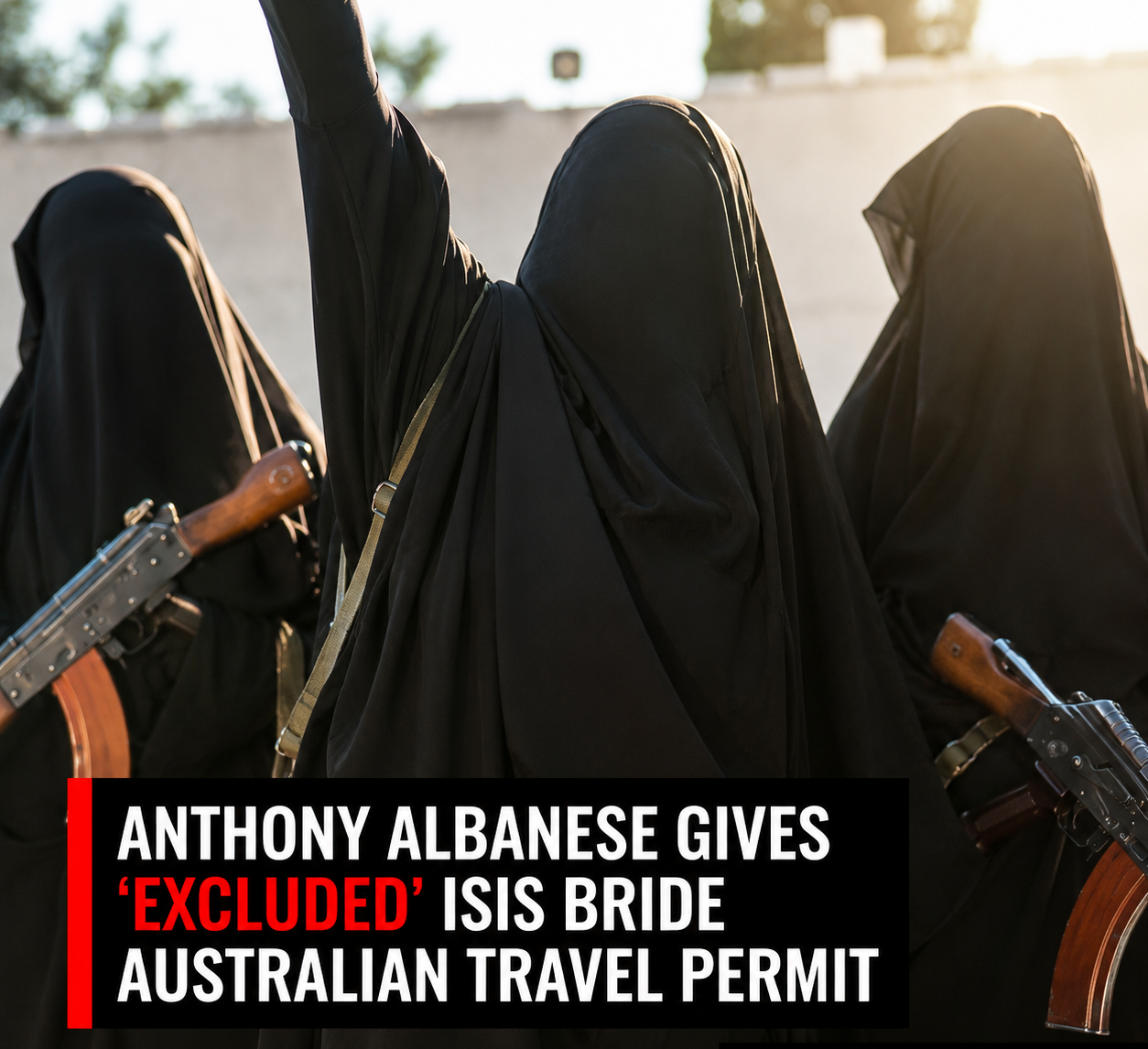
The Albanese government has approved the return of the last remaining Australian citizen with links to Islamic State who was still in Syria, ending months of uncertainty after legal advice concluded authorities could no longer continue blocking her re-entry under Australia’s temporary exclusion laws.
The decision has immediately reignited debate over national security, with supporters of the current legal framework arguing the government had little choice once the law was applied, while critics say the case exposes weaknesses in Australia’s counter-terrorism legislation that should now be addressed.
The woman, Hodan Abby, travelled to Syria in 2015 and was previously prevented from returning to Australia through a Temporary Exclusion Order issued on national security advice. That order was designed to delay her return while security agencies prepared monitoring arrangements and assessed potential risks. However, once she formally applied for a return permit, legal advice received by the government concluded the legislation no longer allowed her exclusion to continue indefinitely.
Home Affairs Minister Tony Burke said the decision was based on legal obligations rather than a change in government policy. He stressed that Australian authorities had prepared extensive post-arrival conditions before approving the permit and insisted the government’s priority remained protecting the community while complying with the law.
Under those conditions, Abby will face one of the most comprehensive monitoring regimes available under Australian legislation. Authorities will oversee where she lives, works and travels, while also requiring advance notification before using telecommunications devices or social media. Intelligence and law enforcement agencies will continue supervising her activities after she arrives in Australia.
The case has attracted particular attention because Abby is the final Australian woman with ISIS links who remained in Syria after earlier repatriation operations brought other women and children home. Several of those earlier returnees were arrested shortly after landing in Australia, while investigations into others continue. That history has intensified public interest in how authorities intend to manage the final return under existing laws.
Government officials have repeatedly emphasised that approval to return does not mean the individual is free from investigation or exempt from Australian law. The Australian Federal Police has ongoing inquiries into a number of returnees from Syria, and any evidence of criminal offences can still be pursued through the courts. ASIO has also confirmed it is satisfied appropriate security measures are in place before Abby’s arrival.
Opposition politicians have argued the case demonstrates that Parliament should revisit the Temporary Exclusion Order legislation. They say ministers should have greater authority to prevent the return of Australians assessed as posing an ongoing national security risk, while also questioning whether existing monitoring powers are sufficient for cases involving former ISIS affiliates.
Others note that Australian citizenship carries legal rights that governments cannot simply ignore. Legal experts have pointed out that Temporary Exclusion Orders were designed to delay and manage a person’s return rather than permanently prevent an Australian citizen from re-entering the country. That legal distinction ultimately became central to the government’s decision.
The woman is expected to return with her young daughter, who reportedly requires ongoing medical treatment after suffering injuries while living in Syria. Child welfare organisations have long argued that children born or raised in former Islamic State territory should receive medical care and support regardless of the circumstances that brought their families there.
The broader debate is now shifting beyond this individual case. Policymakers from across the political spectrum are discussing whether Australia’s counter-terrorism laws should be strengthened so future governments have clearer legal authority when dealing with citizens who joined or supported terrorist organisations overseas.
For now, the government’s position remains that it has acted in accordance with the law while preparing the strongest security measures currently available. Whether Parliament ultimately decides those laws need to change is likely to become one of the next major questions in Australia’s ongoing national security debate.






