Independent senator Jacqui Lambie has accused Pauline Hanson’s One Nation of turning a serious women’s health issue into a political punchline. The confrontation erupted over an animated instalment of the party’s Please Explain series, which mocked a medical condition Lambie had previously described in Parliament. What began as a cartoon attacking several political figures has become a larger argument about the point where satire gives way to personal humiliation.
Lambie’s response was blunt. Speaking to ABC Radio National, she said leaders should not stir up hatred and described the atmosphere around the cartoons as spiteful. Her criticism was directed at Hanson’s political approach and at the decision to include a condition that can be painful and debilitating for women. She called for people around Hanson to urge the party to take the material down, while saying she would not herself demand its removal.
That distinction matters. Lambie was not announcing legal action or a government crackdown on political comedy. She was asking whether a party seeking public office should turn information shared to help other women into an invitation for ridicule. Hanson and One Nation have defended the material as satire, according to subsequent reporting, but their defence should not be confused with a detailed response to every point Lambie made.
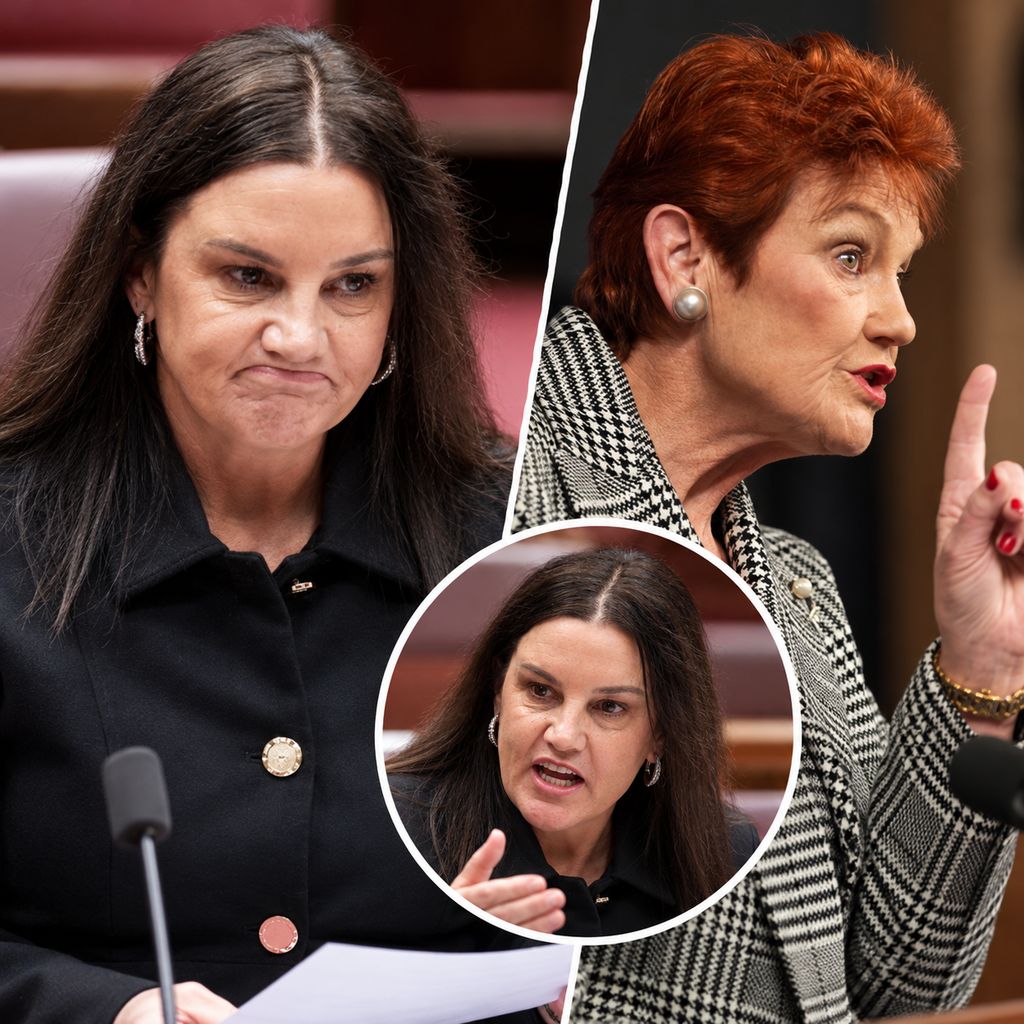
The condition at issue is pelvic organ prolapse, and Lambie has spoken openly about her own experience. She connected her ordeal with injuries she sustained while serving in the Australian Defence Force and described the treatment she required. Those details were placed in the public record by the senator herself. The public disclosure, however, was made in the context of health awareness and the challenges women can face in accessing treatment, not as a statement that her experience was a suitable target for personal insults.
Many people are reluctant to discuss pelvic health openly. Symptoms can affect work, mobility, exercise and ordinary daily activities. Conditions involving the pelvic floor are often underreported because of embarrassment or fear of judgement. Public figures who discuss them can help others understand that they are not alone and that medical advice is available. There is a genuine public interest in the subject, but the medical facts should not be distorted merely because a cartoon has made them part of a political dispute.
One Nation’s animation also targeted other politicians while criticising the federal government’s proposed approach to the responsibilities of digital platforms. As a result, the party can argue that it was engaging in a broader political debate about online regulation and freedom of expression. But that context does not settle the separate question of whether using a colleague’s medical condition was necessary to make its policy point.
Lambie has framed the issue in terms of the example political leaders set. Her criticism asks whether a figure with a national audience should use a deeply personal health disclosure to encourage laughter at the expense of a person dealing with a serious condition. A political audience does not have to accept that criticism to understand why it has resonated beyond the Senate.
The backlash has not come from one ideological camp. The ABC reported criticism from independent MP Monique Ryan and Queensland Labor MP Kara Cook. Further reporting has documented support for Lambie across political lines, including from senior government and opposition figures. Some have pointed to the courage it takes to speak publicly about a condition that many women find difficult even to discuss with family or colleagues.
That broader reaction is significant because Lambie and Hanson have had political disagreements before. They are both outspoken figures, but they do not share a single political programme. A response to the cartoon therefore cannot simply be read as party loyalty or a coordinated legislative campaign. Some of those who oppose Lambie on other questions have nevertheless defended the principle that personal medical experiences should not be weaponised in political argument.
Supporters of sharp political satire may see a risk in expecting comedians or politicians never to cause offence. Australia has a robust tradition of mocking powerful people, and public life regularly attracts unpleasant caricatures. Political parties are entitled to debate proposed laws and criticise rivals, including with humour. But the freedom to publish a cartoon does not remove the freedom of viewers, colleagues and the subject to criticise its content.
There is also a difference between targeting a politician’s policies and targeting a medical condition unrelated to their public decisions. A cartoon challenging Lambie’s votes, parliamentary statements or policy positions would be addressing her public role. A joke built around intimate health details raises a different ethical question, particularly when those details were disclosed to help others rather than to invite public spectacle.
Hanson’s defence that the video was satire describes the form of the content. It does not answer every criticism about its impact. Equally, the volume of public criticism is not a legal finding that the publication was unlawful. No such finding is established by the reports of the row. The dispute is primarily about political judgement, the responsibilities of public figures and the standards audiences expect.
The argument also sits beside Australia’s wider discussion of digital platforms and online safety. One Nation’s political messaging challenges proposed government regulation; critics of the cartoon argue that meaningful public debate on regulation should not depend on humiliating an individual. Those issues can be considered separately. It is possible to oppose a proposed online law while condemning the cartoon’s treatment of Lambie, or to support stronger safeguards without wanting political speech suppressed.
Lambie’s decision not to demand removal gives her criticism a different character from a demand for censorship. Her point is that the people who made and shared the animation should make a judgement about whether it is consistent with their own standards. That is a call for voluntary accountability rather than evidence of a state-imposed penalty.
The reaction among other women is another part of the story. A medical disclosure may encourage someone to seek advice or recognise symptoms they have been hiding. If the public response to such a disclosure is ridicule, others may be less willing to speak. That potential chilling effect is an ethical concern, not a measurable outcome established in this particular case. It explains why health advocates and politicians can regard the cartoon as more than an exchange of personal insults.
For Hanson, the immediate political question is whether the party’s satirical style energises its supporters while alienating people who believe the joke went too far. For Lambie, the episode underscores the risks of speaking about personal experiences in an adversarial political environment. Neither assessment requires speculation about poll results or about the private intentions of the people who created the cartoon.
The central facts are clear: the animation mocked a disclosed medical condition; Lambie objected strongly; other politicians condemned the ridicule; and One Nation defended the video as satire. The deeper disagreement is over whether political humour can carry a message without making an individual’s health struggles the message itself.
The affair illustrates a wider tension in political communication. Animation can be shared quickly and reach audiences that do not watch Parliament or read policy documents. Its exaggeration is part of the format. That makes it attractive for parties trying to cut through crowded social feeds, but the speed and emotional intensity of the format can also reward personal attacks that leave the underlying policy argument behind.
The original policy argument concerned what responsibilities digital platforms should bear for material they distribute. Australians can reasonably disagree about that balance. Some fear that broad online safety rules could constrain legitimate political expression; others want platforms to do more to reduce foreseeable harms. Neither position requires a personal medical insult to be intelligible. The cartoon controversy risks shifting attention from those substantive legislative questions to the personal treatment of one senator.
There are limits to what public reporting establishes about the people who viewed the cartoon. A viral argument does not reveal how representative the loudest reactions are, how many viewers changed their opinion, or whether the video’s creators intended to target women with similar conditions. Those things should not be inferred from reaction alone, however widespread or heated. The observable facts are the content of the animation, the subject’s objection, the party’s defence and the public comments that followed.
For anyone living with a similar condition, the useful message is that pelvic health concerns deserve clinical attention rather than embarrassment. Lambie’s personal story may have prompted wider awareness, but an article about the political dispute should not try to diagnose individuals, imply that all cases have the same cause or offer medical certainty about treatment. Respect for the subject includes recognising the limits of what can be responsibly said in a political news report.
An ethical response to the incident need not depend on agreement with Lambie’s views on immigration, defence or any other topic. It can rest on the narrower judgement that women should be able to speak about serious health experiences without being punished through ridicule.






