Labor’s Tax Reforms Face Fresh Scrutiny As Warnings Grow Over Jobs, Investment And Housing
Australia’s heated debate over tax reform has entered a new phase, with concerns now extending well beyond property investors and into broader questions about jobs, wages, business investment and the future direction of the economy.
What began as a discussion about housing affordability has rapidly evolved into one of the most significant economic arguments facing the Albanese Government.
The central question is simple.
Can Australia make housing more affordable without damaging investment, slowing economic growth or reducing opportunities for workers?
That question has become increasingly important as economists, business leaders and industry groups assess the likely consequences of Labor’s proposed changes to capital gains tax concessions and other investment-related tax arrangements. Recent warnings have come not only from traditional critics but also from voices that had previously supported aspects of the government’s broader reform agenda. :contentReference[oaicite:4]{index=4}
The government’s position is that Australia’s tax system has encouraged excessive investment into existing property while making it harder for younger Australians to enter the housing market.
Labor argues that reforming capital gains tax concessions and negative gearing arrangements will help create a fairer system while improving housing affordability over the long term. The government maintains that these measures are designed to support first-home buyers and reduce distortions within the housing market. :contentReference[oaicite:5]{index=5}
Supporters of the reforms point to a reality confronting many households.
For years, housing prices in major Australian cities have grown faster than incomes, leaving many aspiring homeowners struggling to save deposits and compete with investors.
From this perspective, tax reform is viewed as an attempt to rebalance the system and improve access to housing.
Critics, however, see substantial risks.
Business organisations and industry groups argue that major tax changes can alter investment behaviour in ways that extend beyond residential property.
Their concern is that reduced incentives for investment may ultimately affect business expansion, capital formation, productivity growth and employment opportunities. Several industry groups have warned that unintended consequences could emerge if investment activity slows significantly. :contentReference[oaicite:6]{index=6}
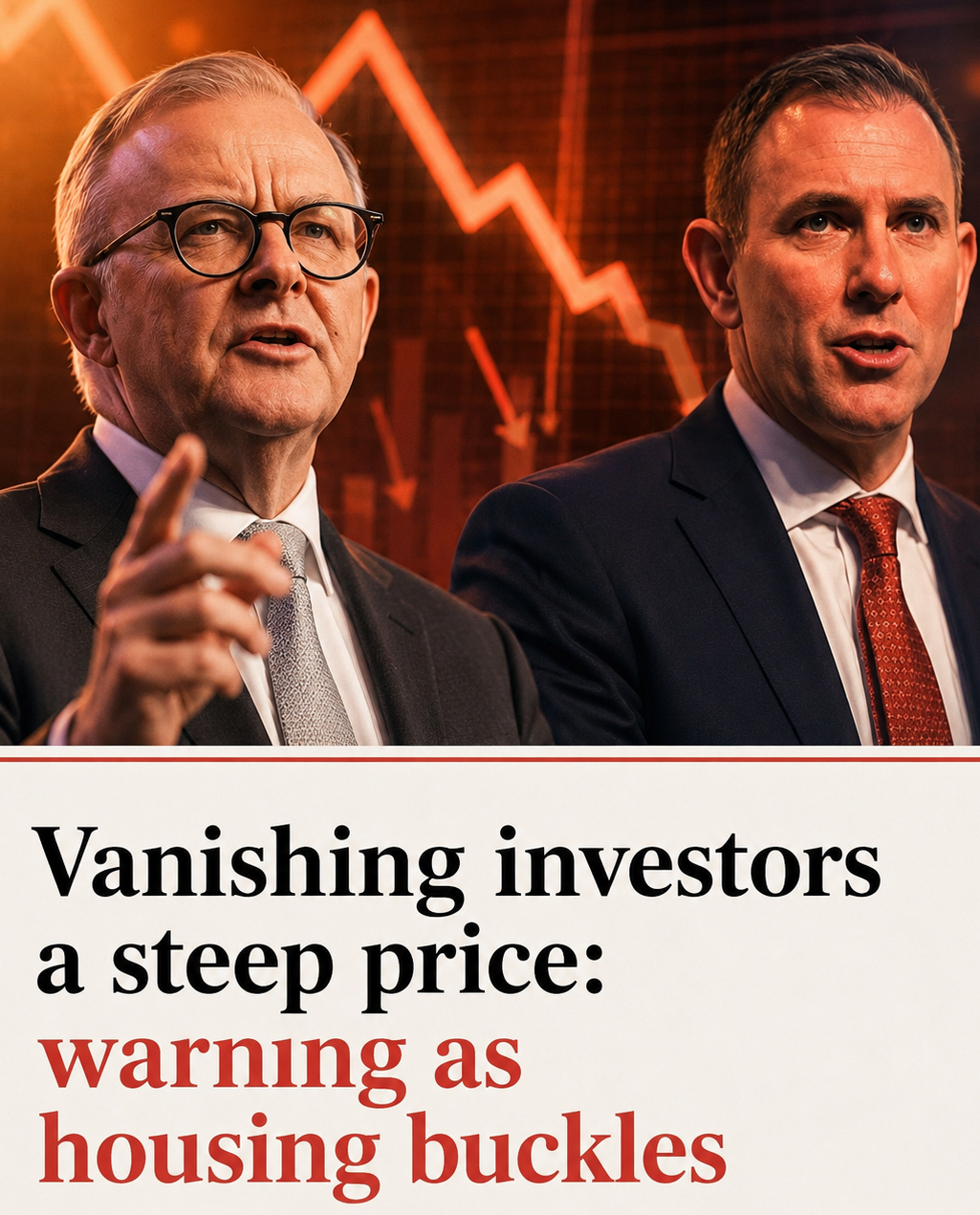
The debate has become even more intense because early signs of housing market weakness are beginning to attract attention.
Recent reports suggest investor activity has softened and property markets in some locations are showing signs of adjustment as uncertainty surrounding future tax settings increases. Analysts have noted that some investors are delaying decisions while waiting for greater clarity regarding how the reforms will ultimately operate. :contentReference[oaicite:7]{index=7}
That uncertainty matters because investment decisions often influence far more than housing prices.
Construction activity, employment growth, lending activity and consumer confidence can all be affected by expectations about future economic conditions.
When investors become cautious, the effects can ripple through multiple sectors of the economy.
This is one reason why the current discussion extends beyond property owners and developers.
Workers, small businesses and households are all paying attention because the outcome could influence wages, employment opportunities and broader economic growth.
Australia’s productivity challenge has become another major factor in the debate.
Many economists argue that long-term wage growth depends heavily on productivity improvements and business investment. If businesses become less willing to invest, some observers worry that future wage growth could also come under pressure. Others argue that fears are overstated and that productive investment will continue to flow toward opportunities offering strong returns. :contentReference[oaicite:8]{index=8}
The disagreement highlights a deeper philosophical divide about economic policy.
One side argues that tax concessions distort markets and contribute to inequality by favouring asset owners.
The other side argues that investment incentives play a crucial role in economic expansion and should not be weakened without careful consideration of the broader consequences.
Neither argument is entirely new.
Australia has debated capital gains tax, negative gearing and housing affordability for decades.
What makes the current situation different is the scale of the proposed changes and the broader economic backdrop in which they are occurring.
Households continue to face cost-of-living pressures.
Businesses are navigating uncertain economic conditions.
Governments are searching for ways to improve productivity while maintaining fiscal sustainability.
Every major economic decision now carries greater political significance than it might have in more stable times.
For Prime Minister Anthony Albanese and Treasurer Jim Chalmers, the challenge is balancing competing priorities.
They must convince voters that reform is necessary while also reassuring businesses and investors that Australia remains an attractive place to invest and create jobs.
For industry groups, the challenge is ensuring that concerns about growth and competitiveness are heard before reforms become permanent.
Both sides agree on one point.
Australia faces serious housing affordability problems.
Where they differ is on how those problems should be solved.
Some believe tax reform is essential.
Others believe increasing housing supply, reducing regulatory barriers and encouraging investment would deliver better outcomes.
That disagreement is likely to remain at the centre of Australian politics for months to come.
As parliament continues debating the reforms and markets respond to changing expectations, voters will be watching closely.
The stakes extend far beyond tax policy alone.
The outcome could influence housing affordability, business confidence, investment decisions and economic growth for years ahead.
That is why the current debate has become one of the most closely watched economic battles in Australia today.






