Former Prime Minister John Howard has reportedly delivered a candid assessment of the Liberal Party’s recent history, arguing that the governments led by Tony Abbott, Malcolm Turnbull and Scott Morrison each fell short of meeting important tests of political leadership.
According to published reports, Howard’s comments appear in a new book by political journalist Paul Kelly, in which the former prime minister reflects on the Coalition’s years in government and the challenges that emerged during a period marked by leadership changes, internal party tensions and shifting electoral fortunes. The reported remarks represent Howard’s personal analysis rather than an official position of the Liberal Party.
Howard served as Australia’s Prime Minister from 1996 to 2007 and remains one of the Liberal Party’s most influential figures. His views continue to attract attention because of his long political career and his role in shaping many of the party’s modern policy traditions. Reflections from former national leaders often contribute to broader discussions about political strategy, leadership and party renewal.
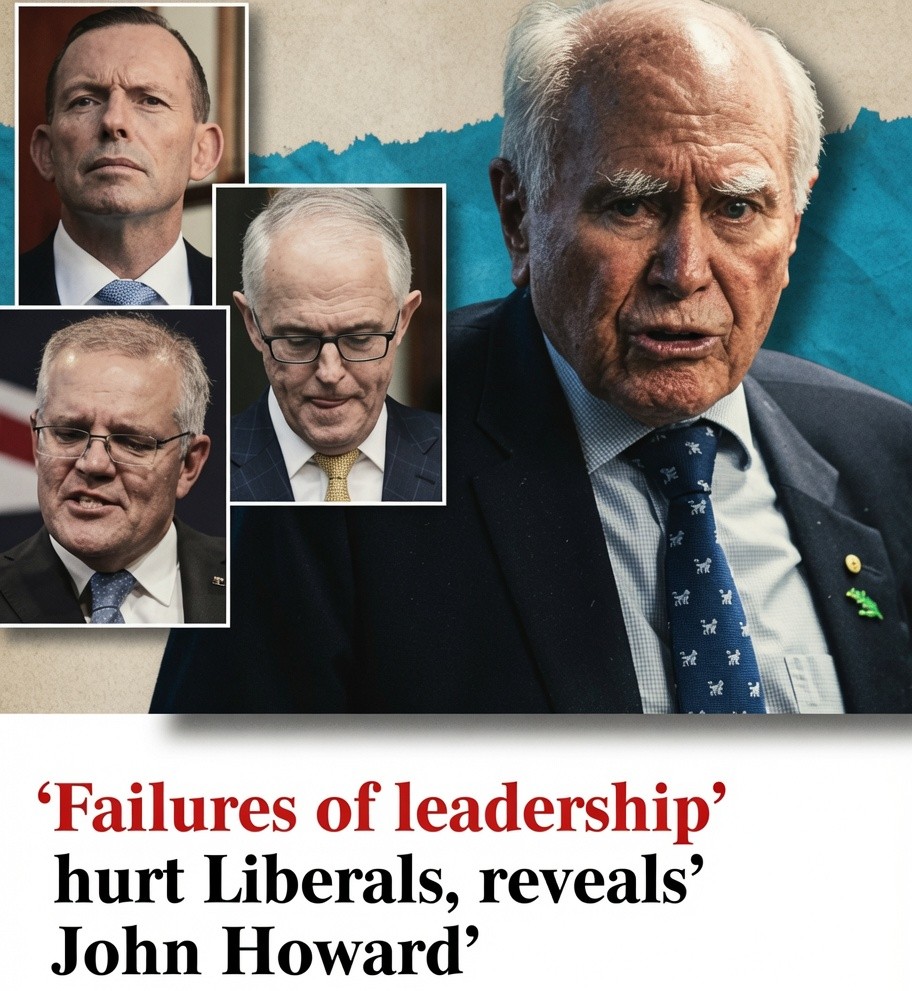
The period covering the Abbott, Turnbull and Morrison governments was characterised by significant political challenges, including leadership transitions, policy disagreements and changing public expectations. Political analysts have frequently identified leadership instability as one factor that influenced public confidence during those years, although electoral outcomes were also shaped by economic conditions, policy debates and broader social issues.
Leadership remains one of the defining issues in Australian politics. Scholars and political commentators often argue that successful governments depend not only on policy development but also on maintaining party unity, communicating effectively with voters and responding consistently to emerging national challenges. Internal divisions can make those objectives more difficult to achieve.
Books written by senior journalists and political observers often provide additional historical context by combining interviews, documentary evidence and retrospective commentary from key participants. While such works can contribute valuable perspectives, they also reflect the interpretations and judgments of their authors and interview subjects rather than definitive historical conclusions.
Political experts note that former leaders frequently use memoirs, interviews and historical accounts to examine past decisions and consider lessons for future governments. These reflections can influence contemporary debates about leadership, party organisation and electoral strategy, particularly during periods of political rebuilding or renewal.
The Liberal Party continues evaluating its future direction as Australia’s political landscape evolves. Questions surrounding leadership, policy priorities, economic management and voter engagement remain central to discussions about how the Coalition positions itself ahead of future elections.
Howard’s reported comments add another perspective to the ongoing conversation about the Coalition’s recent history and the qualities required for effective national leadership. As political historians and commentators continue examining this period, differing interpretations are likely to remain part of Australia’s broader discussion about leadership, governance and the evolution of its major political parties.






